

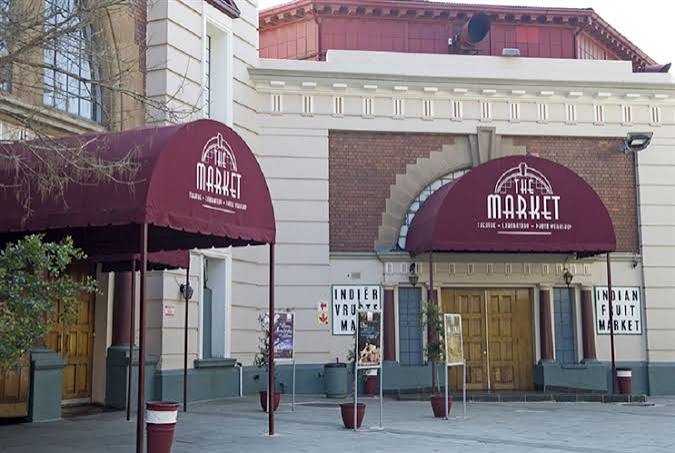
JOHANNESBURG — This Women’s Month, the stage becomes a space for remembrance, confrontation and truth-telling as two powerful productions at The Market Theatre place women’s stories, political history and gender-based violence firmly at the centre of the conversation.
From the contested legacy of struggle icon Winnie Madikizela-Mandela to the devastating realities faced by women affected by gender-based violence, Nomzamo and Voices of Women offer audiences theatre that does more than entertain — they ask difficult questions about the society South Africa has become and the future it wants to build.
Nomzamo: confronting the legacy of Winnie Madikizela-Mandela
Thabang Entertainment and The Market Theatre Laboratory present Nomzamo, a provocative theatrical exploration of the life, legacy and memory of Nomzamo Winnie Madikizela-Mandela.
Written and directed by Thabang Kwebu, the play runs from 28 to 30 August 2026 at the Ramolao Makhene Theatre at The Market Square in Newtown.
Set entirely at Madikizela-Mandela’s graveside, the production creates an intimate setting in which history, politics and personal relationships collide.
At its heart is an imagined conversation between Winnie Mandela and a character representing renowned advocate Dali Mpofu, named Daluxolo.
Through their encounter, the play explores questions surrounding their relationship, the rumours that followed them and the unresolved political and moral questions emerging from South Africa’s liberation struggle.
Kwebu describes the production as an attempt to create a conversation between the past and the present rather than simply revisit historical events.
“Nomzamo is not a political endorsement, but a moral conversation between now and the future, past and present, and between truth and fear.”
The writer-director says the production deliberately avoids presenting itself as propaganda.
Instead, it seeks to interrogate the way history is constructed — and the ways in which powerful figures, particularly women who played controversial and complicated roles in liberation movements, are remembered.
“The play is not a piece of propaganda but an inquiry, confrontation and truth-telling through art,” says Kwebu.
That approach has already attracted critical attention, with the production receiving a Naledi Theatre Awards nomination and successful previous runs, including at Joburg Theatre.
For Kwebu, the central question extends beyond Madikizela-Mandela herself.
It asks who gets to tell history, whose version becomes accepted as truth and how future generations will judge those who made sacrifices during the struggle for democracy.
A homecoming for a Market Theatre Laboratory alumnus
The production also represents a significant homecoming for Kwebu, who is a former student of The Market Theatre Laboratory.
Cherae Halley, Head of The Market Theatre Laboratory, says the institution is delighted to welcome the alumnus back to the space where he developed his craft.
Kwebu’s return also reflects the broader legacy of the Market Theatre Laboratory and its role in nurturing generations of South African theatre practitioners.
His success forms part of the inspiration behind the inaugural Lab Alumni Festival, which seeks to celebrate the institution’s alumni and the creative legacy they have built since leaving the programme.
Voices of Women: theatre as remembrance and resistance
Running alongside Nomzamo is another deeply urgent production, Voices of Women (VOW).
Conceptualised and directed by award-winning theatre-maker and artivist Mandisi “Dr. Disi” Sindo, the work arrives at the Kippies Fringe from 27 to 30 August 2026.
Featuring Liso The Musician and Lonalinamandla Bawuti, the workshop-developed and devised production gives voice to women whose lives have been devastated by gender-based violence.
The story follows Lungiswa and Simamkele, two women from different backgrounds whose lives become connected through their experiences of abuse.
Rather than treating gender-based violence as an abstract social issue, Voices of Women places individual stories and lived experiences at the centre of the performance.
The work draws inspiration from real cases, including those of Nosicelo Mtebeni and Noluvuyo Ndema-Nonkwelo, whose lives were tragically cut short in the Eastern Cape.
Sindo describes the production as more than a theatrical performance.
He calls it a prayer, protest and promise — a commitment to ensuring that women whose voices were silenced are remembered.
“VOW calls us to reflect, to mourn and to act. Because every woman matters, and every voice deserves to be heard.”
The production also acknowledges the wider national crisis of violence against women, paying tribute to victims including Zukiswa Mhlakaza and Reeva Steenkamp, among many others.
When art refuses to remain silent
Although Nomzamo and Voices of Women deal with different subjects, they share a powerful thematic thread: the politics of memory and the consequences of silence.
Nomzamo asks audiences to reconsider how South Africa remembers its liberation heroes and how gender, politics and personal controversy influence historical narratives.
Voices of Women, meanwhile, confronts the consequences of a society in which women continue to lose their lives to violence and abuse.
Together, the productions demonstrate the ability of theatre to create spaces where difficult conversations can take place — conversations that may be uncomfortable, unresolved and even confrontational, but remain necessary.
They also underline the importance of giving artists the freedom to interrogate South Africa’s past and present through creative expression.
Two productions, one urgent conversation
The timing of the productions during Women’s Month adds another layer of significance.
While Women’s Month often celebrates women’s achievements and contributions, Nomzamo and Voices of Women invite audiences to move beyond celebration and confront more uncomfortable realities.
One examines the complicated legacy of a woman who became one of the most powerful and controversial figures of South Africa’s liberation struggle.
The other centres the voices of women who were denied the opportunity to shape their own futures.
Both productions ultimately ask audiences to consider what society chooses to remember, what it chooses to forget and what happens when difficult truths remain unspoken.
For The Market Theatre, they also demonstrate the continuing relevance of theatre as a platform for social commentary, historical interrogation and artistic experimentation.
Catch the productions
Nomzamo runs from 28–30 August 2026 at the Ramolao Makhene Theatre, The Market Square, Newtown.
Tickets are available through Webtickets at R100.
Voices of Women runs from 27–30 August 2026 at the Kippies Fringe.
Performances are scheduled for Thursday and Friday at 19:30, Saturday at 15:30 and 19:30, and Sunday at 15:30.
Tickets are R100, with discounted bulk options available through The Market Theatre box office.
This Women’s Month, audiences are invited to experience theatre that does not simply tell stories — it challenges memory, confronts injustice and demands that we listen.


