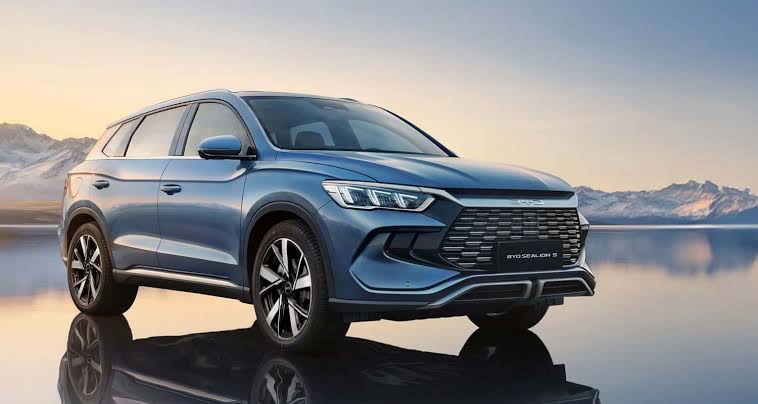
Seen Here: South Africa’s electric revolution is shifting into top gear. New-energy vehicle sales surged 84.2% in the first half of 2026, with plug-in hybrids leading the charge after an extraordinary 486.7% year-on-year increase. With 13,196 NEVs sold and electrified vehicles now accounting for 1 in every 24 new cars, South Africans are embracing a broader range of cleaner, smarter mobility options. From PHEVs and fully electric vehicles to traditional hybrids, the message from the market is clear: The future of motoring is arriving — and South Africa is getting on board. Photo Credit: Sourced
JOHANNESBURG — 26 August 2026 — South Africa’s transition towards electrified mobility is gathering serious momentum, with new-energy vehicle (NEV) sales surging by 84.2% year on year during the first half of 2026.
The biggest story, however, is the extraordinary rise of plug-in hybrid electric vehicles (PHEVs), which recorded a 486.7% increase compared with the same period in 2025.
According to sales data from the National Association of Automobile Manufacturers of South Africa (Naamsa), a total of 13,196 NEVs were sold during the first six months of the year, up sharply from the corresponding period last year.
NEVs now account for 4.2% of South Africa’s total new-vehicle market, which recorded 315,303 units during the first half of 2026.
The figures point to a market that is moving steadily beyond the early-adopter phase as consumers are presented with a growing range of electrified vehicles and powertrain options.
PHEVs emerge as the market’s growth engine
PHEVs were the standout performers, with 4,623 units sold during H1 2026.
That represents year-on-year growth of 486.7%, albeit from a relatively low base. The segment now accounts for 35% of all NEV sales in South Africa.
The rapid growth reflects the appeal of a powertrain that combines electric driving with the flexibility of an internal-combustion engine.
According to Alan Quinn, Chief Product and Innovation Officer, the combination is particularly relevant in a market where charging infrastructure is still developing.
“The fact that PHEV sales have surged by 486.7% tells us that people prefer plug-in hybrids because they can use electric power for their everyday journeys and, at the same time, depend on a combustion engine for longer trips.”
Quinn believes this flexibility is helping stimulate demand while South Africa continues to expand its charging infrastructure.
For motorists who are interested in electrification but remain concerned about charging availability on longer journeys, PHEVs offer a middle ground — allowing daily trips to be undertaken using electric power while retaining a conventional engine for extended travel.

EVs also post triple-digit growth
Battery electric vehicles (EVs) are also gaining traction.
Sales increased by 232.8% year on year, reaching 1,897 units during the first half of 2026.
EVs now represent 14.4% of South Africa’s NEV market, marking a significant increase in both volumes and market presence.
The growth comes as manufacturers continue introducing new electric models to the South African market, giving consumers more choice across different vehicle segments and price points.
The expanding model line-up could prove critical to further adoption, particularly as buyers become more familiar with electric technology and its benefits.
Hybrids remain the biggest NEV category
Despite the explosive growth of PHEVs and EVs, conventional hybrid electric vehicles (HEVs) remain the largest component of South Africa’s NEV market.
HEV sales reached 6,676 units in H1 2026, representing growth of 15% compared with the same period last year.
However, their dominance is beginning to erode.
HEVs accounted for approximately 81% of NEV sales last year, but their share has fallen to 50.6% in the first half of 2026.
The shift illustrates how rapidly the composition of South Africa’s electrified vehicle market is changing.
New brands reshape the competitive landscape
The growth in NEV sales is also being supported by an expanding group of manufacturers and models entering the South African market.
Naamsa has attributed part of the latest growth to new entrants beginning to report sales data, alongside a broader range of products becoming available to consumers.
Among the notable developments is the growing presence of Chinese automotive manufacturer BYD, which began reporting its sales to the industry in March 2026.
The brand has averaged approximately 740 units per month since beginning its reporting, adding further momentum to the NEV market.
The arrival of new manufacturers is increasing competition while simultaneously giving consumers more choice in a segment that was once dominated by a relatively small number of models.
Electrification moves towards the mainstream
For automotive marketplace Cars.co.za, the latest figures suggest South Africa’s electrification journey is entering a new phase.
“The fact that NEVs now account for one in every 17 new cars sold shows that we have moved beyond the early-adopter phase and are now entering the mainstream,” says Quinn.
The growing number of available models supports that view.
More than 50 different battery-electric vehicle models recorded sales during the first five months of 2026, highlighting the expanding breadth of the market.
Consumers are consequently no longer choosing between a handful of electric models. Instead, they are increasingly able to consider different body styles, specifications, technologies and price points.
Charging infrastructure remains key
Despite the encouraging sales figures, South Africa’s transition to electric mobility will depend on more than vehicle availability.
Charging infrastructure remains an important factor in consumer confidence, particularly for motorists considering a full EV.
The rapid growth of PHEVs highlights the role that flexibility can play while the charging network continues to develop.
For motorists who primarily undertake shorter daily journeys, the ability to drive on electric power while retaining a combustion engine for longer trips can provide a practical bridge between conventional and fully electric mobility.
As charging infrastructure expands and EV technology continues to develop, the balance between PHEVs, EVs and traditional hybrids is likely to continue changing.
A market entering a new phase
South Africa’s NEV market is still relatively small compared with the overall new-vehicle market, but its growth trajectory is becoming increasingly difficult to ignore.
With 13,196 NEVs sold in six months, electrified vehicles now account for 4.2% of all new vehicles sold in the country.
More importantly, the composition of those sales is changing rapidly.
PHEVs are surging, EVs are recording triple-digit growth, traditional hybrids remain the volume leader, and new manufacturers are bringing an expanding range of electrified products to market.
The result is a South African automotive landscape in which electrification is no longer simply a niche proposition.
The numbers suggest the electric transition has begun moving from the fringes of the market towards the mainstream — and motorists are starting to have far more choice about how they make the journey.