Standard Bank Joy of Jazz workshop to equip emerging artists with the knowledge, networks and entrepreneurial skills to turn talent into sustainable careers
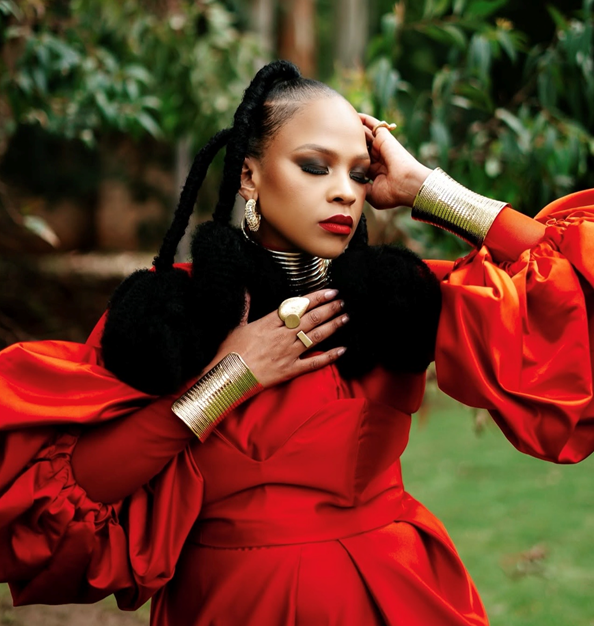
Seen Here: The next generation of South African musicians is getting more than a stage — they’re getting the knowledge, networks and industry connections to build careers that last. The Jazz Wise Youth Music Business Workshop, presented by Standard Bank Joy of Jazz, brings emerging artists face-to-face with leading voices from the music industry on 17 September at Joburg Theatre.From funding and publishing to A&R, marketing, deal-making and building sustainable careers, Jazz Wise is opening the doors to the business behind the music. Photo Credit: Supplied
JOHANNESBURG, 4 September 2026 — Talent may open the door to a career in music, but increasingly, business knowledge is what determines whether an artist can stay in the room.
That is the thinking behind Jazz Wise, a youth-focused music business platform presented by the Standard Bank Joy of Jazz festival, which will bring young musicians face-to-face with leading professionals from South Africa’s creative industry on 17 September 2026.
Hosted at the Joburg Theatre in Braamfontein from 09:00 to 16:30, the Jazz Wise Youth Music Business Workshop is designed to equip aspiring musicians with practical knowledge, industry connections and entrepreneurial skills that can help transform artistic talent into sustainable careers.
The initiative recognises that succeeding in music requires far more than performance ability. Emerging artists increasingly need to understand songwriting, A&R, recording, publishing, marketing, investment, funding and long-term sustainability.
For Standard Bank, that business mindset is central to building a stronger creative economy.
Turning talent into enterprise
Jazz Wise has been designed as a platform where young musicians can learn directly from people who understand the realities of the music business.
The workshop will feature a series of expert-led panels exploring some of the most important questions facing emerging artists — from who funds creative work to whether talent alone is enough to build an international career.
The programme will be facilitated by Pilani Bubu, the SAMA award-winning singer, television presenter and creative entrepreneur and producer of the Folklore Festival.
Bubu brings extensive experience in brand building, budgeting, grant applications, deal-making and artist production to the workshop.
The first panel, “Risk Capital for Culture”, will tackle the question: “Who funds what?”
The discussion will bring together Violet Maila, who leads the Music in Africa Foundation’s South African operations and the Music in Africa Live tour grant programme; Dorine Lebreton, Deputy Director at the French Institute of South Africa (IFAS); and Caroline Christgau, Project Coordinator for Music and Creative Economy at Goethe-Institut Johannesburg.
Their combined experience spans artist development, cultural management, international touring, grants, residencies and cross-border creative collaborations — giving young musicians an opportunity to better understand the funding ecosystem available to them.
Is talent alone enough?
The second panel, “From Classrooms to the Global Stage”, will confront another fundamental question: “Can talent alone hold it down?”
The panel features jazz pianist, educator and musicologist Dr Phuti Sepuru, composer, arranger, bassist, vocalist, arts researcher and lecturer Chantal-Willie Petersen, Croatian-born South African-based jazz vocalist and composer Ziza Muftic, and guitarist and Standard Bank Young Artist Award winner for Jazz Vuma Levin.
The conversation is expected to explore the gap between developing artistic talent and building a viable professional career — and the additional skills musicians need to move from education and performance opportunities into the global music industry.
Staying true to the art — and getting paid
The final panel, “Purpose Value Versus Industry Value”, asks perhaps the most difficult question of all:
“Can you stay true to your why and still get paid?”
Hosted by drummer, author and academic Tumi Mogorosi, the discussion brings together artists and industry specialists with very different perspectives on independence, commercial value and sustainability.
Among them is young singer-songwriter Internet Athi, whose music has surpassed one million streams while remaining independent of a record label.
She will be joined by Ndumiso Manana, musician, producer, founder of Manana Music and the 2026 Standard Bank Young Artist for Music, as well as Nontando Mokoena, Project Manager for the SAMPRA Development Fund at the South African Music Performance Rights Association.
The panel is set to explore how artists can protect their creative identity while developing commercially sustainable careers in an industry where streaming, intellectual property, rights management and multiple revenue streams are increasingly important.
Knowledge is the new currency
For Mantwa Chinoamadi, CEO and curator of the Joy of Jazz festival, the workshop is ultimately about giving young people access to spaces and networks that can accelerate their careers.
“Empowerment is access. When young musicians and students step into spaces like Jazz Wise, they must leave with more than inspiration — they must leave with industry knowledge, real networks, and the confidence to turn talent into enterprise,” says Chinoamadi.
“Our job is to open the doors, bring the right people into the room, and ensure the next generation doesn’t just watch the industry — they lead it.”
That emphasis on access is particularly significant in an industry where relationships, information and networks can often determine who gets opportunities.
For young musicians, understanding how to approach funders, protect intellectual property, negotiate deals, build audiences and position a personal brand can be as important as mastering an instrument.
Investing in Africa’s creative economy
Bonga Sebesho, Standard Bank Group Head of Sponsorship, says Jazz Wise forms part of the bank’s broader commitment to investing in young African talent.
“Jazz Wise reflects Standard Bank’s commitment to driving Africa’s growth by investing in the next generation of creative talent,” says Sebesho.
“The workshop empowers young people with the knowledge, networks and entrepreneurial skills needed to navigate the music industry, grow sustainable careers from their craft, and contribute meaningfully to the future of South Africa’s creative economy.”
The workshop will also provide an avenue for recruiting interns for the year, extending its role beyond a single day of learning and creating potential pathways into the industry for participating young people.
The programme is open to high school students, university students and young professionals, making it relevant to emerging musicians at different stages of their development.
Building the next generation of music entrepreneurs
The Jazz Wise initiative comes at a time when the boundaries between musician, entrepreneur, content creator, producer and business owner are increasingly blurred.
An artist can be a performer, songwriter, publisher, brand, intellectual-property owner and business entity at the same time.
Understanding how those different elements connect is becoming essential for anyone seeking a sustainable career in music.
That is the space Jazz Wise is seeking to occupy: not simply inspiring the next generation of musicians, but giving them the tools to understand the business behind their artistry.
The Jazz Wise Youth Music Business Workshop takes place on Thursday, 17 September 2026, at the Joburg Theatre in Braamfontein, from 09:00 to 16:30.
The 2026 Standard Bank Joy of Jazz itself will continue as a broader cultural and economic platform, with tickets priced at R1 150 for a Friday/Saturday General Admission Day Pass and R2 250 for a Weekend Pass. Standard Bank cardholders qualify for up to 15% off, subject to the applicable terms and availability.
At its heart, however, Jazz Wise carries a message that extends well beyond jazz:
Talent can create attention. Knowledge creates leverage. And when young artists learn how to turn their creativity into enterprise, music becomes not just a career — but an engine for economic opportunity.