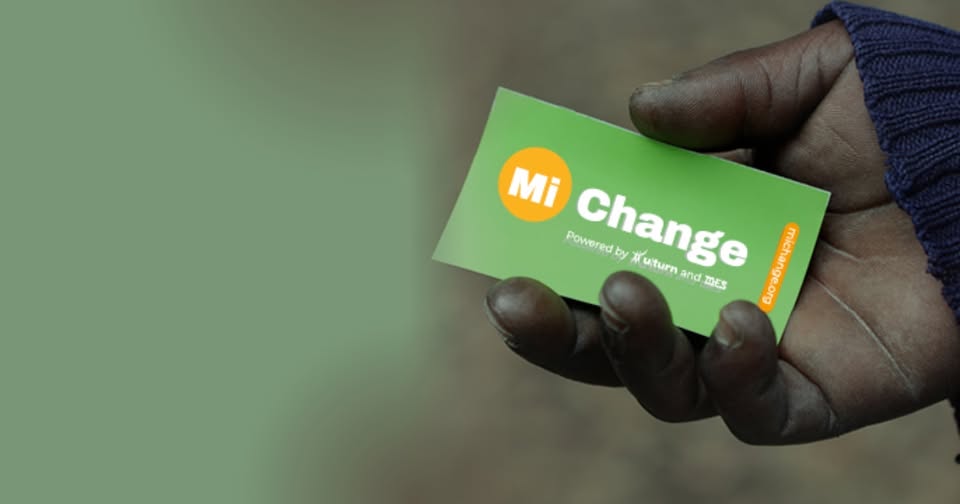
Seen Here: A small gesture. A human connection. A door to new possibilities. Mi-Change has officially launched in Johannesburg, transforming everyday generosity into meaningful support for people experiencing homelessness. Through a simple QR code and a R15 digital voucher, donors can help someone access a meal, a shower, clean clothes or a safe place to sleep. Powered by U-turn Homeless Ministries and MES, with support from the Citi Foundation, the initiative places dignity, compassion and practical action at the heart of creating change. Photo Credit: Sourced
JOHANNESBURG, 13 OCTOBER 2026 — A simple QR code could help change how Johannesburg responds to homelessness, connecting everyday generosity with access to essential services and a pathway towards rebuilding lives.
The Mi-Change digital voucher initiative is now live in Johannesburg, offering residents a practical way to support people experiencing homelessness through cashless donations that can be redeemed for meals, showers, clothing and safe places to sleep.
Implemented through U-turn Homeless Ministries and MES Mould Empower Serve, the initiative is supported by a US$500,000 (approximately R8.2 million) grant from the Citi Foundation, awarded through its US$25-million Global Innovation Challenge, which supports community-led solutions to homelessness around the world.
Launched on 13 October at the MES BG Centre in Hillbrow, the Johannesburg rollout introduces a digital giving model designed to connect donors directly with established organisations providing services and support to people in vulnerable circumstances.
At its heart is a shift in how people can help: making generosity accessible, transparent and connected to practical assistance, while placing dignity and the possibility of long-term change at the centre of the response to homelessness.
Turning everyday generosity into practical support
Mi-Change uses a digital voucher system powered by SnapScan, a familiar payment platform that allows members of the public to contribute without needing to carry cash.
Each voucher costs R15 and is purchased by scanning a QR code linked to a registered participant. The voucher can then be redeemed for essential services at U-turn service centres and MES Centres of Hope across Johannesburg.
These services include a meal, a shower, clean clothing or a safe place to sleep.
The model offers donors a direct and accessible way to help while connecting recipients with organisations equipped to provide support beyond an immediate need.
Jonathan Hopkins, Chief Strategy Officer at U-turn Homeless Ministries, said the launch represented an important moment for Johannesburg.
“This is a moment that carries real weight for Joburg. It puts a spotlight on homelessness in the city, while giving donors a simple, trusted way to act on it.”
Hopkins said using SnapScan helps make the process straightforward.
“The vouchers use SnapScan, a platform people already know, so there’s no learning curve and no hesitation — just the chance to give in a way that is direct, with every donation connecting an individual to support and an opportunity for change,” he said.
From a voucher to a fresh start
The impact of Mi-Change is perhaps most powerfully illustrated by people who have experienced homelessness themselves.
At the Johannesburg launch, Dylon Jordaan, who was once homeless and now works for Mi-Change, shared how receiving a voucher helped him access support during a difficult period in his life.
“There were days I’d wash taxis for small change, just to get through the next few hours,” Jordaan said.
He recalled a rainy day when he was cold, hungry and unable to earn money washing taxis. A friend gave him a Mi-Change voucher, providing access to help when he needed it most.
“ It opened a door — to dignity, and to a community of people who believed I could change, at a time when I couldn’t see that in myself,” he said.
For Jordaan, the initiative represents more than a way to meet immediate needs. It creates an opportunity for people to connect with services and begin taking steps towards a different future.
“Johannesburg needs that same door for so many more people. This isn’t about a handout; it’s about giving someone a reason to take the next step,” he said.
His experience highlights an important dimension of the project: practical assistance can serve as an entry point to broader support, particularly when it is delivered through organisations that understand the complex realities of homelessness.
Citi Foundation backs community-led solutions
The initiative also reflects the growing role of technology and community partnerships in addressing complex social challenges.
André Ross, Chief Executive Officer of Citi South Africa, said homelessness required a response that recognised both immediate needs and the importance of longer-term support.
“Homelessness is one of Johannesburg’s most difficult social challenges, and there is no single or simple solution.”
Ross said Mi-Change provides a practical way for people to contribute while connecting those in need with organisations capable of offering meaningful assistance.
“What I like about Mi-Change is that it gives people a practical and transparent way to help, while connecting those in need to organisations that can provide meaningful support,” he said.
“It brings together technology, community participation and, importantly, human dignity. That potential to create sustainable change is exactly what the Citi Foundation is proud to support.”
The grant forms part of the Citi Foundation’s Global Innovation Challenge, which backs organisations developing community-led responses to homelessness.
By supporting Mi-Change, the initiative brings together digital payments, established service providers and public participation in an effort to make assistance more accessible and better connected to existing support systems.
Building on lessons from Cape Town
Johannesburg is the latest city to benefit from the Mi-Change model, following its implementation in Cape Town.
According to the initiative, more than 12,000 vouchers were redeemed in Cape Town during its first three months, demonstrating the potential of small, digitally enabled contributions to support essential services at scale.
The Johannesburg rollout builds on that experience, introducing the model to a city where homelessness remains a significant social challenge.
The launch event at the MES BG Centre in Hillbrow included interactive demonstrations showing attendees how a QR code scan could translate into access to services on the ground.
A panel discussion involving representatives from Mi-Change, U-turn, MES and the Citi Foundation explored the implications of the rollout and the role partnerships can play in strengthening the response to homelessness.
A citywide invitation to give differently
Mi-Change invites Johannesburg residents to look out for its lanyards, scan the QR code and purchase a voucher for someone who needs assistance.
The R15 contribution can provide access to a basic service, while also connecting the recipient with organisations that can offer further support.
The approach does not suggest that a single voucher can resolve homelessness. Rather, it creates a straightforward way for the public to participate in a broader response by supporting practical services and the organisations delivering them.
In a city where acts of generosity often happen spontaneously, Mi-Change offers a way to connect that impulse with established support systems and a clearer route to assistance.
The idea is simple, but its potential is significant: turn a moment of generosity into practical support, protect dignity and help open a door to a different future.
As Mi-Change expands into Johannesburg, the invitation is for residents, businesses and communities to become part of that effort — one scan, one voucher and one meaningful act of support at a time.
Because changing how a city gives can help change what becomes possible for the people who need it most.
Discover how to get involved: https://michange.org
#MiChange #Johannesburg #HomelessnessSupport #HumanDignity #CommunityImpact #CitiFoundation #UTurn #MES #SocialInnovation