

The transition from secondary school to tertiary education demands more than good grades, with critical thinking, independence and adaptability emerging as essential skills for success in university and the workplace.
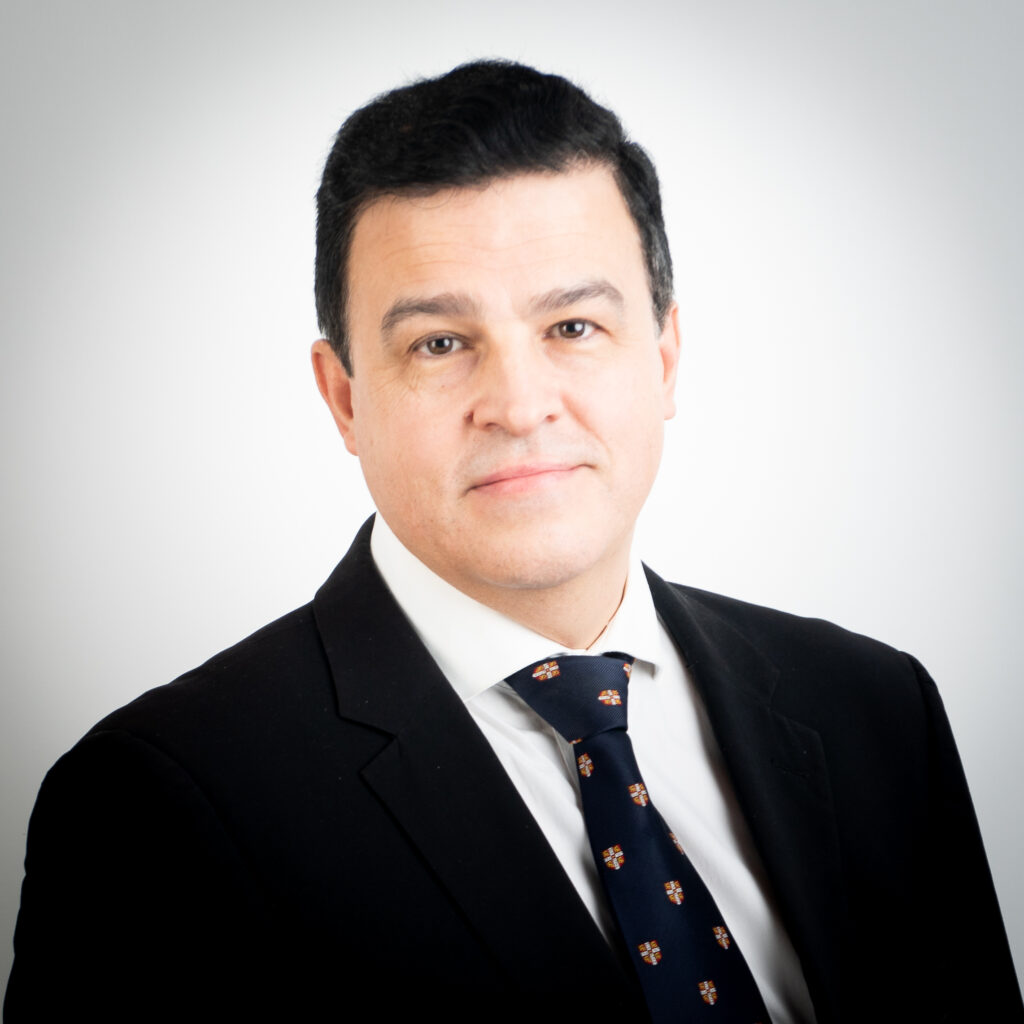
Seen Here: As tertiary education becomes increasingly competitive and the world of work continues to evolve, learners need more than academic knowledge — they need the ability to think critically, work independently, solve problems and adapt with confidence. For Juan Visser, Regional Director for Sub-Saharan Africa, International Education at Cambridge University Press & Assessment, the foundations for lifelong success must be built long before students enter the lecture hall. Photo Credit: Supplied
The journey from the classroom to the lecture hall is one of the most consequential transitions in a young person’s education.
For school leavers, entering tertiary education often means leaving behind the highly structured environment of secondary school and stepping into a world where independence is expected. Students must manage their own time, conduct research, interrogate evidence, formulate arguments and participate confidently in academic discussions.
For educators, the challenge therefore extends beyond helping learners secure admission to university. Increasingly, the priority is ensuring that students are academically and intellectually prepared to thrive once they get there.
According to Juan Visser, Regional Director for Sub-Saharan Africa, International Education at Cambridge University Press & Assessment, the foundations for tertiary success need to be established well before students arrive on campus.
“The challenge for educators is not simply how to help students gain university admission, but how to ensure they are equipped to succeed once there,” says Visser.
A growing higher education challenge
The need for effective preparation is becoming more urgent as access to tertiary education expands globally.
UNESCO data indicates that approximately 264 million students are currently enrolled in higher education worldwide — more than double the number recorded at the turn of the century.
The growth reflects the increasingly important role higher education plays in widening access to opportunity, supporting economic mobility and developing the skills required to drive future economic growth.
But increased access does not necessarily guarantee preparedness.
Research by the Council for Aid to Education and the OECD suggests that approximately 57% of students entering tertiary education are not proficient in critical thinking and written communication.
The finding highlights a significant challenge for education systems: students may successfully navigate the admissions process, yet arrive at university without some of the intellectual and academic habits required to succeed.
The implication is clear — preparation for higher-level learning cannot begin at university.
It must start much earlier.
Rethinking what success at school looks like
For decades, academic achievement has often been closely associated with examination performance and the ability to retain and reproduce information.
But the demands of tertiary education — and an increasingly complex labour market — are shifting the definition of what it means to be prepared.
Students need to be able to analyse information rather than simply absorb it, question assumptions rather than accept them, and construct evidence-based arguments rather than rely on memorised responses.
This places secondary schools at the centre of the conversation about tertiary readiness.
International curricula such as Cambridge IGCSE and Cambridge International AS & A Levels provide one example of an approach designed to develop these capabilities alongside subject knowledge.
The emphasis is not only on what students learn, but also on how they learn.
At IGCSE level, learners are introduced to structured enquiry through analytical reading, problem-solving and evidence-based reasoning across a broad range of subjects. As they progress to AS and A Levels, those foundations are developed further, with students expected to evaluate different perspectives, synthesise information and communicate ideas clearly.
The objective is to move learners beyond simply knowing the answer to understanding how to arrive at a reasoned conclusion.
Building independent thinkers
One of the most important differences between school and university is the degree of independence expected from students.
At university, learners are generally responsible for managing their schedules, keeping up with academic requirements, navigating research resources and monitoring their own progress.
For students who have not developed these habits before arriving on campus, the sudden increase in responsibility can be difficult to navigate.
Developing independent learning during secondary education can therefore provide a critical advantage.
Research from Cambridge University Press & Assessment’s International Education group, published in Preparing Learners to Thrive in a Changing World, reinforces the importance of these capabilities.
The research found that students and teachers regard self-management skills as vital to future success, while also identifying them among the most challenging skills to teach and learn.
From managing time and maintaining focus to working independently and adapting to change, these capabilities are increasingly important not only in higher education but throughout a person’s professional life.
The university preparation that extends into the workplace
The argument for developing these skills is strengthened by the changing nature of employment.
The World Economic Forum’s Future of Jobs Report 2025 identifies analytical thinking and flexibility among the most critical skills for the modern workforce.
That means the capabilities students develop while preparing for university can ultimately influence their ability to navigate the workplace, respond to disruption and identify new opportunities.
Education, in this context, cannot simply be about preparing young people to pass their next examination.
It must prepare them to learn continuously.
The ability to investigate a problem, distinguish reliable information from weak evidence, communicate an argument, work independently and adapt when circumstances change can be applied across virtually every career and professional environment.
Global qualifications, local opportunities
For learners considering an international curriculum, globally recognised qualifications can also offer greater flexibility in determining where their education takes them.
Cambridge International AS & A Levels are recognised through established admission processes by universities in countries including South Africa, Ghana and Nigeria.
This means students can pursue a globally benchmarked secondary qualification while retaining the option of studying at universities in their home countries.
For young people, that flexibility can be significant.
It creates a pathway that does not force students to choose between local opportunities and international ambitions.
The success of learners following Cambridge programmes is also reflected in the annual Outstanding Cambridge Learner Awards, which recognise exceptional achievement in Cambridge assessments across more than 40 countries.
South African learners are among those recognised through the awards, demonstrating that high academic performance can coexist with the development of critical thinking and the ability to perform under internationally benchmarked conditions.
Preparing learners for an unpredictable future
Ultimately, the transition from school to tertiary education is about much more than changing classrooms.
It represents a shift from guided learning towards greater intellectual independence — and from acquiring knowledge towards applying it.
For schools, that makes the development of future-ready capabilities an increasingly important part of the educational journey.
Whether a learner ultimately pursues a university degree, professional qualification, entrepreneurial venture or vocational career, the ability to think critically, manage responsibilities, communicate effectively and adapt to new circumstances will remain valuable.
Visser argues that the ultimate purpose of education should therefore extend beyond university admission.
The strongest education systems are not simply producing students who know more. They are developing young people who know how to learn, how to think and how to adapt.
By the time learners complete their secondary education, those capabilities may prove to be among the most important qualifications they carry with them — providing a foundation not only for tertiary success, but for lifelong learning and meaningful participation in a rapidly changing world.


