By: Lonwabo Mtyeku | Photo Credit: Supplied
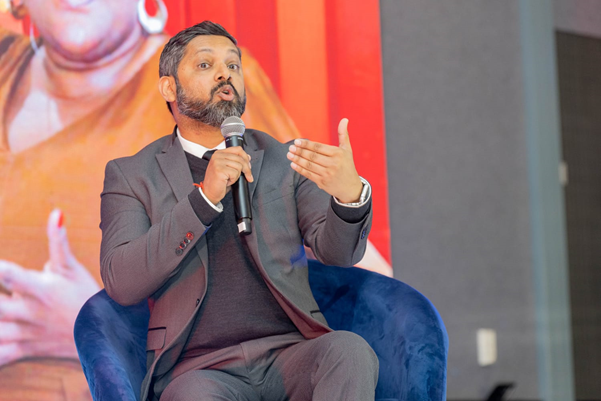
Seen Here: Speaking at the Frank Dialogue, CHIETA CEO Yershen Pillay called for a bold reimagining of education—one that equips young people with future-ready skills in artificial intelligence, digital technologies, entrepreneurship and the green economy. Photo Credit: Supplied
Sandton, Johannesburg — South Africa’s education system must undergo a fundamental transformation if it is to prepare citizens for an increasingly digital, technology-driven and environmentally conscious economy. That was the message delivered by Chemical Industries Education and Training Authority (CHIETA) Chief Executive Officer, Yershen Pillay, during the prestigious Frank Dialogue hosted by acclaimed broadcaster and academic Professor JJ Tabane in Sandton.
Speaking during a high-level panel discussion themed “Reflection on the Future of Education and Skills,” Pillay joined an influential lineup of thought leaders, including former Statistician-General Dr Pali Lehohla, TeachSA Co-founder and Emshukantambo Secondary School Principal Richard Masemola, and Bellamont Energy Holdings CEO Sandile Khoza, to explore how South Africa can better position itself for the future of work.
Education Must Lead Employment, Not Just Graduation
Pillay argued that South Africa can no longer measure educational success solely by qualifications earned, but by graduates’ ability to secure meaningful employment, adapt to changing industries and contribute to economic growth.
He highlighted one of the country’s most persistent challenges: young graduates are frequently expected to possess workplace experience before they can access employment opportunities.
“Education must prepare people for work, not simply prepare them to graduate,” Pillay said.
He emphasised the need for stronger collaboration between education institutions and industry to ensure learners gain practical workplace exposure alongside academic qualifications. According to Pillay, experiential learning, apprenticeships and work-integrated learning should become standard components of the country’s education system.
Future Skills Must Become Today’s Curriculum
With artificial intelligence, automation and digital technologies rapidly reshaping industries worldwide, Pillay stressed that South Africa’s curriculum must evolve just as quickly.
He called for greater investment in teaching critical future-focused competencies, including:
- Artificial Intelligence (AI)
- Data Science
- Digital Literacy
- Technical and Vocational Skills
- Green Economy Skills
- Entrepreneurship
Rather than preparing learners for a single lifelong profession, Pillay advocated for an education model that develops adaptable, lifelong learners capable of navigating multiple careers throughout their working lives.
Green Economy Presents Historic Opportunity
Pillay identified the green economy as one of South Africa’s greatest opportunities for inclusive economic growth and job creation.
He pointed to emerging sectors such as green hydrogen, renewable energy and sustainable manufacturing as industries capable of creating thousands of new employment opportunities.
However, he cautioned that the country must invest proactively in developing the specialised skills these industries will require if South Africans are to benefit from the transition to a low-carbon economy.
Technology Should Democratise Opportunity
While acknowledging the transformative potential of artificial intelligence and digital innovation, Pillay warned that technological advancement must not deepen existing inequalities.
He called for increased investment in digital infrastructure, affordable connectivity and access to modern learning technologies, particularly in rural communities and historically underserved areas.
Without equitable access, he argued, the digital revolution risks leaving millions of South Africans behind.
Entrepreneurship Must Become a Core Educational Outcome
Pillay also challenged the traditional view that education exists solely to prepare people for employment.
Instead, he said schools, colleges and universities should actively cultivate entrepreneurs capable of creating businesses, generating employment and driving economic development.
“Education should empower young people not only to seek jobs, but also to create them,” he noted.
CHIETA Turning Vision into Reality
Pillay highlighted CHIETA’s growing network of nine Smart Skills Centres across South Africa as a practical example of how future-ready education can be delivered.
Designed to bridge the country’s digital divide, the centres provide free access to internet-enabled workstations, accredited digital learning programmes, virtual reality and robotics training, smart boardrooms, innovation hubs, entrepreneurship support and collaborative workspaces for SMMEs and cooperatives.
Community members are also able to search and apply for jobs, prepare professional CVs, attend virtual interviews and access online learning opportunities using the facilities.
According to Pillay, these centres demonstrate how strategic partnerships between government, industry and educational institutions can equip communities with practical skills for careers in artificial intelligence, advanced manufacturing, renewable energy and other emerging sectors.
Building a Competitive South Africa
Closing the discussion, Pillay reaffirmed CHIETA’s commitment to building a responsive skills development ecosystem that aligns education with industry demand through workplace-based learning, strategic partnerships and programmes focused on future industries.
The Frank Dialogue reinforced a growing consensus among education and industry leaders that South Africa’s future competitiveness will depend on producing digitally capable, entrepreneurial and adaptable citizens.
As technology continues to reshape the global economy, ensuring every South African has access to future-ready skills will be essential not only for reducing unemployment but also for driving inclusive economic growth and positioning the country to compete on the world stage.