

By: Lonwabo Mtyeku | Photo Credit: Supplied
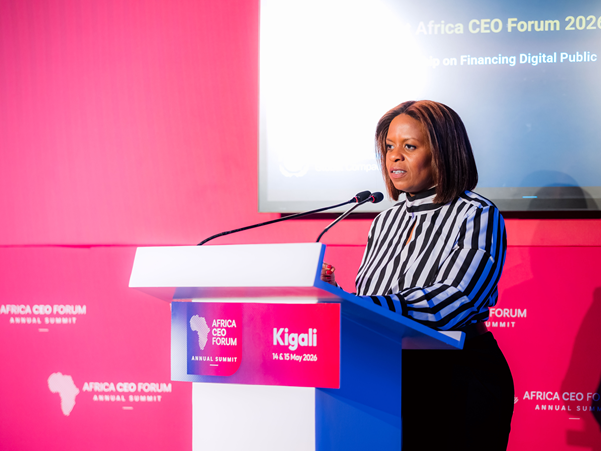
Seen Here: Addressing delegates at the GABI Solutions Lab, Sanda Ojiambo emphasized that Africa’s greatest challenge is not a lack of innovative ideas but the ability to execute and scale them effectively. Photo Credit: Supplied
KIGALI, RWANDA — Africa’s drive toward digital and health transformation received renewed momentum this month as the Global Africa Business Initiative (GABI) intensified efforts to convert bold ideas into tangible outcomes, bringing together some of the continent’s most influential business leaders, policymakers and investors to address the barriers slowing economic progress.
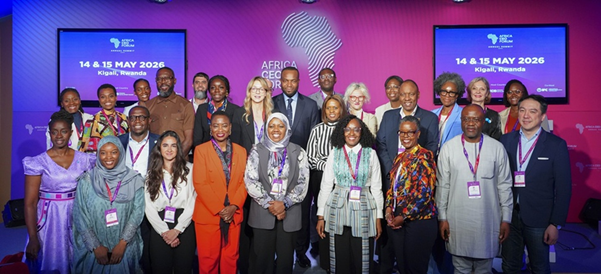
Meeting on the sidelines of the Africa CEO Forum in Kigali on 15 May, the GABI Solutions Lab focused on accelerating the implementation of the organisation’s newly launched Digital and Health Action Pathways. The high-level gathering challenged participants to develop practical, finance-ready solutions capable of unlocking large-scale development across the continent.
The initiative comes at a pivotal moment for Africa as governments and private sector leaders seek to harness the transformative potential of artificial intelligence, digital infrastructure and healthcare innovation while overcoming longstanding challenges related to financing, connectivity and implementation.
“Africa does not face a shortage of ideas, but a significant gap in execution and the financing required to scale solutions,” said Sanda Ojiambo, Assistant Secretary-General and CEO of the United Nations Global Compact.
“The GABI Solutions Lab was a focused working session where public and private sector leaders co-developed practical solutions, structured bankable partnerships and unlocked viable financing pathways that can be advanced immediately. The aim is to ensure that commitments are translated into measurable, real-world outcomes at scale.”
The Digital Transformation and Health Action Pathways were first launched during GABI’s flagship Unstoppable Africa summit in September 2025, bringing together African and global stakeholders committed to moving from policy discussions to measurable delivery.
In Kigali, the two pathways were interconnected through a practical exploration of digital health solutions, using the sector as a test case for attracting private investment into critical public infrastructure projects.
Participants examined key challenges including expanding digital public infrastructure, increasing internet connectivity, developing digital skills and strengthening governance frameworks to ensure artificial intelligence becomes a catalyst for sustainable development rather than a source of widening inequality.
A major theme emerging from the discussions was the urgent need to accelerate the adoption of proven technologies across African markets.
Caitlin Burton, Chief Executive Officer of Rwanda-based AI and robotics company Zipline Africa, argued that Africa must move beyond pilot projects and embrace large-scale implementation.
“Across much of Africa, adoption is still moving at the pace of traditional aid cycles and public sector implementation timelines rather than the speed of modern technology deployment,” Burton said.
“We need financing models, incentives, accountability mechanisms and partnerships that can collapse the adoption timeline for proven infrastructure from decades to years and create greater urgency for action.”
The conversation also highlighted the growing importance of sovereign AI infrastructure and local data ecosystems in supporting Africa’s digital future.
Kate Kallot, Founder and CEO of Kenyan data infrastructure company Amini, stressed that many African innovators still lack access to the digital tools and infrastructure required to build solutions tailored to local realities.
“The lack of data is a symptom of a much larger digital divide, including limited connectivity and infrastructure gaps,” Kallot explained.
“The challenge now is how to deploy financing models for sovereign digital infrastructure at scale, across multiple markets, in a way that delivers real capability into the hands of governments and citizens within the next 12 months.”
Nigeria’s Federal Minister of Communications and Digital Economy, Bosun Tijani, underscored the importance of building the foundational systems necessary to fully benefit from the AI revolution.
“Without meaningful connectivity, skilled people and governance systems that can support adoption at scale, we risk falling further behind,” Tijani said.
“The real challenge is not whether Africa will adopt AI, but whether we have built the absorptive capacity required to use it to transform our economies and key sectors.”
The Solutions Lab attracted senior executives and decision-makers from leading institutions including Afreximbank, Ecobank, McKinsey, ServiceNow, Safaricom, the Aig-Imoukhuede Foundation, PMI, mPedigree and various United Nations agencies, reflecting growing international interest in Africa’s economic transformation agenda.
Now entering its fifth year, the Global Africa Business Initiative has established itself as a key platform connecting business leaders, policymakers and investors around a shared vision for Africa’s development. The organisation promotes a model in which public-sector ambition is aligned with private-sector capital to unlock sustainable growth opportunities across the continent.
As Africa navigates an increasingly digital global economy, the outcomes of initiatives such as the GABI Solutions Lab may prove critical in determining how quickly the continent can translate innovation into inclusive growth, competitive industries and improved quality of life for millions of people.
The next chapter of that conversation will unfold in New York when GABI hosts its flagship Unstoppable Africa summit on 20-21 September, bringing global attention to the continent’s growing role in shaping the future of business, technology and development.