By: Lonwabo Mtyeku | Photo Credit: Community Newsroom
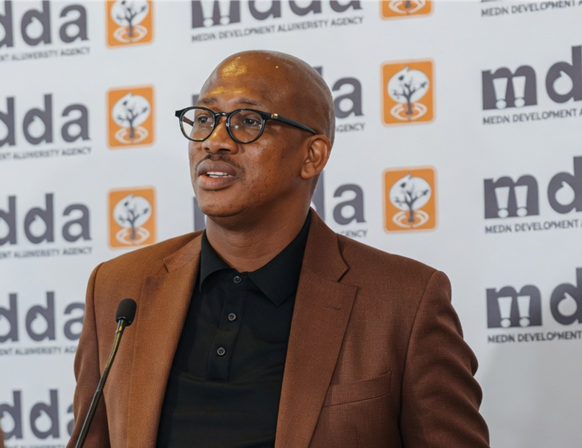
Seen Here: Deputy Minister Kenny Morolong joined stakeholders at the MDDA Funders Breakfast, reinforcing government’s commitment to strengthening community media sustainability, expanding funding partnerships, and accelerating the growth and transformation of South Africa’s grassroots information ecosystem. Photo Credit: Community Newsroom
The Media Development and Diversity Agency (MDDA) recently hosted a high-level Funders Breakfast aimed at strengthening partnerships between development funders, government stakeholders, and private sector institutions to support the long-term sustainability of South Africa’s community media sector.
The engagement formed part of the MDDA’s broader mandate to promote media development, diversity, and access to information, particularly within historically underserved communities. It also served as a strategic platform for dialogue on how funding models can be reimagined to better support community broadcasters, independent publishers, and small commercial media enterprises operating at grassroots level.
A critical sector under pressure
South Africa’s community media sector continues to play a vital role in strengthening local democracy, amplifying marginalised voices, and providing hyperlocal news and information. However, the sector remains under significant financial pressure.
Many community radio stations, print publications, and digital platforms struggle with limited advertising revenue, outdated infrastructure, and growing operational costs. In addition, the rapid shift in audience behaviour toward digital platforms has further disrupted traditional revenue streams.
Against this backdrop, the MDDA Funders Breakfast sought to create a structured environment where stakeholders could openly discuss solutions to these systemic challenges and explore sustainable funding pathways.
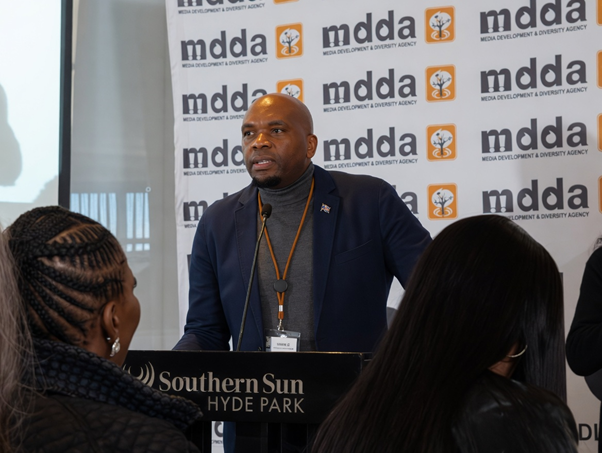
Convening key ecosystem stakeholders
The breakfast brought together a diverse mix of stakeholders, including development finance institutions, corporate social investment (CSI) representatives, media owners, policy actors, and sector support organisations. The objective was to foster stronger coordination between funders and to align investment strategies with the real needs of community media operators.
Participants engaged in discussions centred on improving funding efficiency, reducing duplication of efforts, and ensuring that support reaches media entities that operate in rural, township, and peri-urban areas—often the most underserved in the country.
A recurring theme throughout the engagement was the need to move beyond fragmented, short-term grant funding approaches and instead develop long-term, structured investment frameworks that allow media organisations to plan, grow, and innovate sustainably.

Reimagining funding models for sustainability
One of the key focus areas of the discussion was the exploration of alternative financing mechanisms. Stakeholders highlighted the importance of blended finance models, where public funds, private capital, and development grants are combined to unlock greater impact.
There was also strong interest in supporting media enterprises through capacity-building initiatives that extend beyond financial assistance. These include training in digital transformation, business model development, audience monetisation strategies, and governance improvement.
Participants noted that many community media organisations are not only content creators but also small businesses that require robust operational systems to remain viable. As such, funding strategies must be holistic, addressing both financial and technical sustainability.
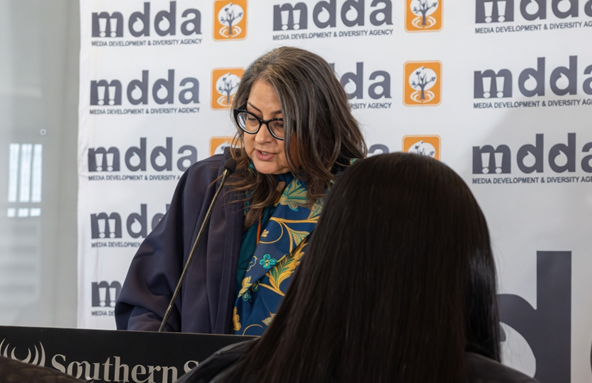
MDDA’s role in media transformation
As the lead public entity responsible for promoting media development in South Africa, the MDDA reaffirmed its commitment to building a more inclusive and diverse media environment.
The agency continues to prioritise support for historically disadvantaged media owners and practitioners, particularly those operating in communities that have traditionally been excluded from mainstream media ownership and participation.
Through its programmes, the MDDA provides grants, training, and strategic partnerships aimed at strengthening institutional capacity and improving the quality and reach of community media outputs.
During the Funders Breakfast, the MDDA emphasised that collaboration remains central to its strategy. The agency cannot achieve its mandate alone and relies heavily on partnerships with both public and private sector stakeholders to scale impact.
The importance of community media in democracy
Speakers at the engagement underscored the critical role of community media in South Africa’s democratic landscape. Unlike national broadcasters and large commercial publishers, community media outlets are deeply embedded in local contexts, making them uniquely positioned to reflect the voices, concerns, and realities of ordinary citizens.
These platforms often serve as the first point of access to information in rural and underserved areas, providing news on local governance, service delivery, education, health, and community development.
In many instances, community media also plays an educational role, helping citizens understand their rights and responsibilities while fostering civic participation.
Stakeholders at the breakfast agreed that strengthening this sector is not only an economic priority but also a democratic imperative.
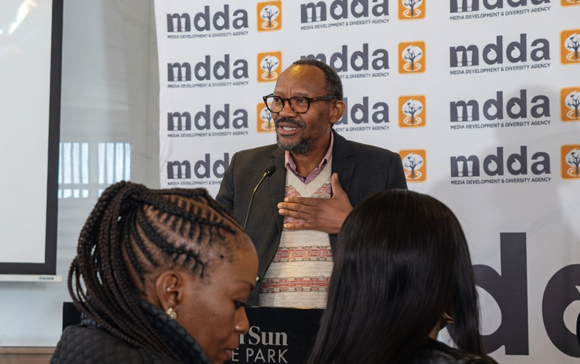
Digital transformation and future readiness
Another key area of discussion was the urgent need for digital transformation within the community media space. As audiences increasingly consume content through mobile devices and online platforms, traditional media outlets must adapt to remain relevant.
However, many community media organisations lack the resources and technical expertise required to transition effectively into the digital age. This includes challenges related to content distribution, monetisation, data analytics, and platform management.
Funders at the engagement expressed interest in supporting digital migration initiatives, including infrastructure upgrades, content digitisation, and skills development programmes tailored to the needs of small media entities.
There was also recognition that digital transformation should not widen the gap between well-resourced media organisations and smaller community-based outlets. Instead, it should be leveraged as a tool for inclusion and growth.
Toward coordinated investment and impact
A key outcome of the Funders Breakfast was the shared commitment to improve coordination among funding partners. Stakeholders acknowledged that fragmented funding approaches often lead to inefficiencies and limited impact.
By aligning funding strategies, sharing information, and identifying common priorities, participants believe it is possible to create a more cohesive support ecosystem for community media.
The MDDA also encouraged funders to consider long-term impact when designing support programmes, rather than focusing solely on short-term outputs. This includes investing in organisational resilience, leadership development, and sustainable revenue generation models.
Looking ahead
The Funders Breakfast concluded with a strong sense of optimism about the future of South Africa’s community media sector, despite the challenges it faces. Stakeholders agreed that with the right mix of funding, collaboration, and innovation, the sector can be strengthened to better serve communities and contribute meaningfully to the country’s information ecosystem.
The MDDA reiterated its commitment to continuing these engagements and expanding partnerships that will ensure community media not only survives but thrives in an increasingly complex and digital media environment.
As South Africa continues to navigate economic pressures and rapid technological change, initiatives such as the MDDA Funders Breakfast are expected to play a crucial role in shaping a more inclusive, sustainable, and resilient media landscape for the future.