Anniversary activation brings the city’s stories to life along Johannesburg’s Walkable Network
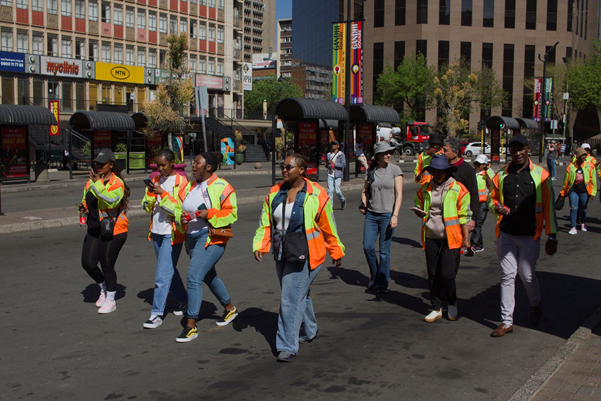
Seen Here: Thirty years of shaping Johannesburg — one person, one place and one story at a time. The Johannesburg Inner City Partnership (JICP) celebrates three decades by putting the spotlight where it belongs: on the people who live, work and contribute to the city’s regeneration. Through its anniversary walk along the Walkable Network, participants shared the places that hold meaning for them, while photographers captured the human stories behind Johannesburg’s changing landscape. From livelihoods and skills to greener public spaces, JICP’s 30-year journey is ultimately a story about people—and the city they continue to build together. Photo Credit: Mark Straw
JOHANNESBURG — Johannesburg is a city defined not only by its skyline, streets and public spaces, but by the people who live, work and build their lives within them.
That human story is at the heart of the Johannesburg Inner City Partnership (JICP) as it marks 30 years of work in the city, using its anniversary to spotlight the people and places that continue to shape Johannesburg’s inner city.
The first anniversary activation brought JICP, its partners and the Joburg Photowalkers together for a walk through the Inner City, offering a street-level experience of the Walkable Network and the people connected to it.
Rather than simply reflecting on three decades of work, the activation placed people at the centre of the anniversary narrative.
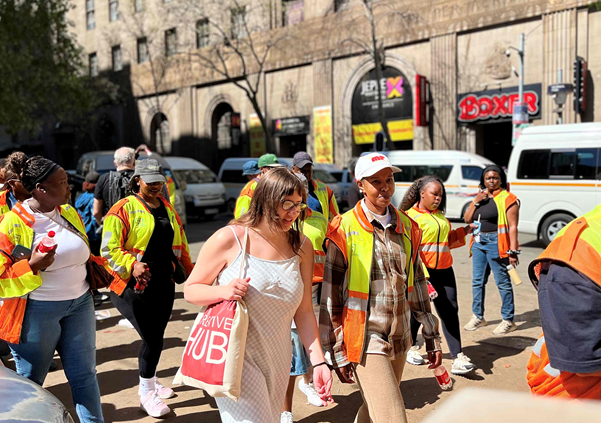
Seen Here: Johannesburg, told through the people who call it home. Photo Credit: Thusi Vukani
Thirty Years, Told Through People
Among those taking part were Inner City residents who were previously unemployed and are now employed through JICP programmes.
There was an added significance to their participation: they, like JICP, turn 30 this year.
Each participant selected a place in the Inner City that carries personal meaning and shared memories, experiences and hopes for Johannesburg.
As they walked through familiar streets and public spaces, Joburg Photowalkers documented the people and places surrounding them, capturing moments that reflect the relationship between residents and the city they call home.
The stories will also be brought to life through a series of short video clips, extending the anniversary activation beyond the physical walk and creating a lasting record of the experiences shared.
The initiative offered a reminder that Johannesburg’s identity cannot be understood solely through its buildings and infrastructure.
The city is also held in the memories of its people, the places that matter to them and the everyday experiences that give its streets meaning.
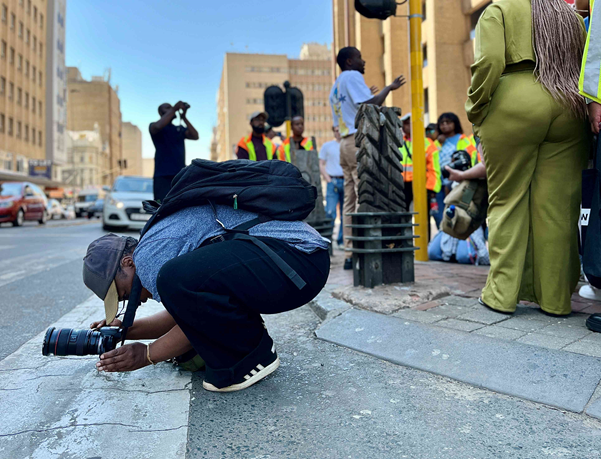
Seen Here: Thirty years of people, places and progress shaping the Inner City. Photo Credit: Thusi Vukani
From Participants to Storytellers
One of the most compelling elements of JICP’s anniversary story is that the documentation of its work is increasingly being created by people participating in its programmes.
Thusi Vukani of Platinum Sketch, a photographer and trainer, has trained 49 participants from across JICP’s Social Employment Fund programmes to document their own projects as they unfold across the Inner City.
The initiative demonstrates how skills development can extend beyond employment itself, enabling participants to become storytellers and chroniclers of the work taking place in their own communities.
Much of the photography that now contributes to JICP’s visual record has been captured by Vukani, helping to build an archive that documents not only projects, but also the people, places and progress behind them.
It is a powerful example of how a programme can create a multiplier effect: people gain skills, those skills are used to document and strengthen projects, and the resulting stories help others see the value of the work taking place around them.
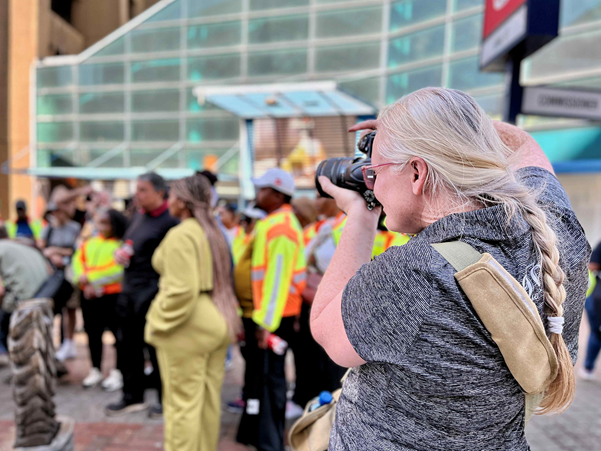
Seen Here: Walking Johannesburg. Discovering its stories. Celebrating its people. Photo Credit: Thusi Vukani
Thirty Years of Work, Thousands of Livelihoods
JICP’s anniversary comes as regeneration work continues across Johannesburg.
Through its current regeneration programmes, 7,332 livelihoods have been supported, with R147 million paid in wages.
More than 4,000 of these opportunities have gone to women, while 4,400 have gone to young people, highlighting the role of community-based regeneration in creating economic opportunities alongside improvements to the urban environment.
Working with 16 partners, the programme has also trained 1,651 people, supported 333 micro-enterprises and activated 537 public spaces.
Behind each statistic is an individual experience: a person earning an income, acquiring a new skill, establishing an enterprise or contributing to the improvement of a space used by the wider community.
Five Programmes, One Connected Vision
JICP’s current work is being delivered through five interconnected programmes, linking employment, skills development, environmental sustainability and improvements to Johannesburg’s public spaces.
Pocket Plazas
Pocket Plazas create small, nature-based public spaces along the Walkable Network. Designed for rest, waiting, trading and social interaction, they introduce opportunities for people to pause and connect within the urban environment.
Fix Squad
The Fix Squad operates as an Earn & Learn programme focused on practical repairs along the Walkable Network.
Participants work on potholes, walkways, stormwater drains, street furniture and other elements of public infrastructure, combining income opportunities with practical skills development.
Social Employment Fund Round 5
The Social Employment Fund Round 5 represents the next phase of JICP’s large-scale social employment work.
The programme creates paid work focused on improving public spaces and waste management while supporting livelihoods and strengthening participants’ skills and experience.
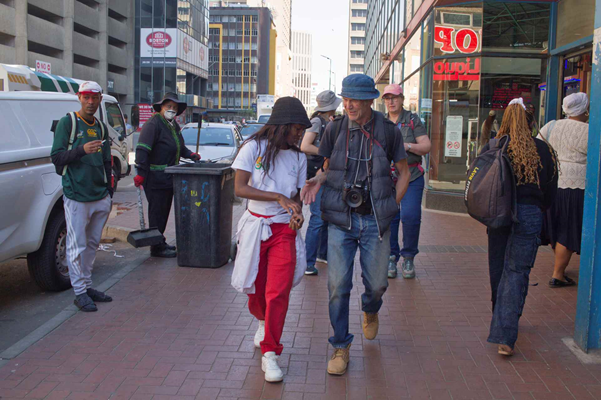
Seen Here: Where every street holds a story, and every person adds to the city’s legacy. Photo Credit: Mark Straw
FLARE
FLARE is a nature-based circular food programme focused on reducing food loss and organic waste through recovery, composting and reuse.
The programme connects environmental sustainability with local economic participation, demonstrating how waste and food systems can form part of a broader urban regeneration strategy.
Community Nurseries
Community Nurseries focus on growing plants and trees for greener public spaces while creating opportunities for local skills development and livelihoods.
Together, the five programmes reflect an integrated approach to regeneration—one that connects people, employment, environmental action and the physical spaces through which Johannesburg’s communities move every day.
Walking the City Differently
The anniversary walk was more than a commemorative event. It created an opportunity to experience the Inner City from the perspective of the people who know its streets intimately.
For participants, the selected locations became points of personal reflection. For photographers and storytellers, they became windows into the broader Johannesburg experience.
The result is a narrative of regeneration told not only through project outputs and statistics, but through human connection.
That distinction matters in a city as complex and layered as Johannesburg. Urban regeneration ultimately takes place in spaces occupied by people, and its impact is experienced through everyday journeys, livelihoods, interactions and memories.
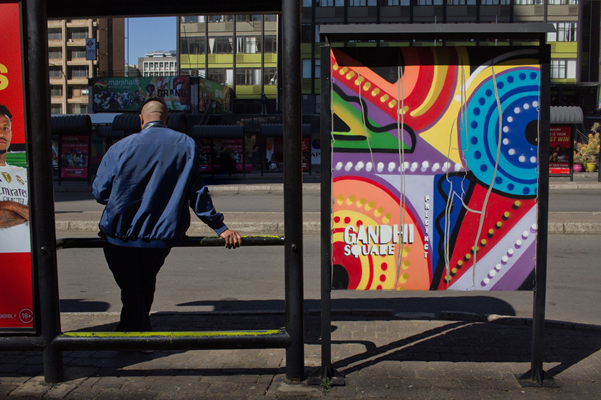
Seen Here: Thirty years on, the journey continues—one community, one story at a time. Photo Credit: Mark Straw
The Story Continues
The anniversary activation is only the beginning.
Over the coming months, further activations will continue bringing the stories of JICP participants and its regeneration programmes into the streets and public spaces where the work is taking place.
Through photography, video and lived experiences, the initiative will invite more people to see Johannesburg differently—to walk it, discover it and meet the people, businesses and projects contributing to its regeneration.
Thirty years provides an opportunity to reflect on the journey behind JICP, but the anniversary is ultimately focused on the city being shaped today.
Because Johannesburg’s next chapter will not be written by buildings alone. It will be written by the people who walk its streets, build its livelihoods, care for its public spaces and continue to imagine what the city can become.