By: Lonwabo Mtyeku | Photo Credit: Supplied

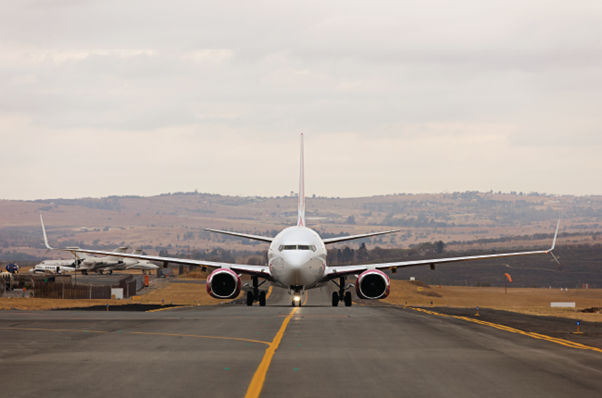
Seen Here: FlySafair has reduced its Dynamic Fuel Surcharge by 40% from its March 2026 peak, passing lower jet fuel costs on to customers and reinforcing its commitment to transparent airline pricing. Photo Credit: Supplied
Lower fuel costs bring welcome relief for South African air travellers
JOHANNESBURG – South African travellers are set to benefit from lower air travel costs after FlySafair announced a significant reduction in its Dynamic Fuel Surcharge, bringing charges down by 40% from their peak levels recorded in March 2026.
The airline said the latest reduction reflects improving conditions in global fuel markets and forms part of its commitment to passing cost savings directly on to customers whenever possible.
The surcharge was initially introduced in March following escalating geopolitical tensions in the Middle East that disrupted global oil supply chains and triggered a sharp spike in jet fuel prices worldwide. At the time, airlines across the globe faced mounting operational costs as fuel markets reacted to uncertainty around supply availability.
Unlike many carriers that absorb fuel costs into ticket pricing, FlySafair introduced a transparent and route-specific Dynamic Fuel Surcharge, allowing passengers to clearly see how changes in fuel prices affected their fares.
Significant Savings for Travellers
The latest adjustment marks the largest reduction since the surcharge was first implemented.
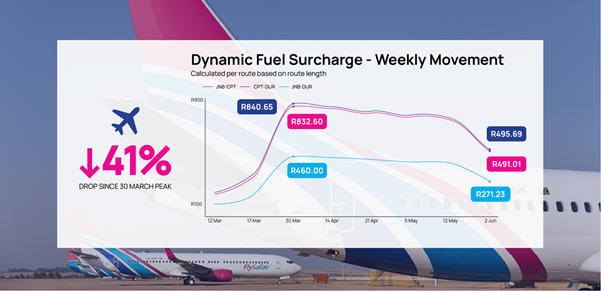
According to FlySafair, the surcharge on the busy Johannesburg-to-Cape Town route has fallen from a peak of R832.60 on 30 March 2026 to R491.01 as of 2 June 2026.
Similarly, the Cape Town-to-Durban route has seen charges decline from R840.65 to R495.69, while the Johannesburg-to-Durban route has dropped from R460.00 to R271.23 over the same period.
The reductions represent meaningful savings for both business and leisure travellers who have faced increased travel costs over the past several months.
Fuel Market Conditions Improve
The airline attributes the decrease to improved availability of Jet A1 aviation fuel and easing refining margins, which have helped fuel prices decline at a faster rate than crude oil prices alone would typically suggest.
Industry analysts have noted that fuel remains one of the largest operating expenses for airlines, often accounting for between 25% and 35% of total costs. As a result, fluctuations in jet fuel prices can have an immediate impact on airfare pricing and airline profitability.
FlySafair’s weekly review process allows the carrier to respond quickly to changing market conditions, ensuring surcharges remain aligned with actual fuel costs.
Commitment to Pricing Transparency
FlySafair Chief Marketing Officer Kirby Gordon said the latest reduction demonstrates the airline’s commitment to transparency and fairness.
“We’re encouraged to see some relief in jet fuel prices, and we’re pleased to be able to pass that benefit on to our customers. When we introduced the surcharge, we committed to reviewing it weekly and reducing it as soon as conditions allowed. This latest adjustment reflects that commitment to transparency and fairness.”
The airline continues to publish its fuel surcharge schedule online, enabling passengers to track changes and understand exactly how fuel costs influence ticket prices.
Volatility Remains a Factor
While current trends are positive, FlySafair cautioned that jet fuel prices remain closely tied to global oil markets and geopolitical developments.
The aviation sector remains vulnerable to international supply disruptions, currency fluctuations, and changes in energy demand, all of which can influence future fuel pricing.
As a result, the airline will continue to monitor market conditions and review its Dynamic Fuel Surcharge on a weekly basis.
Positive Outlook for Domestic Travel
The reduction is likely to be welcomed by South Africa’s travel and tourism sectors, which continue to benefit from growing demand for domestic travel.
Lower fuel-related costs may help stimulate passenger numbers during the second half of the year, particularly among price-sensitive travellers and small businesses that rely on affordable domestic air connectivity.
For consumers, the latest announcement provides a clear indication that declining fuel prices are beginning to translate into real savings at the checkout.
As market conditions continue to stabilise, travellers can expect FlySafair to maintain its transparent pricing approach while balancing affordability with the operational realities of the aviation industry.