


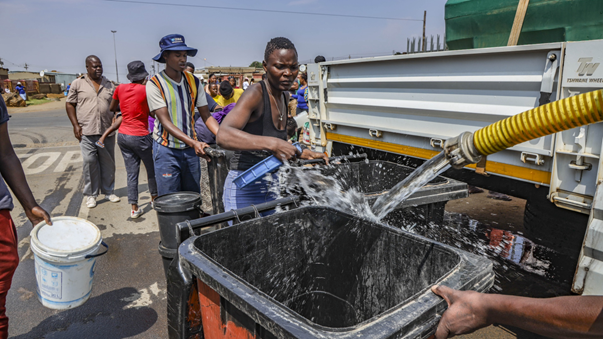
Johannesburg, 10 September 2025 – Tensions flared across several parts of Gauteng today as frustrated residents staged protests over ongoing water shortages that have left households dry for weeks.
From Soweto and Tembisa to Hammanskraal, the West Rand, Westbury, and Coronationville, communities blocked roads, burned tyres, and marched to municipal offices demanding urgent intervention. Protestors, carrying buckets and empty containers as symbols of their struggle, accused local authorities of failing to provide consistent access to clean water — a basic human right enshrined in the Constitution.
Residents said that the crisis has worsened in recent months, with water cuts lasting days at a time. Schools and clinics in affected areas also reported disruptions, with learners unable to attend classes and patients being turned away due to the lack of sanitation.
“We have been without water for more than five days now. How are we supposed to cook, clean, or send our children to school like this?” said Nomsa Mokoena, a mother of three from Soweto. “We are tired of excuses — we want solutions.”
In Westbury and Coronationville, residents expressed similar frustrations, saying their taps had run dry despite repeated promises of service restoration. Some families reported relying on costly water tank deliveries and community boreholes to meet their basic needs.
Municipal officials have attributed the shortages to aging infrastructure, high demand, and ongoing maintenance at Rand Water’s purification plants. However, many residents believe the crisis reflects deeper issues of governance, mismanagement, and poor planning.
Civil society organisations have also weighed in, calling on both provincial and national government to prioritise sustainable water infrastructure investments. Activists warned that unless urgent measures are taken, Gauteng could face even more widespread unrest.
Traffic and Security Disruptions
The protests caused significant traffic congestion in parts of Johannesburg and Pretoria, with police deployed to restore order. Authorities confirmed that several demonstrators were arrested for public violence, though most gatherings remained peaceful.
Police spokesperson Colonel Thembi Maluleke urged calm, saying: “We understand the frustrations of communities, but we call on residents to protest within the bounds of the law. Violence and destruction of property will not resolve the challenges at hand.”
Government Response
The Gauteng Department of Cooperative Governance and Traditional Affairs (CoGTA) acknowledged the severity of the crisis and said it is working with Rand Water and municipalities to stabilise supply. In a statement, the department confirmed that a task team has been established to fast-track maintenance projects, improve water pressure, and address illegal connections that drain the system.
Premier Panyaza Lesufi is expected to address the province later this week on long-term solutions to Gauteng’s water woes.
Human Rights Concerns
Analysts argue that the protests are not just about taps running dry but about the broader failure to deliver essential services. The South African Human Rights Commission has previously warned that persistent water shortages amount to a violation of basic rights, especially for vulnerable communities.
As the crisis deepens, many fear that public anger could escalate further if government efforts fail to deliver immediate relief.
For now, Gauteng residents — from Soweto to Tembisa, Westbury to Coronationville — are demanding one thing above all: access to safe, reliable, and sustainable water.


