

By: Lonwabo Mtyeku | Photo Credit: Friedrich-Naumann-Stiftung
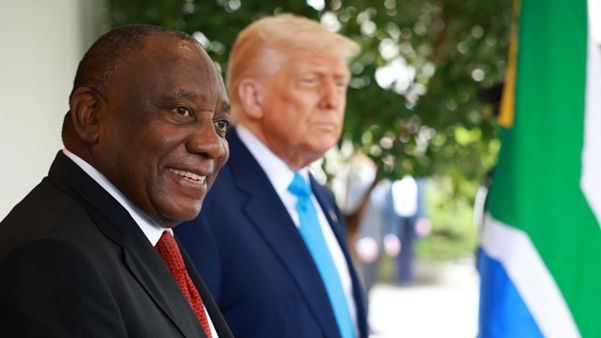
Relations between the United States and South Africa are entering one of their most complex phases since the dawn of democracy in 1994. What was once a partnership defined by moral solidarity, economic cooperation and shared development goals is now characterised by strategic ambiguity, competing global alignments and careful diplomatic recalibration.
This is not a story of rupture, nor of seamless cooperation. It is the story of two nations reassessing their interests in a world no longer anchored by a single centre of power.
A partnership forged in history
The foundation of U.S.–South Africa relations is deeply historical. Washington played a critical role during South Africa’s transition from apartheid, supporting democratic reform and later anchoring cooperation through trade, investment and development assistance. Programmes such as PEPFAR transformed South Africa’s public health landscape, while American companies became embedded across sectors ranging from manufacturing and finance to technology and energy.
For decades, the relationship was underpinned by a shared belief that economic integration, democratic institutions and global cooperation were mutually reinforcing. South Africa emerged as the United States’ most significant partner on the African continent, and the bilateral relationship was often described as both strategic and values-based.
That era of relative clarity has passed.
Trade: interdependence under strain
Economically, the two countries remain deeply intertwined. The United States is among South Africa’s most important trading partners and a major source of foreign direct investment. Hundreds of U.S. firms operate in South Africa, supporting thousands of jobs and serving as regional hubs for African operations.
At the centre of this relationship lies the African Growth and Opportunity Act (AGOA), which for more than two decades has provided South African exporters with preferential access to the U.S. market. Automotive manufacturing, agriculture and industrial goods have all benefited significantly.
Yet AGOA has also become a symbol of uncertainty. Its recent short-term extension, rather than a long-term renewal, has amplified concerns within South Africa about predictability and policy risk. For Washington, trade preferences are increasingly linked to geopolitical alignment and market reforms. For Pretoria, the conditional nature of access raises fundamental questions about sovereignty and economic independence.
Tariff disputes and shifting U.S. trade priorities have further strained confidence, forcing South Africa to accelerate efforts to diversify export markets while still seeking to preserve access to the world’s largest consumer economy.
Geopolitics: non-alignment in a polarised era
The sharpest tensions in the relationship no longer stem from trade, but from geopolitics.
South Africa has consistently articulated a foreign policy rooted in strategic non-alignment and multilateralism. In practice, this has meant engaging simultaneously with the United States, China, the European Union, Russia and other emerging powers. In a world increasingly divided into blocs, this posture has attracted scrutiny.
Washington has grown increasingly uncomfortable with South Africa’s engagement with actors viewed as strategic adversaries, particularly within the BRICS framework. Joint military exercises, diplomatic positions on global conflicts and South Africa’s insistence on neutrality have all contributed to friction.
From Pretoria’s perspective, this is not defiance but realism: a middle power navigating a multipolar world in which economic opportunity and political influence are no longer monopolised by the West. From Washington’s perspective, neutrality can appear indistinguishable from alignment with rivals.
This tension lies at the heart of the current diplomatic unease.
Multilateral spaces and symbolic signals
Strains in the bilateral relationship have increasingly surfaced in multilateral settings. South Africa’s role in global forums such as the G20, BRICS and the United Nations has elevated its international profile, but also placed it under greater scrutiny.
Diplomatic signals — invitations extended or withheld, statements issued or avoided — have taken on heightened symbolic significance. These gestures, while subtle, reflect a recalibration of expectations on both sides and underscore the reality that trust is no longer assumed, but negotiated.
Domestic debate and strategic choices
Within South Africa, relations with the United States have become a subject of active political debate. Business leaders emphasise the importance of stable U.S. ties for investment, trade and employment. Opposition voices argue for a deliberate reset to protect market access and economic certainty.
At the same time, there is strong domestic support for an independent foreign policy that resists external pressure and reflects South Africa’s historical commitment to sovereignty, justice and global equity.
This internal debate mirrors a broader continental conversation. Across Africa, governments are seeking to maximise opportunity in a world where power is diffusing, not concentrating.
Why separation is unlikely
Despite diplomatic friction, a full breakdown in relations remains improbable. Economic interdependence acts as a powerful stabiliser. The United States retains a strategic interest in South Africa as a gateway to the continent, a stable financial centre and a key supplier of critical minerals. South Africa, in turn, benefits from U.S. capital, technology and market access.
The relationship is therefore not collapsing — it is evolving.
The road ahead: recalibration, not retreat
The future of U.S.–South Africa relations will likely be defined less by ideological alignment and more by pragmatic coexistence. Trade frameworks may become more transactional. Diplomatic engagement may grow more cautious. Yet cooperation in areas such as climate transition, health, regional stability and infrastructure development remains both possible and necessary.
South Africa is asserting itself as a sovereign actor in a multipolar world. The United States is recalibrating its partnerships through the lens of strategic competition. Where these two trajectories intersect will define the next chapter of the relationship.
A relationship redefined
Today, U.S.–South Africa relations are best understood not as deteriorating, but as being renegotiated. The era of assumed alignment has given way to one of deliberate positioning. History still matters. Economics still binds. But geopolitics now shapes the tone.
In a fractured global order, the relationship between Washington and Pretoria reflects a wider truth: partnerships endure not because they are simple, but because they adapt.


