

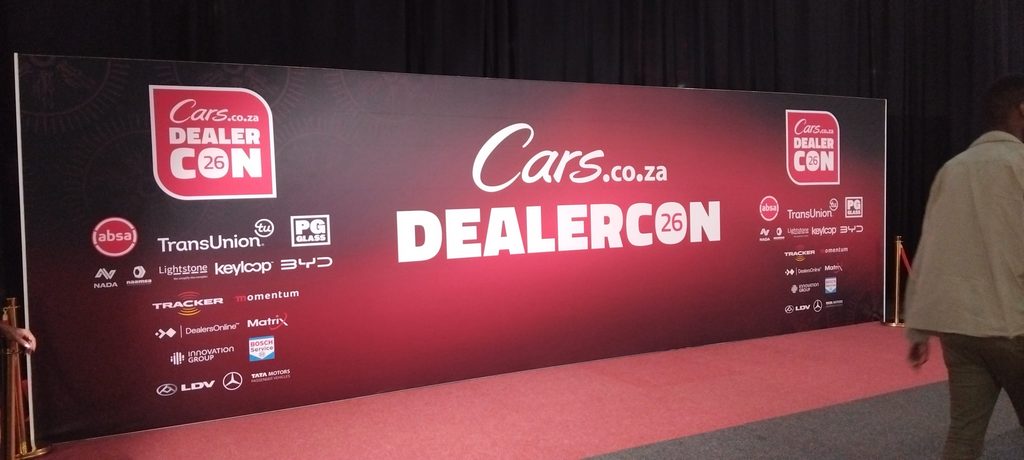
Johannesburg, 17 September 2026 — South Africa’s vehicle market is proving resilient, but beneath the headline sales numbers, a profound shift is taking place in the way consumers discover, evaluate and ultimately choose their next car.That is one of the central messages emerging from the Cars.co.za Industry Report 2026, launched at DealerCon on Thursday, as the automotive industry grapples with affordability pressures, changing consumer expectations, generational shifts and the rapid rise of Chinese vehicle manufacturers.
The report draws on Cars.co.za’s extensive site and lead data, a new consumer survey of more than 2,000 car shoppers, TransUnion’s credit and affordability insights, and analysis by Absa Vehicle and Asset Finance of 2.56 million finance applications.
Taken together, the data paints a picture of a market where demand remains present, but where the ability to afford a vehicle is increasingly determining what consumers buy, how they shop and which brands make the final shortlist.
“The 2026 report shows that South Africa’s vehicle market remains resilient, but the way consumers make decisions is changing,” says Alan Quinn, Chief Innovation and Product Officer at Cars.co.za.
“Affordability is shaping behaviour more than ever, while Chinese brands are moving firmly into the mainstream. For dealers, understanding how buyers discover, research and choose vehicles will be critical to converting demand into sustainable growth.”
A resilient market meets a tougher affordability reality
The latest figures reveal an intriguing contradiction. New-vehicle demand remains comparatively robust, with July 2026 passenger vehicle sales reaching their highest monthly level since September 2014.
Yet consumers are increasingly having to make difficult financial choices.With interest rates at 7.0%, financial optimism has declined from 71% to 66%, while 53% of consumers report cutting back on discretionary spending.
The implication is significant for the automotive industry: consumers may still want to buy cars, but the definition of what constitutes an affordable vehicle is changing.
Price has consequently emerged as the dominant consideration among shoppers, with 70.8% identifying it as a priority when choosing a vehicle. Fuel efficiency follows at 52.5%, underlining the growing importance of the total cost of ownership alongside the initial purchase price.For dealers, the message is clear: selling a vehicle is increasingly about demonstrating value rather than simply selling a badge.
Chinese brands move from challengers to mainstream contenders
Perhaps nowhere is the transformation of South Africa’s automotive landscape more visible than in the rapid expansion of Chinese manufacturers.
Chinese vehicle manufacturers recorded 72% year-on-year sales growth in the second quarter of 2026, dramatically outpacing the 3% growth recorded by traditional manufacturers.
Their combined market share has climbed to approximately 22%, signalling that Chinese brands are no longer operating solely on the fringes of the market.
The shift is even more pronounced in vehicle finance.
According to Absa’s analysis, Chinese brands now account for 40% of SUV finance applications, compared with just 19% in 2023.
The figures suggest that consumers are increasingly willing to consider Chinese vehicles across mainstream segments, particularly where competitive pricing, specifications and value propositions align with affordability concerns.
The rise is therefore not simply a story about new brands entering the market. It reflects a broader change in consumer perceptions and purchasing behaviour.
The digital journey is changing how cars are sold
The Cars.co.za Consumer Survey also highlights the increasingly complex journey between discovering a vehicle and signing the final paperwork.
Social media has emerged as a leading source of vehicle discovery, demonstrating the growing influence of digital platforms in shaping consumer awareness and consideration. But discovery is only the beginning.
Once consumers have narrowed their choices, test drives and written reviews become increasingly influential.
That creates a more demanding environment for dealerships. Visibility alone is no longer enough. Consumers are researching, comparing and validating their decisions across multiple channels before committing to a purchase.
Interestingly, most survey respondents said that a vehicle’s country of manufacture makes no difference to their decision.
That finding is particularly significant against the backdrop of China’s rapidly expanding presence in the South African market. It suggests that, for many consumers, practical considerations such as price, specification, efficiency and overall value may be outweighing traditional assumptions about where a vehicle is manufactured.
The quiet rise of new energy vehicles
South Africa’s transition towards new energy vehicles is also gathering momentum, although the segment remains relatively small.
Hybrid vehicles are becoming increasingly visible in the marketplace, with hybrid stock — both new and used — accounting for 1.74% of Cars.co.za listings in 2026, up from just 0.14% in 2020.
The data also reveals a substantial income difference between EV and internal-combustion-engine buyers.
EV buyers have a median income of R115,000, compared with R73,000 among buyers of internal-combustion-engine vehicles.
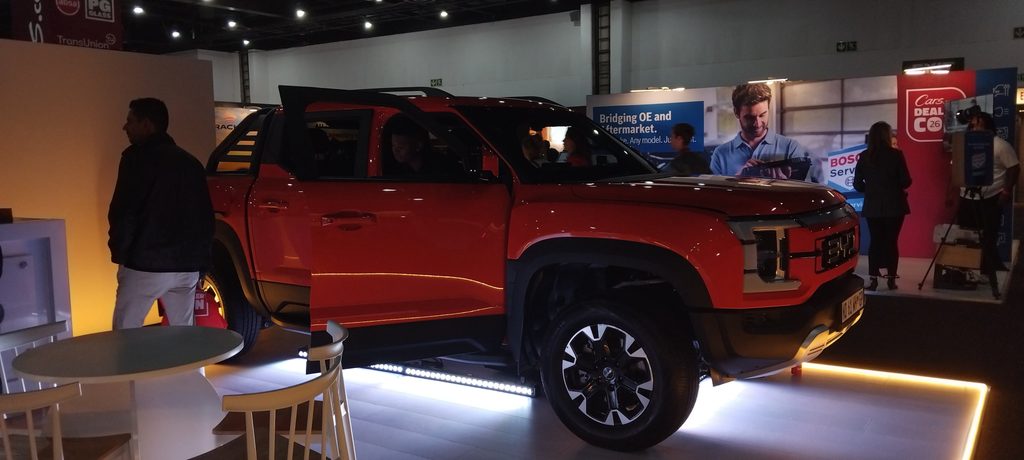
Within the electric vehicle finance market, BYD accounts for 61% of EV finance applications, according to Absa.
While affordability, infrastructure and consumer familiarity remain important considerations in the broader adoption of new energy vehicles, the growth in listings and finance activity points to a market that is gradually expanding beyond conventional petrol and diesel powertrains.
Bakkies remain deeply embedded in South Africa’s automotive culture
The enduring importance of the bakkie to the South African market is another prominent theme in the report.
Double-cab bakkies now account for 58.49% of light commercial vehicle stock on Cars.co.za, up from 48.88% in 2020.
Absa finance data shows an even stronger preference, with double-cab bakkies representing 65% of bakkie finance applications.
But even this traditionally established segment is undergoing change.
The combined finance application share of the traditional Big Four — Ford, Toyota, Nissan and Isuzu — has declined from 84% to 75% over three years, with Nissan’s declining market share identified as a major contributor.
The figures illustrate that even segments historically dominated by established manufacturers are becoming increasingly competitive.
The meaning of automotive status is changing
Perhaps one of the report’s more revealing observations concerns the relationship between cars and status.
The traditional association between prestige and German luxury marques appears to be evolving among status-conscious consumers.
The report identifies declining consideration for German luxury brands, while Ford and particularly Toyota are gaining consideration share among consumers who use vehicles as expressions of status.
The Ford Ranger and Toyota Land Cruiser, in particular, are increasingly appearing in the consideration sets of consumers who traditionally considered German luxury vehicles.
It represents a fascinating change in South African automotive culture: status is increasingly being expressed not only through luxury and exclusivity, but also through perceptions of capability, heritage, durability and desirability.
A new playbook for dealerships
For dealers, the report’s implications extend beyond simply adjusting which vehicles sit on the showroom floor.
The changing consumer journey requires a rethink of stock, marketing, sales conversations and customer engagement.
Affordability is increasingly shaping purchasing behaviour, while Chinese manufacturers are expanding their footprint across SUVs, entry-level vehicles, bakkies and new energy vehicles.
At the same time, consumers are discovering vehicles through social media but turning to more traditional decision-making tools — including test drives and written reviews — before completing the purchase.
For dealerships, this means the customer journey has become both more digital and more evidence-driven.
The showroom remains important, but it is now only one part of a much longer decision-making process.
A market being rewritten by the buyer
The 2026 Cars.co.za Industry Report ultimately points to an automotive market undergoing structural change rather than simply experiencing another cycle of growth and contraction.
South Africans are still buying cars. But they are becoming more deliberate about what they buy, why they buy it and how much they are prepared to spend.
Price and fuel efficiency are commanding greater attention. Chinese manufacturers are rapidly gaining ground. New energy vehicles are establishing a foothold. Digital platforms are influencing discovery, while test drives and credible reviews help determine the final choice.
And established notions of automotive prestige are being reconsidered.
For the country’s dealers and manufacturers, the challenge is therefore not simply to sell more vehicles. It is to understand a consumer who has become more informed, more value-conscious and less bound by traditional automotive loyalties.
In a market where demand remains resilient but affordability is increasingly decisive, the brands and dealerships that understand this changing buyer journey will be operating in a very different automotive landscape from the one that existed only a few years ago.