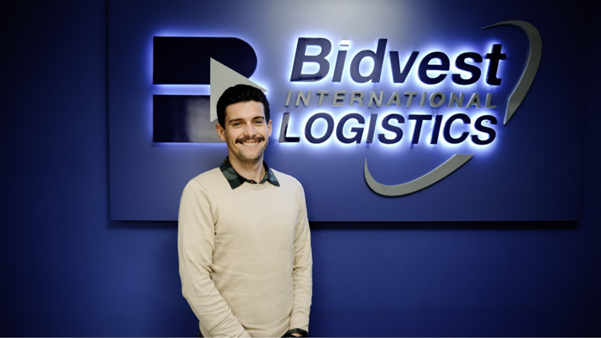
Seen Here: In global trade, every minute counts—and every detail matters. Bidvest International Logistics is helping businesses navigate an increasingly data-driven customs landscape, where accurate documentation, regulatory compliance and proactive risk management are the keys to faster border clearance, stronger supply chains and sustainable international growth. Photo Credit: Supplied
JOHANNESBURG – As international trade becomes increasingly data-driven, customs compliance is emerging as one of the most critical factors determining whether goods move seamlessly across borders or become trapped in costly delays.
According to Andre Gerber, Head of Customs Research, Legal and Training at Bidvest International Logistics (BIL), many supply chain disruptions commonly blamed on border processes actually originate much earlier—during the preparation and submission of customs information.
“Most people assume delays happen when cargo reaches the border,” says Gerber. “In reality, the outcome has often already been determined by the quality and accuracy of the information submitted into the South African Revenue Service (SARS) clearing system.”
His insights come as customs administrations around the world, including SARS, increasingly adopt intelligence-led compliance systems that rely on sophisticated data analytics, risk profiling and post-clearance audits to identify non-compliant traders.
Customs Compliance Is No Longer Just Paperwork
For businesses involved in importing and exporting, customs compliance has evolved from an administrative requirement into a strategic business function.
Rather than assessing individual transactions in isolation, SARS now evaluates the consistency and credibility of information submitted throughout the supply chain, making accurate documentation essential for efficient border clearance.
Gerber explains that customs authorities are increasingly using digital technologies to identify risks before goods even arrive at ports, airports or border posts.
“Compliance is no longer a once-off exercise completed when documentation is submitted,” he says. “It has become a continuous process where every declaration contributes to a trader’s overall compliance profile.”
This shift has been accelerated by SARS’ modernisation programme, which has introduced digital customs registration systems, enhanced licensing platforms and improved integration between tax and customs data.
Air Freight Leaves No Room for Error
The importance of accurate customs information is particularly evident in Gauteng’s fast-paced air freight sector, where businesses depend on rapid cargo movement to meet tight delivery schedules.
Unlike sea freight, where longer transit times provide greater flexibility, air freight exists primarily to transport urgent shipments.
“In our business, speed is everything,” Gerber explains. “If the documentation is incomplete or inaccurate, you’ve already lost valuable time before customs officials even begin processing the shipment.”
For companies operating in sectors such as healthcare, manufacturing, technology and retail, even minor documentation errors can result in significant financial losses caused by delayed production, missed sales opportunities and disrupted supply chains.
Managing Risk Before It Becomes a Problem
Recognising the growing complexity of customs regulations, Bidvest International Logistics has positioned its customs research, legal and training division as a proactive compliance partner rather than simply a customs clearing service.
The team continuously monitors legislative changes, tariff amendments issued by the International Trade Administration Commission (ITAC) and evolving SARS requirements, translating regulatory developments into practical guidance for both clients and internal operations.
“Our responsibility goes beyond interpreting legislation,” says Gerber. “It’s about identifying potential risks early enough to prevent compliance failures from disrupting business operations.”
This preventative approach includes advisory services, structured client onboarding and specialised customs training designed to help businesses strengthen their internal compliance processes before goods enter the international supply chain.
Strong Internal Processes Drive Faster Trade
Gerber emphasises that customs performance increasingly depends on the quality of information provided by importers and exporters themselves.
Commercial invoices, tariff classifications, product descriptions and supporting documentation all influence how customs authorities assess the risk associated with a shipment.
“We can only work with the information clients provide,” he explains. “When businesses understand customs requirements from the outset, the entire clearance process becomes more predictable, efficient and reliable.”
The message is clear: effective customs compliance begins long before cargo reaches the border.
International Standards Strengthen Confidence
Bidvest International Logistics has reinforced its compliance framework through several internationally recognised certifications, including Authorised Economic Operator (AEO) Level 2S status, as well as ISO 9001, ISO 14001, ISO 45001, IATA, CAIA and TAPA accreditations.
These globally recognised standards help strengthen governance, quality assurance, operational safety, environmental management and cargo security across the company’s logistics operations.
For customers, these certifications offer more than regulatory assurance—they contribute to greater operational certainty, reduced customs intervention, lower compliance risks and smoother cargo movement through international supply chains.
Precision Is the New Measure of Speed
As global trade continues to become more digitised and increasingly regulated, experts believe businesses must view customs compliance as a competitive advantage rather than a regulatory obligation.
In an environment where every hour of delay carries financial consequences, accurate documentation, robust compliance systems and proactive risk management have become essential ingredients for supply chain resilience.
For importers and exporters navigating an increasingly complex international trade landscape, the ability to move goods quickly no longer depends solely on transport infrastructure—it begins with the precision of the information submitted long before a shipment reaches the border.
As Gerber concludes, in today’s global economy, speed starts with accuracy.
#BidvestInternationalLogistics #CustomsCompliance #GlobalTrade #SupplyChain #Logistics #ImportExport #BusinessNews #TradeInnovation #BorderManagement #EconomicGrowth