

By: Lonwabo Mtyeku | Photo Credit: Supplied
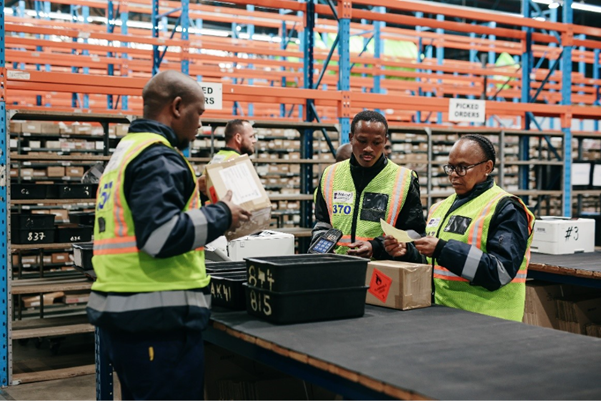
Seen Here: Bringing logistics closer to business. BIL’s expansion into George and Bloemfontein strengthens its regional warehousing and transport network, delivering faster fulfilment, greater supply chain agility and enhanced support for South Africa’s growing e-commerce economy. Photo Credit: Supplied
Johannesburg, South Africa — As South Africa’s e-commerce sector continues to accelerate, the battle for competitive advantage is increasingly being fought behind the scenes—in warehouses, distribution centres and fulfilment networks rather than on online storefronts.
Recognising this shift, logistics provider BIL has announced the expansion of its warehousing and transport capabilities into George and Bloemfontein, strengthening its regional footprint and positioning itself to meet the growing demand for faster, more agile supply chain solutions.
The move reflects a broader transformation taking place across the logistics industry, where warehousing has evolved from a simple storage function into a strategic pillar of business performance.
Today’s customers expect rapid, reliable and transparent delivery. Meeting those expectations requires more than efficient transport—it demands fulfilment networks capable of responding dynamically to changing consumer demand.
Warehousing Is Becoming a Strategic Asset
For years, warehouses were viewed primarily as places to store inventory.
Today, they have become critical hubs that determine how quickly products reach customers, how efficiently businesses manage stock, and how resilient supply chains remain during periods of disruption.
As online retail continues to reshape consumer behaviour, logistics providers are increasingly investing in regional fulfilment infrastructure that reduces delivery distances and improves operational flexibility.
Rather than relying solely on large metropolitan distribution centres, businesses are decentralising inventory by establishing strategically located regional hubs that bring products closer to end consumers.
The result is shorter delivery times, improved service reliability and greater resilience when demand fluctuates.
Agility Is Defining the Next Generation of Logistics
Industry experts increasingly agree that the future of fulfilment lies not simply in speed, but in adaptability.
Consumer purchasing patterns have become more unpredictable, requiring businesses to reposition inventory quickly and respond to changing market conditions in real time.
Research into supply chain optimisation suggests that organisations treating inventory placement as a dynamic capability—rather than a fixed operational process—are better positioned to improve fulfilment efficiency and customer satisfaction.
Advanced technologies now enable logistics providers to allocate stock more intelligently, optimise replenishment cycles and improve order fulfilment across multiple locations simultaneously.
This combination of digital intelligence and distributed infrastructure is redefining modern supply chain management.
Strengthening Regional Connectivity
Against this backdrop, BIL’s expansion into George and Bloemfontein represents more than geographic growth.
It reflects a strategic investment in regional logistics capability designed to improve responsiveness and strengthen customer service across South Africa.
The new facilities will integrate warehousing and transportation operations, providing inventory management, order fulfilment, staging, distribution support and enhanced regional transport services under one operational model.
By positioning inventory closer to customers, the company aims to reduce delivery lead times while improving coordination between storage, dispatch and last-mile delivery.
For businesses operating in increasingly competitive markets, these efficiencies can translate into stronger customer satisfaction and improved operational performance.
Meeting the Demands of a Growing Digital Economy
South Africa’s e-commerce ecosystem continues to mature, with consumers placing greater emphasis on convenience, delivery speed and service reliability.
This evolution is encouraging retailers, manufacturers and logistics providers alike to rethink traditional supply chain models in favour of more flexible, technology-enabled fulfilment strategies.
Regional warehousing is becoming an essential component of that transformation.
As businesses seek to strengthen resilience against supply chain disruptions while maintaining cost efficiency, decentralised logistics infrastructure is expected to play an increasingly important role in supporting sustainable growth.
Building the Supply Chains of Tomorrow
For logistics providers, success is no longer measured solely by the ability to transport goods.
Increasingly, it is determined by how effectively they integrate warehousing, transportation, technology and data into a seamless fulfilment ecosystem capable of adapting to rapidly changing market conditions.
BIL’s expansion into George and Bloemfontein reflects this changing reality.
By extending its operational reach beyond South Africa’s traditional logistics hubs, the company is positioning itself to support businesses with faster inventory access, improved regional distribution and more resilient supply chain solutions.
As e-commerce continues to reshape consumer expectations, one thing is becoming increasingly clear: the future of logistics belongs not to the biggest warehouse, but to the smartest and most agile fulfilment network.