By: Lonwabo Mtyeku | Photo Credit: Sourced
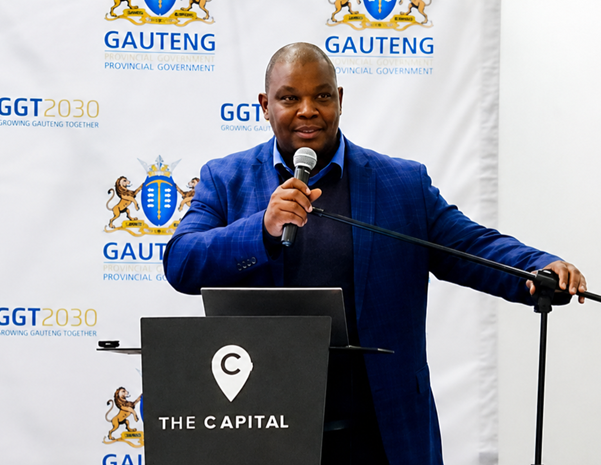
Seen Here: MEC Jacob Mamabolo engaging delegates at a Local Government Framework dialogue, reinforcing a commitment to stronger coordination, accountability, and sustainable service delivery across Gauteng municipalities. Photo Credit: Community Newsroom
On Sunday, 24 May 2026, Johannesburg became the focal point of a renewed national conversation on governance reform, service delivery efficiency, and municipal sustainability as key stakeholders gathered at The Capital on the Park for a high-level Local Government Framework engagement.
The session brought together policymakers, municipal leaders, governance practitioners, civil society voices, and development specialists under a shared objective: to interrogate the structural realities facing South Africa’s local government system and to refine practical frameworks capable of restoring public trust and administrative effectiveness.
A system under pressure, a framework under review
Discussions throughout the day reflected a sober assessment of the current local government landscape—characterised by uneven service delivery, financial strain in several municipalities, infrastructure backlogs, and governance inconsistencies that continue to erode public confidence.
One senior governance facilitator summarised the tone of the engagement bluntly:
“Local government is no longer operating in a business-as-usual environment. The pressure points are structural, not incidental.”
Rather than approaching these challenges in abstract terms, the forum focused on systems-level reform. Central to the dialogue was the need for a more integrated local government framework that strengthens accountability mechanisms, improves revenue collection efficiency, and enhances the professionalisation of municipal administration.
A policy analyst involved in the discussions noted:
“We are dealing with a framework that must move from compliance-based governance to performance-based delivery. That shift is overdue.”
Speakers repeatedly emphasised that local government is not merely an administrative layer, but the front-line of democratic delivery—where policy either succeeds or fails in tangible ways.
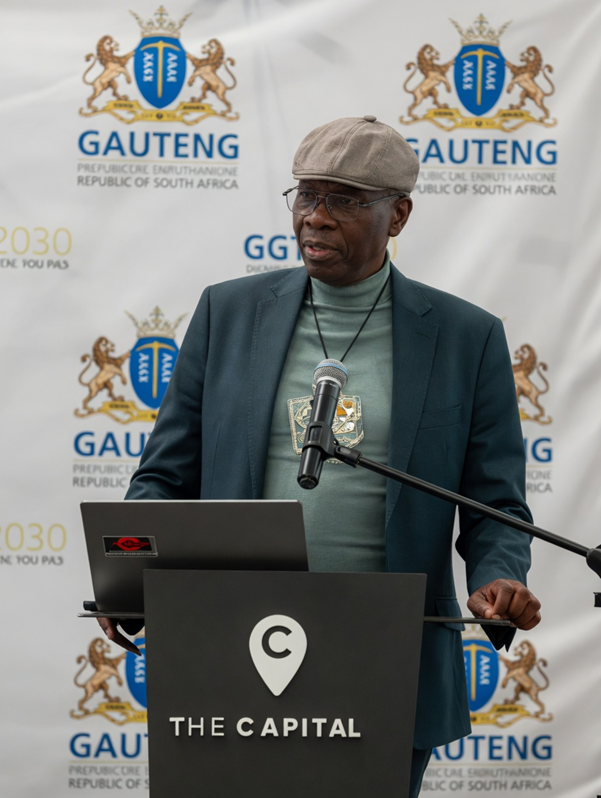
Seen Here: Themba Nxumalo of South African Local Government Association addressing delegates at a Local Government Framework engagement, emphasizing strengthened municipal capacity, coordinated governance, and improved service delivery outcomes across South Africa. Photo Credit: Community Newsroom
Key themes: accountability, capacity, and coordination
Three dominant themes emerged from the proceedings:
1. Institutional accountability and oversight
Participants stressed the importance of tightening oversight structures while ensuring that accountability does not become purely punitive, but corrective and developmental in nature.
A municipal oversight specialist commented:
“Consequence management must not be symbolic. It must be systematic, consistent, and tied to measurable outcomes.”
Strengthening audit responsiveness and consequence management systems was identified as a priority.
2. Municipal capacity and skills development
A recurring concern was the shortage of technical and managerial capacity within municipalities. The framework discussion highlighted the urgency of targeted skills pipelines, professional certification standards, and long-term retention strategies for critical municipal roles.
One local government practitioner stated:
“You cannot deliver smart cities with under-resourced administrations. Capacity is not optional—it is foundational.”
3. Intergovernmental coordination
The fragmentation between national, provincial, and local spheres of government was identified as a structural barrier to effective service delivery.
A planning and infrastructure expert observed:
“We are still working in silos that were never designed for today’s urban complexity. Coordination is the missing infrastructure.”
The proposed framework calls for more coherent planning alignment, particularly in infrastructure development, budgeting cycles, and monitoring systems.
Towards a more resilient local government model
A key outcome of the engagement was the broad consensus that incremental adjustments are no longer sufficient. Instead, participants leaned toward a redesigned local government framework that prioritises systems integration, digital governance tools, and performance-based accountability models.
A senior participant summarised the shift in thinking:
“We are not patching a broken system—we are redesigning a governance ecosystem that must function under 21st-century pressures.”
There was also strong support for community-centred governance approaches, where residents are not only service recipients but active participants in planning, monitoring, and evaluation processes.
A forward-looking policy moment
While the discussions were technical in nature, the tone remained forward-looking. The sentiment across the room reflected a shared recognition that restoring confidence in local government is both an administrative and moral imperative.
As one closing remark captured it:
“If local government works, democracy feels real. If it fails, everything else becomes theoretical.”
The gathering at The Capital on the Park therefore represented more than a policy workshop—it functioned as a strategic convergence point for rethinking how municipalities can be rebuilt to serve citizens more effectively, transparently, and sustainably.
As South Africa continues to confront complex service delivery and governance challenges, the outcomes of this Local Government Framework engagement are expected to contribute meaningfully to ongoing reform dialogues at multiple levels of government.