By: Lonwabo Mtyeku Photo Credit: Sourced
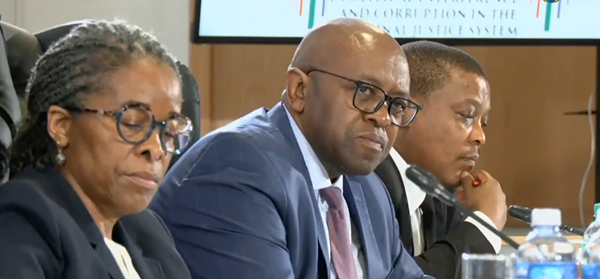
Seen Here: Accountability, integrity, and the future of justice. The Madlanga Commission continues to probe critical questions around judicial conduct, as Mbuyiseli Madlanga leads efforts to reinforce trust in South Africa’s legal system. Photo Credit: Sourced.
TSHWANE, GAUTENG — South Africa’s evolving constitutional democracy is once again under scrutiny as the Madlanga Commission continues its work, drawing national attention to issues of judicial conduct, institutional integrity, and the broader credibility of the justice system.
Chaired by former Constitutional Court Justice Mbuyiseli Madlanga, the commission has emerged as a critical platform for examining allegations and concerns that strike at the heart of public trust in the judiciary.
A Mandate Rooted in Accountability
The Madlanga Commission was established to investigate serious claims relating to judicial behaviour and governance within South Africa’s legal framework. Its mandate reflects a broader commitment to transparency and accountability—principles that underpin the country’s constitutional order.
At a time when institutions are increasingly tested, the commission represents a proactive effort to confront challenges within the judiciary before they erode public confidence further.
Key Developments and Testimonies
Recent proceedings have been marked by high-profile testimonies, legal arguments, and detailed submissions from various stakeholders, including members of the judiciary, legal practitioners, and institutional representatives.
Central themes emerging from the hearings include:
- Allegations of misconduct and ethical breaches
- Questions around judicial independence and influence
- Internal governance and oversight mechanisms within the courts
- The role of accountability structures in safeguarding integrity
The commission has adopted a methodical approach, carefully interrogating evidence while ensuring procedural fairness for all parties involved.
Balancing Independence and Oversight
One of the most complex issues confronting the commission is the delicate balance between judicial independence and accountability. While the judiciary must remain free from political interference, it must also be subject to scrutiny where conduct falls short of constitutional expectations.
Legal experts note that the outcomes of the commission could help clarify this balance, potentially leading to reforms that strengthen both independence and oversight.
Public Confidence at Stake
The work of the commission comes at a critical moment, as public trust in institutions remains a central concern in South Africa’s socio-political environment.
By addressing allegations openly and transparently, the commission has the potential to reinforce confidence in the judiciary—provided its findings are seen as credible, fair, and decisive.
Potential Implications
The final report of the Madlanga Commission is expected to carry significant weight, with possible recommendations that could include:
- Disciplinary action where misconduct is established
- Institutional reforms to improve governance and oversight
- Enhanced ethical guidelines and accountability mechanisms
- Policy recommendations aimed at strengthening judicial systems
These outcomes could shape the future functioning of South Africa’s courts and influence how judicial accountability is managed going forward.
A Defining Moment for the Judiciary
As proceedings continue, the Madlanga Commission stands as a defining moment in South Africa’s democratic journey—one that tests the resilience of its legal institutions and the strength of its commitment to constitutional values.
The nation now watches closely, aware that the commission’s findings will not only address specific allegations but also set important precedents for transparency, accountability, and the rule of law.
In a system built on justice, the credibility of those entrusted to uphold it remains paramount—and the Madlanga Commission may prove pivotal in reinforcing that foundation.
#MadlangaCommission #JudicialAccountability #SouthAfrica #RuleOfLaw #ConstitutionalDemocracy