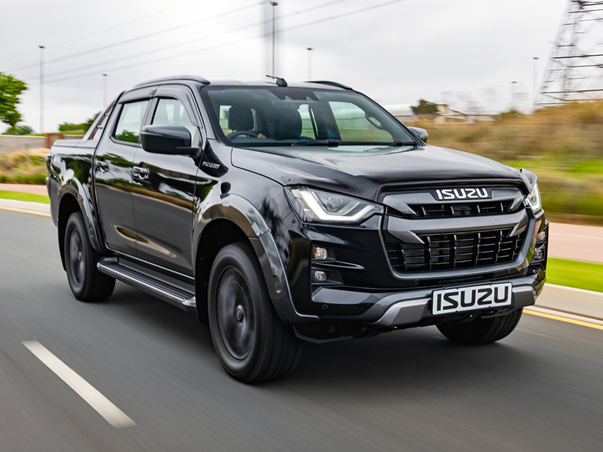
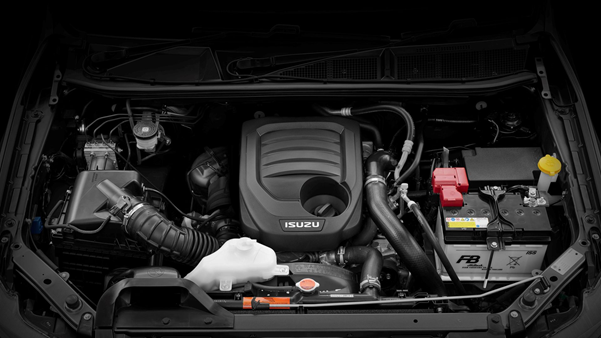
Seen Here: Power meets practicality in the Isuzu D-Max showdown. From the fuel-conscious 1.9-litre to the muscle-packed 3.0-litre, the smartest choice is the one that delivers the right balance of performance, efficiency and value for money. When every kilometre counts, choose the power that works for your pocket and your lifestyle. Photo Credit: Supplied
With rising diesel costs putting pressure on South African motorists, the choice between the Isuzu D-Max 1.9-litre and 3.0-litre turbodiesel engines comes down to a crucial balance between affordability, fuel efficiency and performance.
JOHANNESBURG, 21 October 2026 – As the cost of motoring continues to influence vehicle-buying decisions, prospective bakkie owners are weighing up whether to prioritise fuel economy and a lower purchase price or invest in additional power for demanding driving conditions.
For buyers considering the Isuzu D-Max, the decision centres on two popular diesel options: the 1.9-litre Ddi turbodiesel, designed to deliver practical everyday motoring, and the more powerful 3.0-litre Ddi, which offers additional muscle for towing, hauling and long-distance travel.
According to Cars.co.za, the two engines cater to different driving needs, with the 1.9-litre presenting a compelling value proposition for urban motorists and families, while the 3.0-litre appeals to those who regularly demand more from their bakkies.
The performance gap is significant. The 1.9-litre Ddi produces 110 kW of power and 350 Nm of torque, while the 3.0-litre delivers 140 kW and 450 Nm. That translates into an additional 30 kW and 100 Nm for buyers opting for the larger engine.
However, the extra performance comes at a higher purchase price and a modest increase in claimed fuel consumption.
“The choice between the 1.9 and 3.0-litre D-Max comes down to how the bakkie will actually be used,” said Alan Quinn, Chief Innovation and Product Officer at Cars.co.za.
For motorists who spend most of their time in town and seldom tow, the 1.9-litre’s lower purchase price and better fuel economy make a persuasive case. By contrast, buyers who regularly tow or undertake long journeys with heavy loads may find the 3.0-litre’s additional torque and performance worth the premium.
The 1.9-litre Ddi: A practical choice for everyday driving
For urban families, commuters and motorists who need a versatile double-cab without the demands of frequent heavy-duty work, the D-Max 1.9 Ddi offers a practical entry point into Isuzu’s bakkie range.
The engine is particularly suited to daily commuting, school runs, shopping trips and occasional road journeys, where outright power may be less important than affordability and manageable running costs.
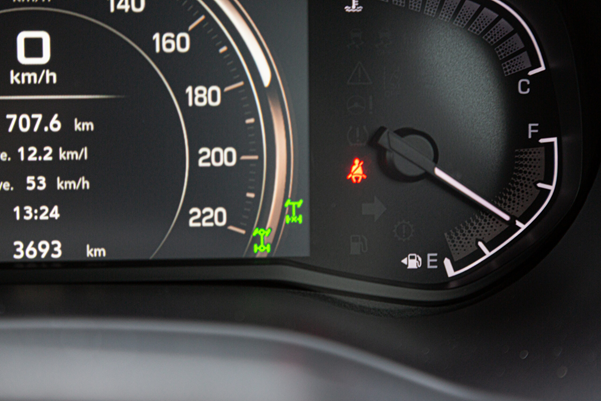
In the X-Rider 4×2 automatic configuration, Isuzu claims fuel consumption of 7.3 litres per 100 kilometres. With a 76-litre fuel tank, that equates to a theoretical driving range of approximately 1,041 kilometres under the stated consumption figure.
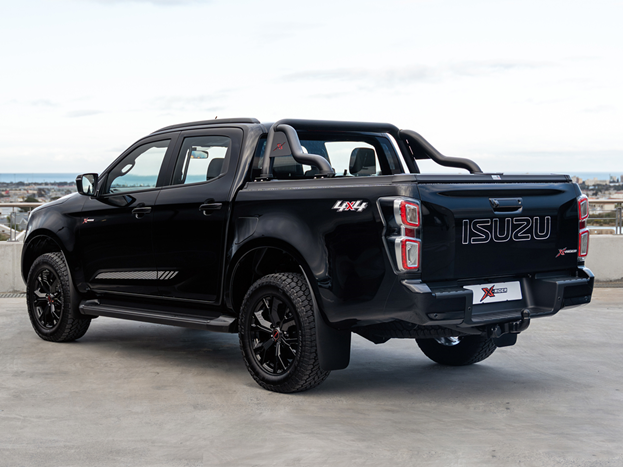
The 1.9 Ddi X-Rider 4×2 automatic is priced from R690,810, making it the more accessible option of the two.
For buyers who rarely tow heavy trailers or carry substantial loads, the smaller engine could provide the right combination of everyday usability and cost-conscious ownership.
Actual fuel consumption and driving range will depend on traffic conditions, driving style, vehicle load, terrain and maintenance.
The 3.0-litre Ddi: More muscle for demanding journeys
While the 1.9-litre prioritises value, the D-Max 3.0 Ddi is aimed at drivers who need greater pulling power and stronger performance under demanding conditions.
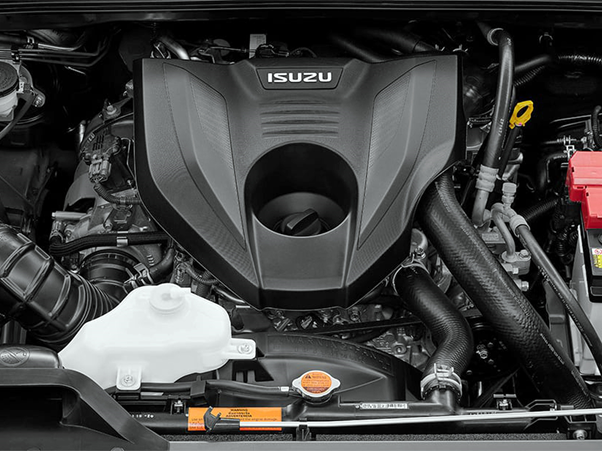
Producing 140 kW and 450 Nm, the larger engine provides additional torque that can be particularly useful when towing a caravan, boat or trailer, travelling with a full load, or navigating long-distance routes.
Isuzu claims fuel consumption of 7.9 litres per 100 kilometres for the 3.0 Ddi X-Rider 4×2 automatic. Based on the same 76-litre tank, the theoretical range is approximately 962 kilometres.
The model starts at R792,470, placing it R101,660 above its 1.9-litre counterpart.
Although the difference in claimed fuel consumption appears relatively small, the purchase-price premium is substantial. Buyers therefore need to consider how frequently they will use the additional performance rather than paying for power they may seldom need.
For motorists who regularly tow or travel with heavy loads, however, the stronger engine could offer greater suitability for their particular requirements.
The real cost difference: Purchase price versus running costs
The financial comparison extends beyond the showroom price.
At the stated starting prices, buyers choosing the 1.9-litre save R101,660 upfront. That money could be allocated towards insurance, vehicle accessories, maintenance, finance repayments or fuel expenses.
The claimed consumption figures also favour the smaller engine. At 7.3 litres per 100 kilometres compared with 7.9 litres, the 1.9-litre uses 0.6 litres less diesel over every 100 kilometres, based on the manufacturers’ stated figures.
Over 20,000 kilometres, that difference amounts to approximately 120 litres of diesel. The actual monetary saving will depend on the diesel price paid and real-world consumption.
Nevertheless, the larger engine’s additional torque may justify its premium for owners whose work or lifestyle regularly requires towing and carrying heavier loads.
It is also worth remembering that fuel consumption is only one component of ownership costs. Insurance premiums, financing terms, servicing, tyres, depreciation and resale value should all form part of the final calculation.
Which Isuzu D-Max makes the most sense?
For buyers prioritising affordability, everyday commuting and occasional family travel, the 1.9-litre Ddi emerges as the stronger value proposition. Its lower entry price and better claimed fuel economy make it an attractive option for motorists who do not regularly push their bakkies to their limits.
The 3.0-litre Ddi, meanwhile, makes a stronger case for drivers who tow frequently, transport heavy loads or regularly undertake demanding long-distance journeys. Its additional power and torque provide tangible performance advantages that may be more important than the initial price difference.
Ultimately, the better choice is not necessarily the engine with the highest output, but the one that best matches the owner’s actual requirements.
For the urban family, the 1.9-litre offers a compelling balance between cost and capability. For the frequent tower or heavy-load traveller, the 3.0-litre may be the more appropriate long-term investment.
In a market where every rand matters, choosing the right D-Max means looking beyond the badge and engine size to consider how the bakkie will be used, what it will cost to run and which features deliver genuine value over the ownership period.
About Cars.co.za
Cars.co.za is one of South Africa’s leading automotive marketplaces, connecting consumers, dealers and automotive brands through vehicle listings, motoring content, reviews, research and digital tools. The platform helps South Africans make informed vehicle-buying and selling decisions while celebrating the people and communities shaping the country’s automotive culture.
Source: Cars.co.za
#IsuzuDMax #MotoringNews #BakkieLife #FuelEfficiency #CarsCoZa #SouthAfricanMotoring