By: Lonwabo Mtyeku | Photo Credit: Sourced
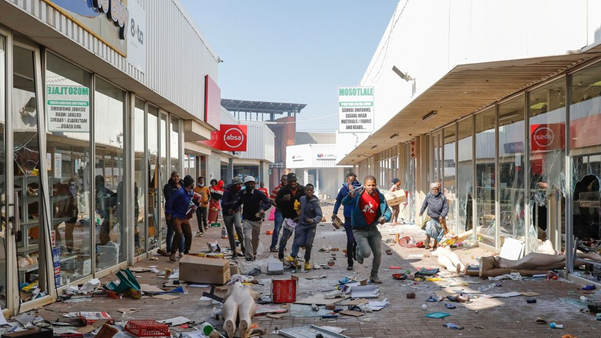
Seen Here: Protests moving into shopping malls raise complex legal and safety risks, placing pressure on centre management to balance constitutional rights with duty of care and liability obligations. Photo Credit: Sourced
As protest action increasingly shifts from streets to shopping malls, legal experts are warning that the risks for property owners, retailers, employees and the public are becoming more complex—and potentially more costly.
While the right to protest is constitutionally protected in South Africa, that protection is not absolute when demonstrations move into privately owned commercial spaces. Inside shopping centres, the legal framework shifts significantly, placing greater responsibility on property owners and managers to ensure safety and prevent harm.
Private Space, Public Access — A Legal Tension
Shopping centres occupy a unique legal position: privately owned but publicly accessible. This distinction is critical.
Although individuals have the right to assemble, that right does not automatically extend to privately controlled premises. When protest activity takes place داخل malls without authorisation—or escalates into disruption or risk—the focus moves away from constitutional rights and toward liability, control, and duty of care.
Centre management is legally obligated to take reasonable steps to ensure that shoppers, tenants, and employees are not exposed to foreseeable harm.
Liability Under the Law
The Regulation of Gatherings Act provides the statutory framework for protests and demonstrations, including provisions for civil liability.
Where damage or injury occurs during a gathering—often referred to as “riot damage”—organisers and participants can be held jointly and severally liable. This extends to property damage, personal injury, or even loss of life.
However, legal exposure does not end there.
Victims are not limited to remedies under the Act. They may pursue additional claims under common law, particularly in cases where negligence can be proven. This opens the door for legal action against a broader range of parties, including shopping-centre management and private security providers.
Insurance Gaps and Financial Exposure
One of the most significant risks lies in insurance coverage—or the lack thereof.
The South African Special Risks Insurance Association (SASRIA) provides cover for events such as riots, strikes, and civil unrest. However, this cover is not automatic and must be explicitly included in a policy.
Even where SASRIA cover exists, claims are not guaranteed:
- Peaceful or loosely organised protests may not meet the threshold for a “riot”
- Insurers may reject claims if adequate preventative measures were not taken
- Standard insurers often exclude protest-related damage entirely
This creates a potential “insurance gap,” where neither conventional insurers nor SASRIA accept liability—leaving property owners exposed to significant financial losses.
Workers on the Frontline
Retail employees are among the most vulnerable when protests occur داخل or near shopping centres.
The Compensation for Occupational Injuries and Diseases Act (COIDA) provides protection for injuries sustained in the course of employment, including certain psychological conditions linked to workplace trauma.
However, coverage is not universal:
- Injuries أثناء commuting are generally excluded unless specific conditions apply
- Emotional distress alone is not compensable without a medically recognised condition
- Legal uncertainty may arise in borderline cases, such as injuries أثناء entering a workplace during unrest
Where COIDA does not apply, employees may pursue alternative legal claims against negligent third parties.
Duty of Care and Negligence
At the heart of the issue is the concept of foreseeability.
If shopping-centre management knew—or should reasonably have known—that protest activity was likely and posed a risk, they are expected to act. Failure to do so could result in delictual liability.
Reasonable preventative steps may include:
- Enforcing access control and entry policies
- Deploying adequate security personnel
- Intervening in unlawful gatherings
- Implementing evacuation and emergency response plans
A passive approach, particularly in high-risk scenarios, can significantly increase legal exposure.
A Growing Trend, A Growing Risk
As shopping centres become increasingly visible platforms for public expression, the likelihood of protest activity within these spaces is expected to rise.
For centre owners and managing agents, the implications are clear: proactive risk management is no longer optional.
This includes:
- Reviewing and enforcing internal policies on demonstrations
- Strengthening security preparedness
- Ensuring appropriate insurance cover, including SASRIA
- Training staff and tenants on emergency protocols
Beyond Rights: The Reality of Responsibility
The right to protest remains a cornerstone of South Africa’s democracy. But within privately owned commercial environments, that right intersects with equally important obligations—safety, accountability, and risk mitigation.
As protests move indoors, the legal landscape becomes more intricate. For shopping-centre management, the challenge is no longer just about allowing or restricting access—it is about navigating a complex web of liability, insurance exposure, and human safety.
In this evolving environment, preparedness is not just prudent—it is essential.