
By: Lonwabo Mtyeku | Photo Credit: Supplied

Johannesburg, 18 February 2026 – When the curtains rise on this year’s Joburg Film Festival from 3–8 March, audiences will be ushered into a cinematic journey framed by two extraordinary South African films—works that confront history, interrogate identity, and reimagine genre with striking confidence.
Presented in partnership with MultiChoice Group, a CANAL+ company, the festival once again positions Johannesburg as a continental hub for daring, globally resonant storytelling. Tickets are now on sale for a programme that spans local triumphs and international standouts across cinemas in the city.
But it is the opening and closing films—Laundry (Uhlanjululo) and The Trek—that crystallise the festival’s intent: to foreground cinema that is rooted in South African soil yet expansive in vision.
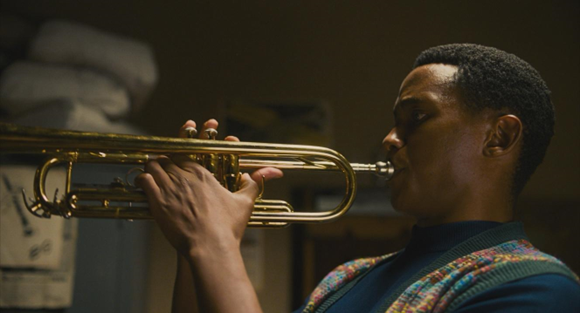
Ntobeko Sishi in Laundry (Unhlanjululo)
Opening Night: Memory, Inheritance and Resistance in Laundry (Uhlanjululo)
The festival opens on 3 March with Laundry (Uhlanjululo), the debut feature from filmmaker Zamo Mkhwanazi. Fresh from its international premiere at the Toronto International Film Festival—where it was described as “thrilling African cinema”—the film arrives home carrying global acclaim and deep personal resonance.
Although opening night attendance is by invitation, a public screening will take place at 15:15 on 7 March at Numetro Cine 1 in Hyde Park, Sandton.
Set in 1960s apartheid South Africa, Laundry tells the story of a Black family operating a laundry business under fragile permission in a whites-only district. At its centre is Enoch, portrayed by Siyabonga Shibe, a patriarch fighting to preserve his family’s livelihood in a system engineered to erase it. Opposite him stands a younger generation—embodied by Ntobeko Sishi—torn between survival and self-expression.
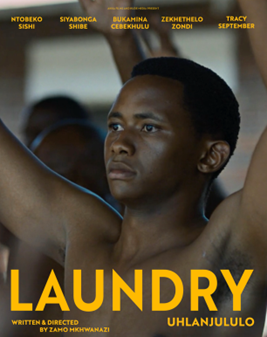
The film’s aesthetic has been praised for its polished, 1990s historical drama sensibility, yet beneath its surface lies an intimate reckoning. Mkhwanazi has spoken openly about drawing from her own family history: her grandfather lost his laundry business when apartheid legislation took hold. That inherited rupture becomes the emotional engine of the film—a meditation on stolen opportunity, generational trauma and the quiet heroism of endurance.
Having begun her career writing on Isidingo and premiered her short Gallo Rojo at Cannes Directors’ Fortnight, Mkhwanazi now stakes a powerful claim as one of the country’s most assured new voices.
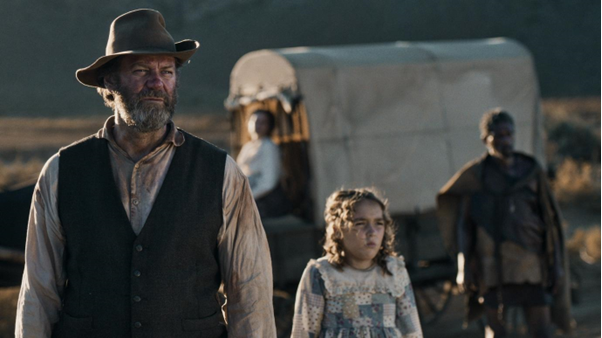
Morne Visser in The Trek
Closing Night: Myth, Madness and the Kalahari in The Trek
If Laundry excavates the wounds of the past through realism, The Trek—the festival’s closing film on 8 March at Theatre On The Square—ventures into mythic terrain.
Directed by first-time filmmaker MeekaeeI Adam, the film unfolds in the vast Kalahari Desert of 1846. A Dutch-Afrikaans family and their British patron embark on a land-seeking expedition guided by a mysterious Khoen traveller. Hunger, exhaustion and mistrust slowly corrode their fragile alliances, while spectral figures drawn from Southern African folklore hover like silent arbiters of fate.
Blending historical drama, psychological tension and western-horror tropes, The Trek reframes colonial expansion through a distinctly Southern African lens. It is both genre cinema and political allegory—challenging inherited narratives while embracing the visceral power of myth.
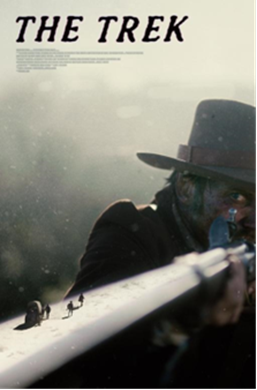
Adam has already received a Best First-Time Director nomination from the Directors Guild of South Africa, signalling a formidable new talent. The film features performances from Morné Visser, Maurice Carpede, Camilla Borghesani, Trix Vivier and Rob van Vuuren, each contributing to a descent into moral and existential unravelling.
A Festival with Purpose
For festival curator Nhlanhla Ndaba, the pairing of these two films is deliberate. Both navigate uniquely South African subject matter with technical finesse and emotional intelligence, inviting audiences not merely to watch—but to journey alongside their characters.
Nomsa Philiso, spokesperson for MultiChoice Group, underscores the broader mission: democratising access to bold, meaningful cinema. In a media environment saturated with spectacle, the Joburg Film Festival positions itself as a space for films that illuminate as much as they entertain.
A Defining Moment for South African Cinema
Together, Laundry (Uhlanjululo) and The Trek form a powerful cinematic dialogue—one grounded in history, yet unafraid to experiment with form and genre. They signal an industry confident enough to excavate painful memory and imaginative enough to reshape myth.
As the festival prepares to welcome audiences from 3–8 March, one message rings clear: South African cinema is not peripheral. It is central, urgent and globally competitive.
In Johannesburg this March, the screen becomes both mirror and frontier.