

Ten standout wines recognised as South Africa’s Chenin Blanc industry strengthens its global reputation while supporting producers and farming communities
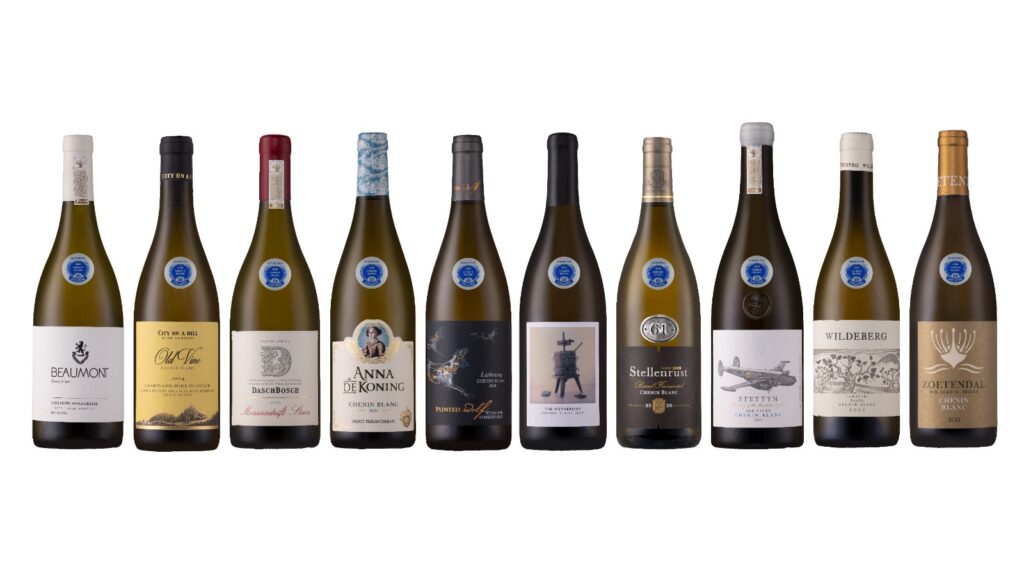
Seen Here: The Winning Wines for The Standard Bank Chenin Blanc Top 10 Challenge 2026. Photo Credit: Supplied
CAPE TOWN, 11 September 2026 — South Africa’s Chenin Blanc industry has once again demonstrated its depth, diversity and commercial potential, with 10 exceptional wines named winners of the 2026 Standard Bank Chenin Blanc Top 10 Challenge.
The annual competition, a partnership between Standard Bank and the Chenin Blanc Association, attracted 150 entries from 97 producers across 36 Wine of Origin classifications, underscoring the breadth of Chenin Blanc production across the country.
Following three days of rigorous blind judging, the 10 winning wines were selected, with six originating from heritage vineyards aged 35 years or older.
The results highlight the increasing sophistication of South African Chenin Blanc, with the winning wines reflecting a broad spectrum of styles while demonstrating fruit purity, freshness, elegance and texture.
The competition is now in its 13th year, having evolved into an important platform for promoting South African Chenin Blanc while creating commercial and social opportunities for producers and their communities.
Meet the 2026 Top 10
The 2026 winners are:
- Beaumont Family Wines Hope Marguerite 2025 — WO Bot River, Walker Bay
- City on a Hill Old Vine Chenin Blanc 2024 — WO Swartland
- DaschBosch Mossiesdrift Steen 2025 — WO Breedekloof
- Groot Phesantekraal Anna de Koning 2024 — WO Cape Town (Durbanville)
- Painted Wolf Wines Lightning Chenin Blanc 2024 — WO Wellington
- Stettyn Old Vine Chenin Blanc 2025 — WO Stettyn
- Stellenrust ArtiSons Mothership Chenin Blanc 2025 — WO Stellenbosch
- Stellenrust 61 Barrel Fermented Chenin Blanc 2025 — WO Stellenbosch
- Wildeberg Terroirs Chenin Blanc 2024 — WO Paarl
- Zoetendal Chenin Blanc 2022 — WO Coastal Region
The geographic spread of the winners illustrates one of Chenin Blanc’s defining strengths: its ability to express different South African growing environments and winemaking philosophies.
More than a wine competition
For Standard Bank, the challenge is positioned as more than an awards programme.
The bank sees the initiative as part of its broader support for South Africa’s agribusiness sector and its contribution to employment, exports, rural development and economic growth.
Stephan van der Merwe, Head of Commercial Banking for the Western and Eastern Cape at Standard Bank South Africa, said agriculture remains central to the country’s economic opportunity.
“Agribusiness is at the heart of South Africa’s growth, and supporting farmers and the communities around them is an important part of our role in amplifying opportunity.”
Van der Merwe said the competition creates visibility for producers while helping showcase the quality of South African wines to potential markets beyond the country’s borders.
The commercial opportunity is significant. Chenin Blanc is not only South Africa’s most widely planted wine-grape variety, but has become one of the country’s strongest vehicles for demonstrating the diversity and quality of its wine production internationally.
Chenin Blanc’s economic footprint
The latest SAWIS vineyard statistics show that Chenin Blanc accounts for 18.4% of South Africa’s total wine-grape vineyard, with approximately 15,949 hectares planted nationally.
Its dominance gives the cultivar a significant role in the country’s agricultural economy, from vineyard production and cellar operations to logistics, tourism, hospitality and exports.
The breadth of Chenin Blanc production also means that the category brings together producers operating across a wide range of regions and scales.
The 2026 Top 10 results reinforce that diversity, with winning wines coming from Bot River, Swartland, Breedekloof, Durbanville, Wellington, Stettyn, Stellenbosch, Paarl and the broader Coastal Region.
Turning recognition into community investment
One of the competition’s defining features is its commitment to ensuring that the benefits extend beyond the winning producers.
Each of the 10 winning producers receives R25,000, which must be directed towards social upliftment or skills-development initiatives benefiting wine-farming communities.
According to the Chenin Blanc Association, more than R3 million has been channelled into community development projects since the competition began, with initiatives supporting education, food security, worker wellbeing, skills development and infrastructure.
Ken Forrester, Chairman of the Chenin Blanc Association, said community investment had been embedded in the competition from the beginning.
“We wanted the Challenge to be about more than simply winning a cash prize.”
He said directing the prize money towards farming communities reflected the recognition that the wine industry’s success is underpinned by the people working across the vineyard and agricultural value chain.
Creating a route to market
This year’s competition is also expanding its consumer reach through a new partnership with Brice & Burnett, which has been appointed the exclusive retail partner.
For the first time, consumers will be able to access the complete collection of the 10 winning wines through a single specialist retailer.
The arrangement gives winning producers another platform to convert competition recognition into consumer exposure, while giving wine enthusiasts an opportunity to experience the diversity represented by the 2026 Top 10.
Market access remains a crucial part of the broader value proposition for agricultural producers, particularly in a sector where recognition needs to translate into sustainable sales and stronger brand visibility.
From local recognition to global opportunity
The competition’s significance extends beyond the awards ceremony.
Standard Bank says its involvement forms part of a broader approach to helping agricultural businesses unlock finance, market opportunities and commercial relationships.
For wine producers, international market access can provide an important avenue for growth, while the reputation of South African Chenin Blanc increasingly gives the category a strong platform from which to compete globally.
The Standard Bank Chenin Blanc Top 10 Challenge therefore operates at the intersection of wine excellence, agricultural development, market access and community investment.
As the competition enters its second decade, its continuing relevance reflects the changing role of wine awards. Recognition is no longer simply about a medal or trophy; it can become a mechanism for building brands, opening markets, supporting rural economies and directing investment towards the communities behind the product.
The 2026 winners now carry that opportunity forward — ten wines representing the diversity of South African Chenin Blanc and an industry increasingly focused on turning agricultural excellence into broader economic value.


