

National Oral Health Month puts the spotlight on everyday habits that can make a difference to healthier teeth and gums
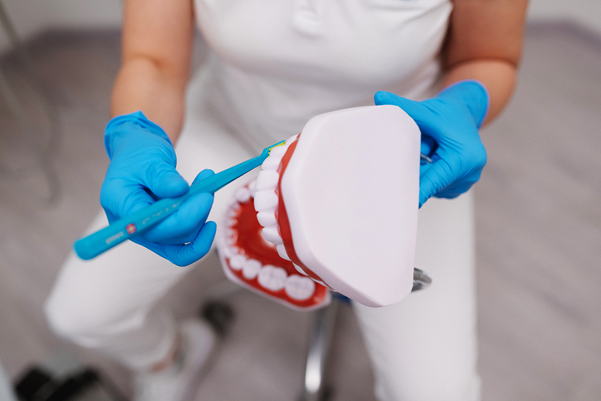
Seen Here: Your smile deserves more than a quick brush. This National Oral Health Month, rethink your routine — brush gently, clean between your teeth, refresh your toothbrush regularly and pay attention to what your mouth may be telling you about your overall health. Small habits, healthier smiles. Photo Credit: Supplied
JOHANNESBURG, September 2026 — A healthy smile starts long before a dental appointment. It is shaped by the everyday choices made at the bathroom sink — from how much pressure is used when brushing to how often the spaces between teeth are cleaned.
As South Africa observes National Oral Health Month in September, the focus is once again on improving oral-hygiene awareness and encouraging people to take better care of their teeth and gums. The South African government identifies cavities and gum disease among the most common oral-health problems, making preventive care an important part of everyday wellbeing.
Oral-care brand Curaprox is using the month to challenge some familiar assumptions about dental hygiene and encourage consumers to rethink their daily routines.
Here are six things worth knowing.
1. Harder brushing does not mean cleaner teeth
More pressure does not necessarily translate into better cleaning.
Aggressive brushing can be unnecessarily harsh on the teeth and gums. Instead, effective brushing depends on technique, consistency and using an appropriate toothbrush.
Curaprox recommends brushing gently, with very little pressure. Its CS 5460 toothbrush, for example, uses densely packed ultra-fine filaments designed to remove plaque while being gentle on teeth and gums.
The principle is simple: clean thoroughly, not aggressively.
2. Your toothbrush needs a regular refresh
A toothbrush is a daily workhorse, but its effectiveness declines as the bristles wear.
Curaprox Managing Director Richard Meyer says consumers should not wait until bristles begin falling out before replacing their toothbrush.
“We don’t need to wait until the bristles start coming off before replacing our toothbrushes; it is recommended that we replace it approximately every three months,” Meyer says.
He also recommends considering a replacement after a cold or infectious illness as part of maintaining a fresh oral-care routine.
3. Brushing alone does not reach every area
One of the most commonly overlooked parts of oral hygiene is the space between the teeth.
A toothbrush cannot effectively clean every interdental space, allowing plaque to accumulate in areas that are difficult to reach. Curaprox recommends incorporating interdental cleaning into the daily routine, with brushes available in different sizes to accommodate different gaps.
The company’s guidance recommends cleaning between the teeth once a day alongside regular brushing.
For consumers who experience discomfort or bleeding when starting interdental cleaning, professional guidance can help determine the appropriate brush size and technique.
4. Whiter does not always mean healthier
The pursuit of a brighter smile can sometimes lead consumers towards highly abrasive products.
Curaprox says whitening should be approached with consideration for enamel and overall oral health. Its Be You range uses an enzymatic approach to whitening, while the company’s broader toothpaste range includes products designed around gentle cleaning and enamel care.
The wider message is that consumers should look beyond the promise of a dramatic whitening effect and consider how a product fits into their long-term oral-care routine.
5. Oral bacteria can be shared
Oral health is not entirely an individual matter.
Some bacteria associated with dental caries can be transmitted between people. This is particularly relevant when caring for young children, whose developing teeth can be vulnerable to decay.
Parents and caregivers can reduce unnecessary exposure by avoiding practices such as putting a child’s spoon, pacifier or feeding bottle into their own mouth before giving it to the child.
Good oral hygiene therefore extends beyond individual brushing habits to everyday interactions within families.
6. Your mouth can tell you more than you think
The condition of the mouth can provide important clues about overall health.
The relationship between oral and general health is increasingly recognised, with gum disease and other oral conditions associated with broader health concerns. South Africa’s National Oral Health Month messaging similarly highlights the connection between oral health and overall wellbeing.
Changes such as persistent gum bleeding, swelling, pain or other unusual symptoms should not simply be dismissed as part of everyday life. Where concerns persist, professional dental assessment is advisable.
Small habits, lasting impact
National Oral Health Month is a useful reminder that oral health is not a once-a-year conversation.
Brushing twice a day, cleaning between the teeth, replacing worn toothbrushes and paying attention to changes in the mouth can all form part of a consistent preventive routine. Curaprox’s own guidance recommends brushing thoroughly at least twice daily and cleaning between the teeth once a day.
Ultimately, better oral care does not necessarily require a complicated routine. It requires consistency, the right technique and a willingness to rethink habits that may have been carried from one generation to the next.
This September, the message is simple: your smile deserves more than a quick brush — it deserves informed, gentle and consistent care.