By: Lonwabo Mtyeku | Photo Credit: Community Newsroom
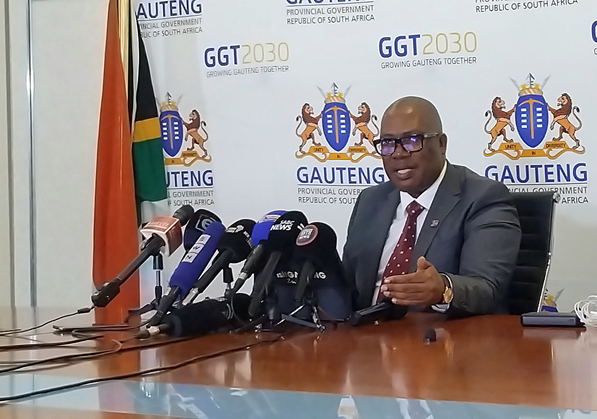
Seen Here: Panyaza Lesufi addresses the media in Johannesburg, outlining a sweeping Gauteng Provincial Government reshuffle aimed at strengthening service delivery and stabilising coalition governance across key departments. Photo Credit: Community Newsroom
Johannesburg, South Africa — Panyaza Lesufi has announced a significant reshuffle of the Gauteng Provincial Government, outlining a reconfigured executive aimed at stabilising governance, improving performance, and navigating the realities of a multi-party coalition administration.
Addressing the media, Lesufi described the reshuffle as a “strategic realignment” designed to inject urgency and accountability into key departments while accommodating the dynamics of coalition governance following the African National Congress’ weakened electoral position in the province.
Key Changes in the Gauteng Executive
Lesufi confirmed several high-impact portfolio changes affecting core service delivery departments:
- Health Portfolio: Leadership in the health department has been restructured, with a renewed focus on fixing systemic challenges in public healthcare, including hospital management, staffing shortages, and budget controls.
- Education Portfolio: Adjustments were made to strengthen oversight in one of the province’s most critical sectors, with emphasis on infrastructure development, learner placement, and digital learning expansion.
- Infrastructure Development: A new MEC has been tasked with accelerating stalled infrastructure projects and addressing long-standing backlogs in housing and public works.
- Community Safety: Changes in this portfolio are intended to intensify crime-fighting coordination, particularly in high-risk urban areas across Gauteng.
- Economic Development & Finance: Lesufi retained key figures in economic portfolios to ensure continuity in driving investment, job creation, and fiscal stability, particularly as the province seeks to rebuild economic momentum.
While Lesufi did not frame the changes as punitive, he acknowledged that performance evaluations played a decisive role in reassignments and removals.
Coalition Governance at the Core
The reshuffle also reflects the political arithmetic of coalition governance. Gauteng’s legislature now requires cooperation between multiple parties, forcing the executive to balance political inclusivity with operational efficiency.
Lesufi confirmed ongoing engagements with coalition partners to ensure alignment on policy priorities, while also maintaining that governance cannot be compromised.
“Coalition does not mean confusion,” he said. “It means shared responsibility. But ultimately, delivery to our people remains non-negotiable.”
Targeting Service Delivery Failures
The Premier was candid about the challenges facing Gauteng, citing:
- Persistent energy disruptions
- Strain on public healthcare facilities
- Housing and infrastructure backlogs
- Rising urban crime
He emphasised that the reshuffle is intended to place “the right people in the right roles” to accelerate interventions in these areas.
Political Stability vs Performance Pressure
Analysts suggest the reshuffle serves a dual purpose — reinforcing governance capacity while consolidating Lesufi’s leadership within a politically fragmented environment. By reshaping his executive, Lesufi is attempting to assert control while maintaining coalition cohesion.
However, the success of this move will ultimately depend on measurable improvements in service delivery rather than political optics.
A Reset Moment for Gauteng
Closing his address, Lesufi positioned the reshuffle as part of a broader reset for the province:
“This is a moment to refocus, to act with urgency, and to restore the confidence of the people of Gauteng. We cannot afford delays — our communities need results now.”
As the new executive settles into its roles, all eyes will be on whether this re-calibrated leadership structure can translate political compromise into tangible progress on the ground.