

By: Lonwabo Mtyeku Photo Credit: Supplied
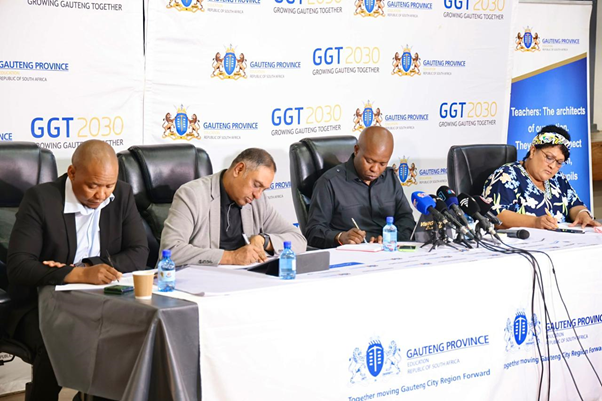
Seen Here: Lebogang Maile addresses the media, outlining Gauteng’s education challenges and unveiling the province’s 2025–2030 Strategic Plan aimed at strengthening learning outcomes and infrastructure. Photo Credit: Supplied
Johannesburg — Gauteng MEC for Education, Lebogang Maile, has outlined an ambitious yet urgent roadmap for reforming the province’s education system, warning that rapid population growth, infrastructure strain, and declining foundational learning outcomes continue to place the system under severe pressure.
Addressing a media briefing, Maile presented a comprehensive overview of the state of education in Gauteng alongside the Department’s 2025–2030 Strategic Plan — a framework designed to stabilise and modernise schooling in South Africa’s economic hub.
A System Expanded, But Under Strain
Since the dawn of democracy in South Africa, Gauteng’s education system has undergone massive expansion. Learner enrolment has more than doubled, rising from just over 1.4 million in 1995 to nearly 2.8 million in 2026. This growth, driven largely by urbanisation and in-migration into Gauteng, has enabled near-universal access to schooling.
However, Maile cautioned that access has come at a cost.
“Demand continues to outpace delivery,” he noted, highlighting that the province adds more than 50,000 learners annually — a pace that infrastructure development has failed to match.
The result is widespread overcrowding, with some township and inner-city classrooms accommodating up to 70 learners per teacher. Currently, more than 700 schools experience overcrowding, with a shortage of over 5,500 classrooms and an estimated need for at least 200 new schools.
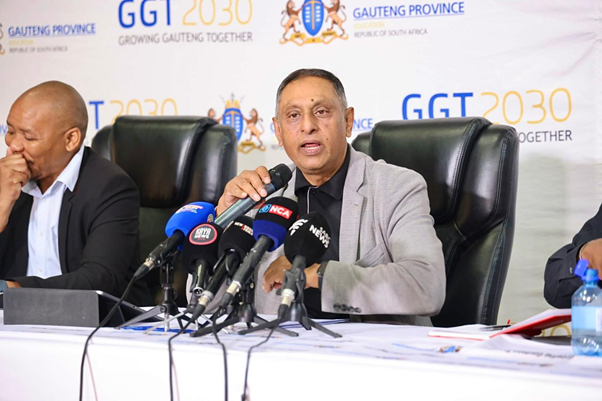
Seen Here: GDE Acting Head of Department, Albert Chanee Photo Credit: Supplied
Infrastructure and Resource Deficits
Despite significant financial investment — with Gauteng’s education budget growing from R4.5 billion in 1995 to over R70 billion today — fiscal constraints and rising costs have eroded the system’s capacity to respond effectively.
Furniture shortages remain acute, with tens of thousands of desks and chairs still outstanding following the 2026 school readiness audit. Infrastructure delivery has also slowed, with only 48 schools built or refurbished between 2015 and 2024.
Compounding the challenge is the rising wage bill, which consumes a large portion of the budget, leaving limited room for infrastructure, maintenance, and learning materials.
Early Childhood Development Gaps
The transfer of Early Childhood Development (ECD) to the education department in 2022 has exposed deep structural weaknesses. The sector remains largely privatised, with no public ECD centres in Gauteng.
Thousands of centres operate without formal registration, often unable to meet regulatory standards or access government subsidies. Bureaucratic delays and insufficient funding continue to hinder efforts to expand access, particularly in low-income communities.
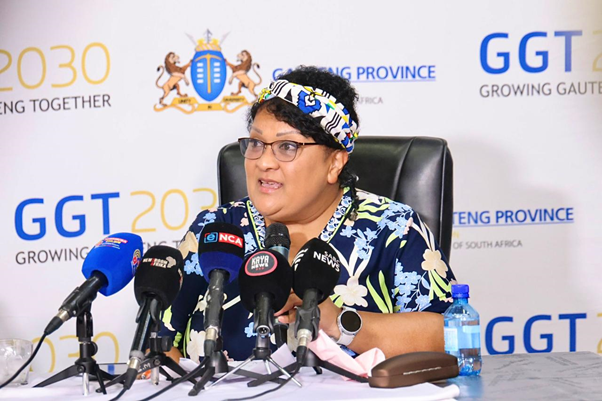
Seen Here: Deputy Director-General for Curriculum Management & Delivery, Adv. Alison Bengtson Photo Credit: Supplied
A Silent Crisis in Learning Outcomes
While Gauteng celebrated a record 89.06% matric pass rate in 2025, Maile acknowledged that headline figures mask deeper systemic issues.
International assessments reveal that a majority of learners struggle with basic literacy and numeracy. Approximately 81% of Grade 4 learners cannot read for meaning — a foundational deficit that cascades into poor performance in later grades, particularly in Mathematics and Physical Sciences.
Teacher shortages in critical subjects, especially STEM fields, further exacerbate the problem. The province currently faces a shortfall of at least 370 specialised teachers, alongside growing demand for Foundation Phase educators.
Teacher and Safety Challenges
Although the number of teachers has increased by more than 55% since 1995, staffing levels have not kept pace with enrolment growth. Large class sizes, teacher burnout, and out-of-field teaching remain persistent issues.
School safety also continues to pose a serious threat to learning. Incidents of violence, bullying, substance abuse, and mental health challenges are on the rise, placing additional pressure on already stretched psychosocial support services.
Strategic Plan Targets Systemic Reform
In response, the Gauteng Department of Education’s 2025–2030 Strategic Plan introduces a multi-pronged reform agenda aligned with the province’s broader development blueprint.
Central to the plan is the integration of technology into education, aimed at fostering critical thinking and preparing learners for a rapidly evolving global economy.
Key interventions include:
- Strengthening foundational learning through the General Education and Training (GET) Language and Mathematics Strategy, with a strong emphasis on reading.
- Boosting STEM outcomes via the Maths, Science and Technology (MST) Strategy, focusing on teacher development, resource provision, and learner performance.
- Expanding technical education through the Technical High School Strategy, positioning schools as hubs for vocational skills and entrepreneurship.
- Improving matric outcomes under the Further Education and Training (FET) Strategy, targeting a pass rate above 90% while supporting high-risk learners.
- Reorganising schools through specialised institutions designed to align education with industry needs and economic priorities.
Collaboration as a Cornerstone
Maile emphasised that government alone cannot resolve the systemic challenges facing education. The Department will embark on extensive stakeholder engagements, including consultations with school leadership, governing bodies, parents, and private sector partners.
“We need a whole-of-society approach,” he said. “Partnerships with business, civil society, and communities are essential if we are to build a resilient and future-ready education system.”
A System at a Crossroads
As Gauteng positions itself as the economic engine of South Africa, the success of its education system will be critical in shaping the province’s future workforce and social stability.
The 2025–2030 Strategic Plan presents a clear vision — but its success will depend on execution, funding, and sustained collaboration in the face of mounting demand.
For now, the province’s education system stands at a crossroads: expanded in access, but under increasing strain to deliver quality outcomes at scale.