

By: Lonwabo Mtyeku | Photo Credit: Unsplash
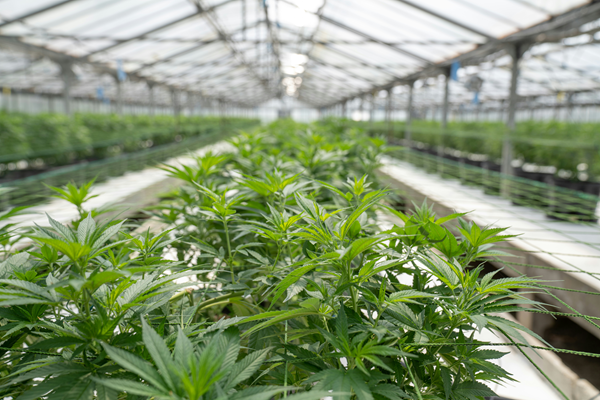
Seen Here: South Africa’s cannabis economy stands at a legal crossroads — where opportunity meets regulation, and the interpretation of National Environmental Management: Biodiversity Act 10 of 2004 could determine the future of a multi-billion-rand industry. Photo Credit: Unsplash
Johannesburg, South Africa — South Africa’s push to formalise a thriving cannabis and hemp industry is gaining momentum, but a complex legal question is emerging at the heart of this green economy: can cannabis be classified as an indigenous biological resource, and if so, what does that mean for business, research, and regulation?
As government advances its national cannabis master plan, aimed at unlocking economic growth and job creation, it must simultaneously navigate the stringent provisions of the National Environmental Management: Biodiversity Act 10 of 2004 (NEMBA), a cornerstone of the country’s environmental protection framework.
The Legal Framework: Where Biodiversity Meets Business
NEMBA was designed to protect South Africa’s rich biodiversity while regulating how biological resources are accessed, traded, and commercialised. Central to this is a strict permitting system governing bioprospecting and biotrade — activities that involve researching, developing, or commercially exploiting biological materials.
Failure to comply is no minor oversight. Offenders face penalties of up to R10 million in fines or imprisonment of up to 10 years, underscoring the seriousness with which the state treats biodiversity governance.
For any cannabis-related venture, the legal trigger hinges on a three-part test:
- Whether the activity qualifies as bioprospecting
- Whether cannabis is considered an Indigenous Biological Resource (IBR)
- Whether any exemptions apply
Cannabis: Indigenous or Introduced?
The crux of the issue lies in classification. Under NEMBA, an indigenous species is one that occurs naturally within South Africa — excluding species introduced through human activity.
Cannabis presents a legal grey area.
While widely cultivated and capable of growing in the wild, historical evidence suggests cannabis may have been introduced to southern Africa centuries ago, possibly by Arab traders as early as the 1300s. If this interpretation holds, cannabis may fall outside the strict definition of an indigenous species.
However, the situation is not that simple.
Over generations, cannabis has adapted to local conditions, producing distinct landraces and becoming deeply embedded in traditional knowledge systems. This raises the possibility that authorities — particularly the Department of Forestry, Fisheries and the Environment (DFFE) — could interpret cannabis, or derivatives of it, as falling within the scope of IBRs.
Bioprospecting Implications for Industry
If cannabis is deemed an IBR, the implications for the industry are substantial.
Any commercial research or development — from medicinal extraction to product innovation — could be classified as bioprospecting. This would trigger requirements such as:
- Permits issued under NEMBA
- Material Transfer Agreements (MTAs)
- Benefit Sharing Agreements (BSAs) with local communities or knowledge holders
These requirements are designed to ensure ethical sourcing and equitable benefit distribution, particularly where traditional knowledge is involved.
While progressive in principle, the regulatory burden could slow down industry growth if not carefully aligned with economic policy objectives.
No Clear Exemptions — Yet
Currently, cannabis is not listed under the International Treaty on Plant Genetic Resources for Food and Agriculture, which excludes certain species from NEMBA’s scope. Nor has the Minister issued any formal exemption for cannabis or hemp.
This regulatory silence leaves stakeholders in a state of uncertainty.
On one hand, strict enforcement could protect local biodiversity and ensure communities benefit from commercialisation. On the other, it risks creating barriers for investors and entrepreneurs’ eager to participate in a rapidly growing global market.
A Policy Decision with Economic Consequences
Government now faces a strategic choice.
It could move to explicitly exempt cannabis from NEMBA’s more onerous provisions, accelerating industrial development and positioning South Africa as a competitive player in the global cannabis economy.
Alternatively, it could formally recognise cannabis as an IBR — a move that would prioritise conservation and community benefit-sharing, but require a more structured and compliance-heavy industry model.
Either path carries significant implications for regulation, investment, and transformation.
An Industry in Waiting
As South Africa stands on the cusp of a cannabis-driven economic shift, clarity is urgently needed. The intersection of environmental law and industrial policy has created a regulatory conundrum that cannot remain unresolved for long.
For now, the cannabis sector remains poised between opportunity and uncertainty — its future shaped not only by market demand, but by how the law ultimately defines the plant itself.