


Johannesburg, South Africa — September 2025
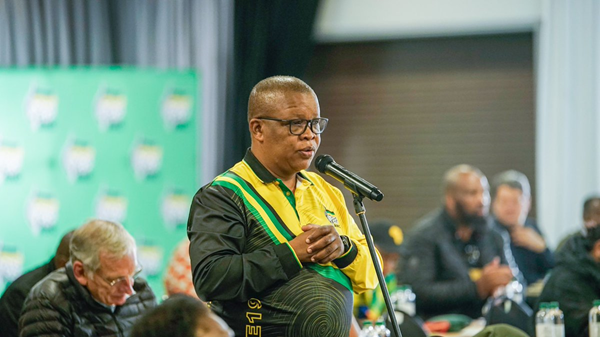
The African National Congress (ANC), Africa’s oldest liberation movement and governing party of South Africa, convened a landmark community engagement at the Nasrec Expo Centre this past week. The event signaled not only the ANC’s ongoing efforts to strengthen dialogue with communities but also its broader attempt to recalibrate its social contract with citizens in an era marked by economic strain, political contestation, and evolving civic expectations.
A Convergence of Policy and Grassroots Voices
The Nasrec Expo Centre, historically significant as a venue for major political and cultural gatherings, was transformed into a forum of democratic participation. Thousands of community members, civil society stakeholders, youth organisations, women’s groups, and business representatives gathered to engage directly with ANC leadership. The purpose: to deliberate on pressing issues such as service delivery, unemployment, gender-based violence, infrastructure development, and the protection of constitutional democracy.
At its core, the engagement sought to restore trust between communities and political leadership, reflecting an academic tradition of deliberative democracy, where governance is not unilaterally imposed but co-produced through consultation, feedback, and negotiation.

Themes of the Engagement
1. Service Delivery and Infrastructure
Delegates emphasised water shortages, electricity reliability, housing backlogs, and transportation challenges. These concerns were not framed merely as logistical deficits but as barriers to dignity and human development.
2. Economic Transformation and Employment
Discussions highlighted the enduring crisis of unemployment, particularly among youth, with calls for expanded public-private partnerships, township enterprise development, and targeted support for small and medium-sized enterprises (SMEs).
3. Social Cohesion and Gender-Based Violence (GBV)
Gender-based violence emerged as a dominant theme. Community members urged the ANC to accelerate structural reforms, strengthen policing capacity, and ensure survivor-centered justice. The engagement underscored that GBV is not only a social ill but a systemic barrier to equality, growth, and nation-building.
4. Governance and Accountability
Communities demanded increased transparency in municipal budgeting, procurement, and service delivery. The call for accountability resonates with the broader global debates around governance, anti-corruption measures, and participatory development.
Academic and Policy Significance
Political scientists often note that the legitimacy of a ruling party is not solely grounded in electoral performance but in its ability to maintain meaningful engagement with its constituents between election cycles. In this respect, the ANC’s Nasrec engagement is more than symbolic. It serves as an instrument of participatory governance, where community concerns are explicitly documented and theoretically integrated into policy frameworks.
The format resembled what governance theorists call “deliberative forums,” where dialogue enables power redistribution by amplifying marginalized voices. For the ANC, this approach reflects both a historical legacy of mass-based mobilisation and an adaptation to contemporary democratic demands.
ANC Leadership Perspectives
Senior ANC officials addressed the crowd, affirming the party’s historical responsibility to deliver on the Freedom Charter’s vision: “The People Shall Govern.” Leaders reiterated commitments to:
- Accelerating infrastructure investment in under-served communities.
- Establishing youth-focused employment pathways linked to the digital economy.
- Strengthening oversight of municipalities to curb maladministration.
- Embedding anti-GBV strategies into every layer of governance.
Speakers acknowledged shortcomings in service delivery while positioning the Nasrec engagement as a cornerstone of renewal—one that demands listening as much as leading.
A Turning Point in Civic Engagement?
The Nasrec engagement has been described by observers as a potential turning point for the ANC’s relationship with the public. In the context of declining voter confidence, such engagements provide opportunities for the party to re-anchor itself within grassroots struggles.
Critically, the event illustrates a recognition that political power is sustained not only through electoral mandates but through constant accountability and dialogic governance.
Conclusion
The ANC’s community engagement at the Nasrec Expo Centre is emblematic of the intersection between politics, policy, and people. It reaffirmed the enduring need for dialogue as a democratic practice, not a rhetorical device. As South Africa grapples with socio-economic transformation and the demands of a youthful, assertive population, forums like Nasrec are not optional—they are essential to sustaining democratic legitimacy.
In scholarly terms, the event underscored the ANC’s attempt to transition from a party of liberation memory to a party of governance responsiveness. Whether this marks a substantive shift or remains symbolic will depend on how faithfully the concerns raised at Nasrec translate into actionable, measurable policy outcomes.
For now, however, the engagement offered a moment of collective reflection, a reaffirmation of participatory politics, and perhaps a glimpse into a renewed social contract between the ANC and the people of South Africa.