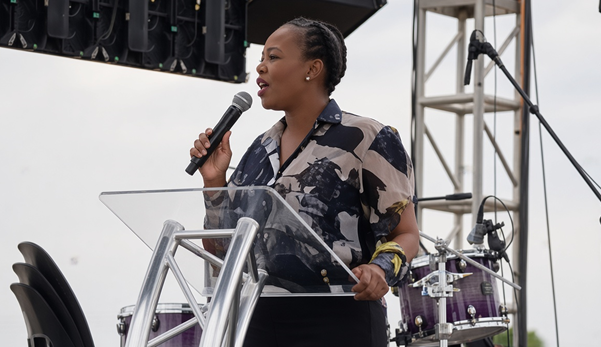
Seen Here: Minister of Small Business Development, Ms Stella Tembisa Ndabeni, delivered the keynote address at the launch of the enhanced Township and Rural Entrepreneurship Programme (TReP) at Seshego Stadium, Ground B, in Polokwane on 27 October 2026. The enhanced programme aims to empower township and rural entrepreneurs through improved access to affordable finance, blended financing solutions and business development support, with funding of up to R3 million available to qualifying enterprises. The initiative reinforces government’s commitment to strengthening small businesses, expanding economic opportunities and promoting inclusive growth across South Africa. Photo Credit: Supplied
Minister Stella Ndabeni announces enhanced financing terms as South Africa steps up support for township and rural entrepreneurs
POLOKWANE, Limpopo — 28 October 2026
Township and rural entrepreneurs have a renewed opportunity to access business financing of up to R3 million following the relaunch of the enhanced Township and Rural Entrepreneurship Programme (TReP) in Seshego, Polokwane, on Tuesday.
The programme, relaunched by the Minister of Small Business Development, Ms Stella Tembisa Ndabeni, introduces a higher funding ceiling, extended repayment periods and stronger business development support, in a move aimed at helping micro, small and medium-sized enterprises (MSMEs) overcome barriers to growth.
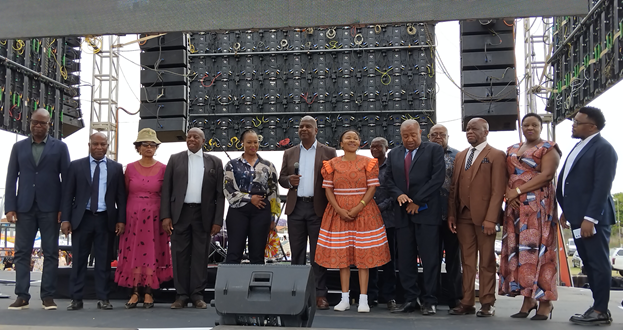
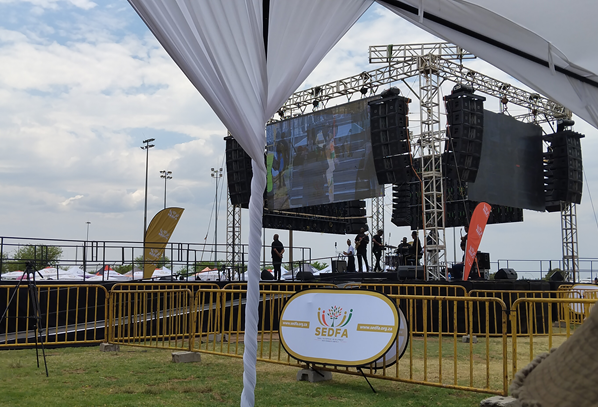
The relaunch took place at Seshego Stadium, Ground B, with the Department of Small Business Development and the Small Enterprise Development and Finance Agency (SEDFA) promoting improved access to finance for enterprises operating in township and rural economies.
According to the Department of Small Business Development’s announcement ahead of the event, the enhanced programme is designed to improve financing access, reduce application turnaround times and strengthen business development and post-investment support.
Funding limit increased from R1 million to R3 million
One of the most significant changes to TReP is the increase in the maximum funding amount from R1 million to R3 million, potentially giving qualifying enterprises greater scope to invest in their operations and pursue expansion.
The enhanced financing framework retains a favourable interest rate of 5%, with repayment periods of up to 60 months and a repayment moratorium of up to six months, subject to the applicable programme conditions.
The programme also introduces a blended financing approach, combining loan and grant components for qualifying applications.
In a post-event update, SEDFA reported that qualifying funding above R250,000 and up to R3 million would comprise 60% loan financing and 40% grant financing, subject to programme criteria.
The revised terms could be particularly relevant to businesses that need capital to acquire equipment, expand premises, increase production capacity, purchase stock or strengthen their working capital position.
However, funding is subject to eligibility requirements and assessment; the maximum amount is not an automatic grant available to every applicant.
“We design them for entrepreneurs” — Ndabeni
Speaking at the relaunch, Minister Ndabeni emphasised the importance of designing business support instruments around the needs of the entrepreneurs they are intended to serve.
In a statement published by SEDFA following the event, the Minister was quoted as saying: “We do not design instruments for ourselves as a portfolio; we design them for entrepreneurs.”
She added that the department had engaged with intended beneficiaries before the relaunch.
The remarks underscore the importance of consulting business owners when developing financing programmes and ensuring that the terms and support mechanisms respond to the practical challenges facing small enterprises.
For entrepreneurs, access to funding is only one part of the equation. Businesses also need assistance with financial management, regulatory compliance, operational planning and market access to ensure that financing translates into sustainable growth.
The enhanced TReP seeks to address these needs through stronger business development and post-investment services.
Programme targets barriers to township and rural enterprise growth
Businesses in townships and rural communities often operate in markets where access to affordable capital, established supply chains and business development resources can be limited.
These constraints can make it difficult for entrepreneurs to purchase essential equipment, maintain sufficient stock, employ additional workers or expand into new markets.
TReP is designed to support informal, micro and small enterprises, as well as cooperatives, operating in township and rural economies.
The programme covers a range of business sectors, including clothing and textiles, bakeries and confectioneries, cooked-food businesses, retail, automotive services, personal care and artisan enterprises.
By expanding financing options and strengthening business support, the programme aims to improve the ability of qualifying enterprises to participate in the mainstream economy.
SEDFA also reported that businesses showcased their products and services at the Polokwane relaunch, highlighting the role of local entrepreneurs in the event.
While individual participant testimonials and detailed attendance figures were not available in the published information reviewed for this report, the showcase provided a platform for local businesses to present their offerings in the context of the programme’s renewed focus on enterprise development.
Who qualifies for TReP funding?
According to the Department of Small Business Development’s published TReP eligibility guidance, applicants must meet the programme’s requirements.
These include:
- The business must be registered with the Companies and Intellectual Property Commission (CIPC), including eligible cooperatives.
- The business must be 100% owned by South African nationals.
- The enterprise must operate in a township or rural area.
- At least 70% of employees must be South African citizens. Non-South African employees must hold valid work permits.
- The enterprise must be registered, or apply for registration, with the South African Revenue Service (SARS) and the Unemployment Insurance Fund (UIF).
- The business must have a valid business bank account or be willing to open and operate one.
- The enterprise must meet the applicable business-licensing requirements.
Applicants should confirm the full, current criteria with SEDFA before submitting an application, as eligibility and supporting-document requirements may depend on the nature of the business and the funding sought.
How entrepreneurs can apply
Entrepreneurs interested in accessing the enhanced programme should approach the Small Enterprise Development and Finance Agency (SEDFA), which implements TReP, to obtain the latest application requirements and guidance.
Prospective applicants should:
- Confirm that their business operates in an eligible township or rural area and meets the programme’s ownership and registration requirements.
- Prepare their business registration documents, business bank account details and applicable tax, UIF and licensing information.
- Develop a clear business plan explaining how much funding is required, how the money will be used and how the investment is expected to support business growth.
- Contact SEDFA to confirm the current application process, the required supporting documents and whether applications are being accepted under the enhanced terms.
- Ask about available business development support and assistance with completing an application.
Official information is available through the Department of Small Business Development and the Small Enterprise Development and Finance Agency.
The department’s published TReP programme guidance also outlines the programme’s target sectors and eligibility requirements.
Although the relaunch announcement outlined the improved financing terms, a confirmed application-opening date or dedicated application portal for the enhanced programme was not established in the information reviewed. Entrepreneurs should therefore verify these details directly with SEDFA rather than assume that applications are automatically open.
From funding access to sustainable businesses
The relaunch comes as small enterprises remain an important part of efforts to broaden economic participation, create employment and strengthen local economies.
Increasing the funding ceiling could allow qualifying businesses with larger capital requirements to pursue investments that were previously beyond their reach under the programme’s earlier limit. Longer repayment periods and a repayment moratorium may also help eligible businesses manage their cash flow, depending on their individual financing arrangements.
Nevertheless, the impact of the enhanced programme will ultimately depend on its implementation, the accessibility of its application process and the ability of beneficiaries to turn financial assistance into viable, sustainable business activity.
Transparent application requirements, timely decisions and effective post-investment support will be important in ensuring that eligible entrepreneurs can navigate the programme and make productive use of approved funding.
For township and rural business owners, the relaunch provides a reason to reassess their financing needs, strengthen their business plans and establish whether the enhanced TReP offering is suitable for their enterprises.
The central challenge now is translating improved financing terms into tangible business expansion, sustainable livelihoods and employment opportunities in the communities the programme is designed to serve.
Publication checks before release
The article now incorporates publicly reported information, but I recommend confirming three points with the Department or SEDFA before publishing:
- The Minister’s full speech: The quotation above is reported by SEDFA; the complete speech would help establish whether additional commitments or announcements were made.
- Participant voices: Obtain direct comments from at least two entrepreneurs who attended, ideally one seeking funding and another who has previously benefited from enterprise-support programmes.
- Application status: Confirm whether applications under the enhanced R3 million ceiling are open, where they must be submitted, and which documents are required.
The official sources used for the programme details are the Department’s relaunch announcement and SEDFA’s post-event updates . These support the reported funding changes and the Minister’s quoted remarks, but do not establish individual entrepreneurs’ reactions or all the operational details of the application process.