

First for Women’s latest Her & Now research finds self-employed women feel most dismissed by financial institutions, while Mo’s Crib founders show what can happen when entrepreneurial ambition outpaces access to capital

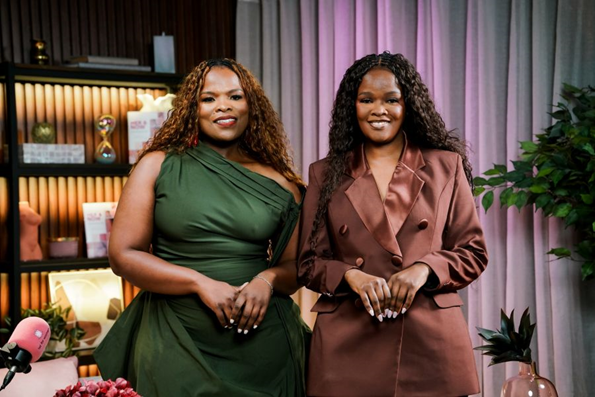
Seen Here: Mo and Michelle Mokone, co-founders of Mo’s Crib, embody the power of African entrepreneurship — turning a bold vision, craftsmanship and resilience into a globally exporting business that has created hundreds of jobs. Their story is a powerful reminder that when women are given the space to build, they don’t just create businesses — they create possibilities. Photo Credit: Supplied
JOHANNESBURG, 14 September 2026 — For thousands of South African women building businesses outside traditional employment, access to finance can still depend on a system designed around a payslip rather than entrepreneurial potential.
That is one of the stark findings emerging from First for Women’s Her & Now Edition 2: A World Built for Someone Else, which found that self-employed women were more likely than any other employment group surveyed to say they had been dismissed or not taken seriously by a product, service or institution.
Of the 296 self-employed women surveyed, 169 — 57% — reported having experienced this. Among women whose income fluctuates from month to month, 46% said banks accommodate that reality poorly or not at all.
The findings form part of a wider study based on more than 6,000 South African women’s voices, examining how financial services, work, safety, household responsibilities and other systems intersect with women’s everyday lives.
The research becomes particularly tangible through the story of sisters Morongwe “Mo” and Michelle Mokone, co-founders of sustainable homeware business Mo’s Crib, whose entrepreneurial journey features in the latest season of The Anele Podcast: Her & Now.
Building without a bank loan
The Mokone sisters started Mo’s Crib in 2016, transforming handcrafted design into a growing export business producing woven baskets, planters, furniture and other décor from materials including discarded PVC water pipes and natural grasses.
What began with an origami-inspired creation sold at a market has developed into an African craft-export business with an international footprint.
Recent reporting has put the company’s workforce at about 380 people, with products reaching consumers in 15 international markets.
But the journey was not built on conventional bank financing.
For roughly three years, the sisters relied on their own savings, friends and family while learning how to navigate the funding and support ecosystem around them.
Their experience illustrates the central tension highlighted by the Her & Now research: entrepreneurs can demonstrate demand, build products, employ people and generate export revenue while still struggling to fit financing models that prioritise predictable salaries and conventional collateral.
The sisters also discovered a government support programme almost by accident while attending a trade show in New York — a moment that highlighted the distance that can exist between available support and the entrepreneurs who need it.
When a business doesn’t fit the funding model
For Mo, the challenge goes beyond access to capital.
She has argued that labour-intensive, circular-economy businesses such as Mo’s Crib can fall through funding gaps because they are not always recognised within conventional definitions of technology-driven businesses.
That argument has increasingly become part of her international advocacy.
At ChangeNOW in Paris, Mo’s Crib highlighted the financing challenges facing craftsmanship-driven businesses and questioned why models creating employment, environmental impact and economic value can remain overlooked by traditional funding structures. The company says its circular manufacturing model has created more than 300 jobs and diverted more than 10,000 tonnes of plastic from waste streams.
For the Mokone sisters, the objective was never simply to create a successful market stall.
They say they always envisioned a global African brand — a conviction that shaped their decisions before the international orders arrived.
From survival to global markets
The business has since built relationships with major retailers and international markets, demonstrating the commercial potential of African design and craft when supported by the right market access.
The Department of Trade, Industry and Competition previously highlighted Mo’s Crib’s use of the African Growth and Opportunity Act to access the US market. The company reported shipping eight containers to the US by 2023, with the American market accounting for 60% of its revenue at the time.
The company now describes itself as a leading African craft exporter, with a sustainability model centred on transforming discarded materials into design-led products while creating employment.
That trajectory gives weight to the broader question raised by Her & Now: what economic value is being lost when financial systems fail to recognise how modern women actually earn and build wealth?
“Over-motivated and under-sponsored”
The research found that 894 women identified banking and financial services as an area where they feel like an afterthought.
When asked what would change that experience, the most common response was a financial product capable of assessing real cash flow rather than relying primarily on a payslip.
It is a distinction that matters in an economy where more women are earning through entrepreneurship, freelancing, informal businesses and income streams that do not arrive in identical amounts every month.
Host Anele Mgudlwa captures the broader frustration in a simple phrase: South African women are “over-motivated and under-sponsored.”
For entrepreneurs such as the Mokone sisters, that gap can determine whether an idea remains a side hustle or becomes an employer, exporter and contributor to the wider economy.
The power of focus
Despite the obstacles, the Mokone sisters say their growth has been driven by focus — doing more of what works, building deliberately and surrounding themselves with people who share the right mindset.
For Mo, attitude is more important than a perfect résumé.
“It’s about a spirit of willingness — I can teach you the job, I can’t teach you attitude.”
The philosophy reflects the company’s wider emphasis on craftsmanship, skills development and employment, particularly for women.
Mo’s Crib has set an ambitious goal of employing 10,000 artisans across Africa by 2030, positioning craft not as an outdated economic activity but as a form of African talent with potential value in an increasingly automated economy.
Grace, resilience and the next generation
For Michelle, the journey has also been about accepting the decisions that made the business possible.
“I look at life as whatever I have done, said or thought was the best decision in that moment even when it wasn’t. I look back and give myself grace.”
That perspective sits comfortably alongside the central message of the Her & Now research.
The issue is not whether South African women are resilient. The report argues that resilience should not have to compensate indefinitely for systems that fail to accommodate their realities. First for Women says its second edition draws on 6,558 completed survey responses across the two editions, with participants from all nine provinces and different income, employment and household circumstances.
Jill Mulligan, Head of Marketing at First for Women, says the Mokone sisters demonstrate the scale of potential that can emerge when women back their own ideas despite limited institutional support.
“They built an export business employing hundreds of women with no institutional funding behind them for years, and they still had to find out about the support they qualified for by chance.”
From research to action
The significance of Her & Now lies in the intersection between the numbers and the stories.
The data identifies a structural problem. The Mo’s Crib story demonstrates what that problem can look like in real life — and what can happen when entrepreneurs find alternative ways forward.
The challenge for financial institutions, policymakers and the broader business ecosystem is therefore not simply to encourage women to become more resilient.
It is to build systems capable of recognising cash flow, potential, assets, business models and ambition alongside traditional measures of financial credibility.
Because the next major African business may not begin with a payslip.
It may begin with an idea, a market stall, a recycled piece of PVC — and two women willing to bet on themselves.
The Anele Podcast: Her & Now Season 2 is available on First for Women’s YouTube channel, with the Mo’s Crib episode released on 10 September 2026.