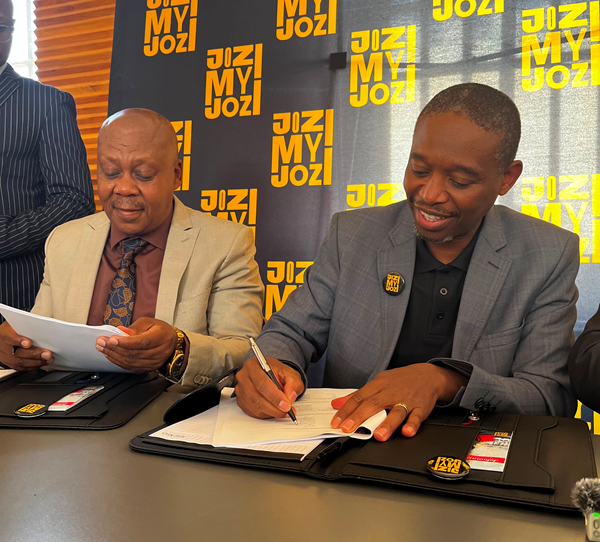
Seen Here: Building a smarter Johannesburg taxi industry: Jozi My Jozi CEO Innocent Mabusela (centre) joins Gibela-Namela Holdings Chairman Velanto Thwala (left) and Zwelakhe Mchunu (right) at the signing of a landmark MOU aimed at improving taxi-rank safety, cleanliness, driver wellbeing, skills development and smart mobility across the city. Photo Credit: Supplied
JOHANNESBURG, 7 August 2026 – A new partnership between Gibela Namela Holdings and citizen-led non-profit company Jozi My Jozi (JMJ) aims to strengthen Johannesburg’s minibus taxi industry through improved infrastructure, safety, driver wellbeing, skills development and technology-driven mobility solutions.
The two organisations have signed a memorandum of understanding (MOU) following 18 months of discussions, marking a significant step towards more structured and sustainable interventions across the city’s taxi ecosystem.
The agreement forms part of Project Unite, one of Jozi My Jozi’s Public Transit Revitalisation programmes, which seeks to work directly with taxi associations to improve the systems supporting public transport and the millions of commuters who depend on minibus taxis every day.
Building a stronger taxi ecosystem
The partnership recognises the taxi industry’s critical economic and social role in Johannesburg while seeking to address some of the challenges affecting taxi operators, drivers, commuters and taxi-rank environments.
JMJ CEO Innocent Mabusela said meaningful transformation requires collaboration with those who understand the industry from the inside.
“The taxi industry is one of Johannesburg’s most important economic sectors,” said Mabusela.
He said the extensive engagement that preceded the MOU was necessary to ensure that proposed interventions were developed in partnership with industry leadership.
“The taxi industry has the knowledge and the reach. Our role is to work alongside it to build systems that strengthen the industry over time,” he said.
The partners intend to develop a more coordinated operating environment in which taxi associations, operators, drivers and commuters can benefit from improved systems and services.
Technology at the centre of transformation
A key component of the proposed partnership is the use of technology to support a Smart Mobility Transit model.
The partners believe technology can help create more efficient systems while improving the experience of both taxi operators and passengers.
Several initiatives are expected to form part of the rollout discussions, including four projects aimed at addressing critical aspects of the taxi industry’s operating environment.
Project Dignity
Project Dignity will focus on the cleanliness and maintenance of taxi ranks, with the aim of creating safer, cleaner and more welcoming environments for commuters and operators.
Project Protect
Through Project Protect, the partners will explore interventions designed to improve security at taxi ranks and strengthen the safety of commuters, drivers and other stakeholders.
Project Heal
Project Heal will focus on the physical and mental wellbeing of taxi drivers, recognising the pressures associated with spending long hours on the road while serving thousands of commuters.
Project Learn
Project Learn will concentrate on driver skills development, providing opportunities to strengthen professional capabilities and support improved standards within the industry.
Together, the initiatives are intended to address the taxi industry as a broader ecosystem rather than focusing solely on the vehicles and routes that transport commuters.
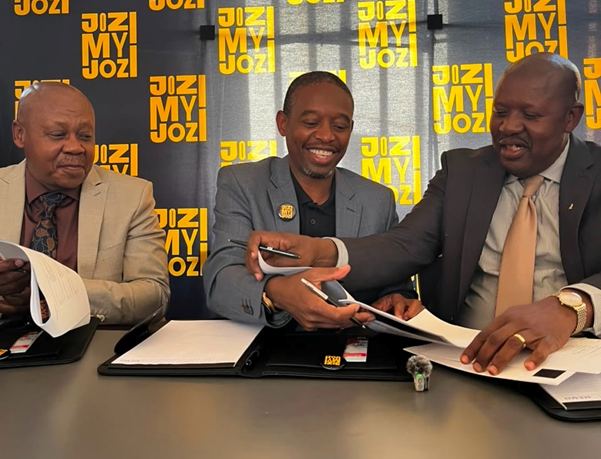
Seen Here: A new chapter for Johannesburg’s public transport: Gibela-Namela Holdings and Jozi My Jozi have joined forces through Project Unite to drive practical interventions that strengthen the taxi industry and improve the daily commuting experience for millions of Johannesburg residents. Photo Credit: Supplied
Industry leadership welcomes partnership
Themba Gcabashe, Business Development Executive at Gibela Namela Holdings, said the partnership could help reshape Johannesburg’s taxi industry across multiple levels.
“As the CoJ taxi industry, we believe this partnership with Jozi My Jozi will derive many valuable initiatives that change the landscape of this extensive industry going forward, from the associations and operators, to taxi rank infrastructure and the commuters at large,” said Gcabashe.
The statement reflects the partners’ ambition to create interventions that extend beyond individual taxi associations and contribute to improvements across the wider public transport network.
City supports the initiative
The City of Johannesburg was represented at the signing by Lutando Maboza, Executive Director: City of Johannesburg Transport.
Maboza said the City supports the partnership as part of efforts to improve the overall public transport experience for Johannesburg residents.
The City’s involvement is significant given the central role played by minibus taxis in transporting commuters across the metropolitan area, particularly in communities where taxis provide essential connections between residential areas, business districts and other transport nodes.
A partnership focused on commuters
For Johannesburg’s millions of public transport users, the success of the initiative will ultimately be measured by practical improvements to their daily journeys.
Cleaner taxi ranks, stronger security, healthier and better-trained drivers and smarter mobility systems could contribute to a more reliable and dignified commuter experience.
The MOU between Gibela Namela Holdings and Jozi My Jozi therefore represents an attempt to bring industry leadership, civic participation, technology and government closer together around a shared objective: building a stronger, safer and more sustainable taxi industry for Johannesburg.
As Project Unite moves towards implementation, the partners are expected to develop the proposed interventions further and establish a rollout plan that can translate the agreement into tangible improvements for operators, drivers, associations and commuters.