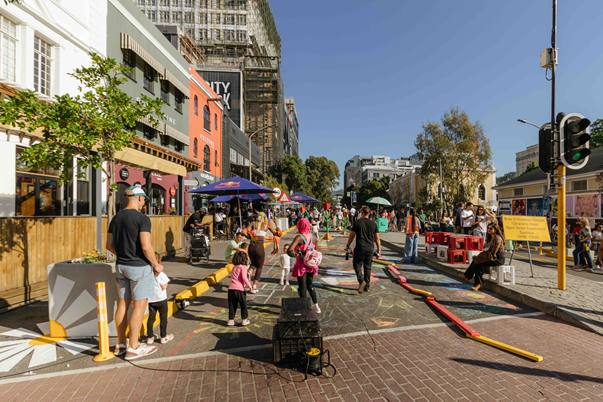
Seen Here: Building cities that move people, not just traffic. The Safe Passage Programme is transforming urban mobility by creating safer, greener and more connected streets that support commuters, cyclists, pedestrians and local businesses—one corridor at a time. Photo Credit: Supplied
Cape Town – A bold initiative to re-imagine South Africa’s streets is gathering momentum, with the Safe Passage Programme preparing to expand beyond Cape Town’s city centre following the successful launch of its innovative street experiment on Bree Street.
Developed through a public-private partnership between the SDI Development Trust and Young Urbanists NPC, and supported by the City of Cape Town, Mayor Geordin Hill-Lewis, and Adreach Group as the exclusive media partner through its Brand Urbanism model, the programme is positioning itself as a blueprint for safer, greener and more inclusive urban mobility across the country.
The next phase will extend the initiative from Cape Town’s CBD towards Langa, strengthening the mobility corridor along Albert Road while improving safety and accessibility between Athlone and Langa. The long-term ambition reaches far beyond the Western Cape, with similar interventions planned for Tshwane, Durban and other metropolitan municipalities.
Reimagining Streets for People
At its core, the Safe Passage Programme seeks to transform the way South Africans move through their cities by creating safer and more accessible routes for pedestrians, cyclists, scholars, commuters, public transport users and small businesses.
The programme also places significant emphasis on supporting South Africa’s growing informal and township economies by improving mobility between informal settlements and formal urban centres.
Among its major beneficiaries are small businesses operating within the transport ecosystem, particularly last-mile delivery services such as Green Riders, whose cyclists rely on safe and efficient infrastructure to earn a living.
By introducing protected cycling lanes and dedicated motorcycle parking, the initiative aims to reduce congestion, improve road safety and create more organised public spaces while supporting the country’s expanding gig economy.
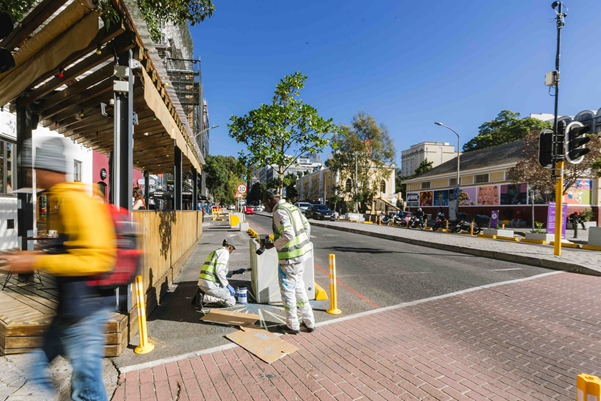
Seen Here: From Cape Town’s Bree Street to the communities of Langa and beyond, the Safe Passage Programme is proving that collaboration between government, business and civil society can create public spaces that are safer, more inclusive and built for everyone. Photo Credit: Supplied
Bree Street Pilot Tests the Future of Urban Design
The six-month Safe Passage Precinct street experiment on Bree Street has become South Africa’s first large-scale urban street experiment designed to evaluate how road space can be reallocated to better serve communities.
Stretching between Wale Street and Shortmarket Street, the pilot temporarily reduces vehicle lanes while introducing flexible infrastructure that includes protected cycling facilities, removable seating areas, planters, bollards, designated loading zones and dedicated motorcycle parking.
Rather than focusing solely on vehicle movement, the project prioritises pedestrian safety, active mobility and vibrant public spaces, while still maintaining efficient access for businesses and essential traffic.
The initiative aligns with the City of Cape Town’s CBD Mobility and Access Plan, which identifies Bree Street as one of the city’s most active commercial and cultural corridors.
Officials say the pilot is already generating valuable data on pedestrian movement, road safety, business activity, traffic flow and public perception that could influence future urban planning across South Africa.
Complementary public events such as First Thursdays and Open Streets Main Road Sundays have further demonstrated the potential of people-centred streets to stimulate economic activity while strengthening community life.
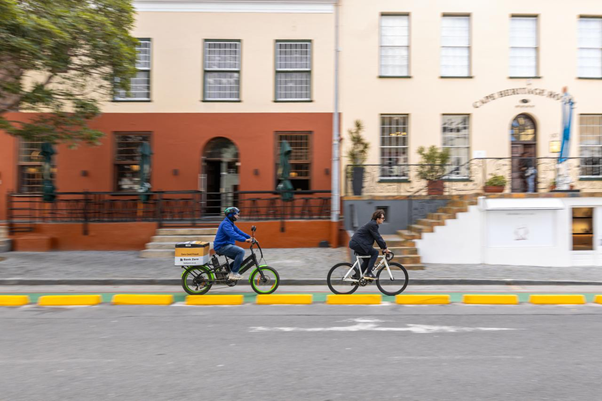
Seen Here: Reimagining South African cities through innovation and partnership. The Safe Passage Programme is paving the way for safer mobility, stronger local economies and vibrant public spaces—demonstrating how thoughtful urban design can improve everyday life for communities across the country. Photo Credit: Supplied
Funding Better Cities Through Brand Urbanism
A defining feature of the Safe Passage Programme is its innovative funding model.
Through Brand Urbanism, Adreach Group is helping finance safer streets by combining outdoor advertising, corporate sponsorships, branding opportunities and ESG-focused investment with public infrastructure projects.
Instead of relying solely on government funding, the model enables businesses to invest directly in improvements such as cycling infrastructure, public art, safer pedestrian spaces and urban activations while simultaneously creating meaningful brand visibility.
The initiative will also showcase original works by South African artists across public infrastructure, landmark buildings, cycling facilities and the zero-emission Safe Passage Mellow Van, ensuring creativity remains central to the transformation of public spaces.
Collaboration Driving Urban Innovation
Ryan Hancock, Sales Director at Adreach Group, believes the project demonstrates how meaningful partnerships can accelerate urban development.
He says the collaboration between the SDI Development Trust, Young Urbanists NPC, Safe Passage Programme and the City of Cape Town provides a practical model for improving mobility while supporting commuters, scholars, SMMEs, delivery riders and local businesses.
According to Hancock, the programme also presents an opportunity for the private sector to invest in highly visible infrastructure that delivers measurable public value.
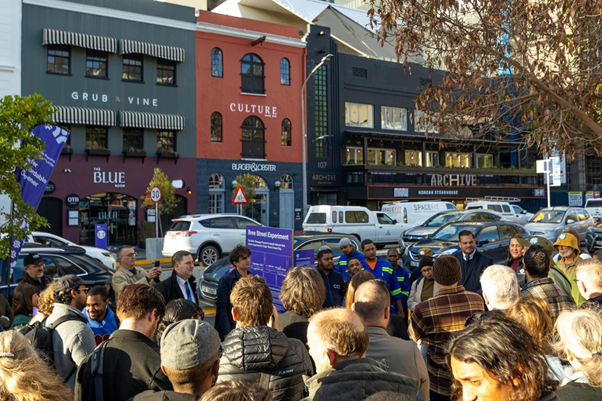
Seen Here: More than a street upgrade—it’s a vision for the future.By connecting communities, empowering SMMEs, supporting delivery riders and creating people-first public spaces, the Safe Passage Programme is helping shape cities that are safer, greener and more connected for generations to come. Photo Credit: Supplied
A National Blueprint for Safer Mobility
The expansion follows earlier Safe Passage initiatives in Tshwane, where the Always On Traffic Light programme demonstrated how targeted infrastructure improvements could significantly enhance road safety at busy intersections.
Building on those lessons, the programme now aims to replicate similar evidence-based interventions in Gauteng and KwaZulu-Natal before ultimately expanding to municipalities across South Africa.
Roland Postma of Young Urbanists NPC says the initiative illustrates the power of collaboration in translating government policy into tangible improvements that people experience every day.
He believes bringing together government, private companies and civil society creates new opportunities to improve public assets while simultaneously supporting youth employment, local enterprise and sustainable urban development.
Building Cities That Work for Everyone
As South Africa continues to confront rapid urbanisation, traffic congestion and inequality in access to safe transport, the Safe Passage Programme offers a practical vision for cities designed around people rather than vehicles.
By connecting communities, improving road safety, supporting local businesses and creating greener public spaces, the initiative seeks to demonstrate that relatively modest infrastructure interventions can have a lasting impact on economic opportunity, environmental sustainability and quality of life.
With expansion now underway from Cape Town towards Langa—and further rollouts planned for Tshwane, Durban and beyond—the Safe Passage Programme is positioning itself as a model for how South African cities can become safer, smarter and more connected through collaborative innovation.