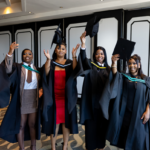
By: Lonwabo Mtyeku | Photo Credit: Supplied
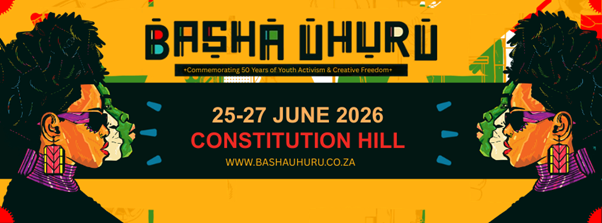
Johannesburg — Constitution Hill is set to transform into a high-energy cultural hub as the Basha Uhuru Freedom Festival returns from 24–27 June 2026, commemorating 50 years of youth activism, liberation struggle memory, and creative freedom under the theme “Commemorating 50 Years of Youth Activism and Creative Freedom.”
Now in its 14th edition, the festival remains one of Johannesburg’s most significant youth-focused cultural gatherings, blending music, film, fashion, entrepreneurship, dialogue, and heritage into a single multi-day experience rooted in the legacy of June 16 and the 1976 Soweto Uprising.
A Festival Rooted in Memory and Momentum
Hosted at Constitution Hill and the People’s Park, Basha Uhuru continues to position itself as more than a cultural showcase — it is a civic platform designed to connect historical memory with contemporary youth expression.
According to organisers, the 2026 edition reflects both reflection and urgency: honouring the young people who shaped South Africa’s democratic journey while confronting present-day challenges such as unemployment, inequality, and creative industry access.
“Basha Uhuru is more than a festival – it is a celebration of the power, resilience and imagination of South Africa’s youth,” said Vuyiswa Ramakgopa, MEC for Gauteng Economic Development, Agriculture and Rural Development, emphasising the festival’s role in strengthening Gauteng’s creative economy.
Creative Conference Opens the Programme
The festival opens on 24–25 June with closed sessions led by the Youth Summit presented by WeThePeopleSA and Chapter 9 institutions, under the theme “Constitutionalism in Action: Youth Shaping the Next 30 Years.”
The summit seeks to reposition young people as active custodians of South Africa’s democracy, while addressing systemic issues through dialogue, civic engagement, and policy-focused discussions.
Sessions will include intergenerational conversations on women’s rights, youth resistance, and the evolving forms of activism — from traditional protest to digital organising.
Film, Music, and Knowledge-Sharing at the Core
On 25 June, the programme shifts into storytelling and cinema with the Basha Uhuru Visions of Freedom Film Festival, featuring locally produced short and feature films exploring identity, justice, heritage, and contemporary social realities.
The following day, 26 June, brings a full-day creative conference titled “Back to the Future: Remembering Freedom in 2026”, presented by Iqhawe Magazine. The programme includes:
- Intergenerational dialogue on women’s leadership and visibility
- Youth Assembly discussions on the next 30 years of South Africa
- A Music Masterclass hosted by Groove Academy, featuring industry bodies including SAMPRA, SAMRO, CAPASSO, RISA, and others focused on royalties, rights, and music monetisation
- A theatre production titled “50 Years On: Aluta Must No Continua” at the Women’s Jail
- The Words of Freedom Poetry Showcase, curated by Sabelo Soko, featuring leading spoken word artists including Mak Manaka and Xabiso Vili
Sounds of Freedom Concert Returns
The festival culminates on 27 June with the highly anticipated Sounds of Freedom Music Festival, a full-day celebration hosted at Constitution Hill’s People’s Park from 10h00 until late night (02h00).
The main stage lineup includes a mix of established and emerging South African talent such as Nasty C, DJ Tira, Zee Nxumalo, DJ Cleo, Bucie, Skwatta Kamp, Atmos Blaq, Maline Aura, Lochive, and others.
Beyond music, visitors will experience a curated makers market, youth expo, fashion showcases, and heritage exhibitions — reinforcing the festival’s blend of commerce, culture, and creativity.
Honouring Legacy Through Art and Public Memory
A notable highlight of this year’s festival is the unveiling of a mural dedicated to Maria McCloy, the celebrated designer and creative publicist who played a key role in shaping the festival’s identity. The artwork, created by Lazi Mathebula, will be installed along Joubert Street alongside existing heritage murals, including that of Hugh Masekela.
Organisers say the installation underscores the festival’s commitment to preserving creative legacy while amplifying contemporary voices.
A Platform for Creative Economy Growth
Stakeholders including the Joburg Tourism Company and Constitution Hill’s public programming division have emphasised the festival’s economic impact, highlighting its role in enabling gig work for creatives, supporting MSMEs, and providing market access for emerging entrepreneurs.
Approximately 600 young participants are expected to attend conference programming across the three-day core festival, while additional audiences will engage through concerts, exhibitions, and public activations.
A Living Archive of Youth Culture
As Johannesburg prepares for another edition of Basha Uhuru, the festival continues to position itself at the intersection of remembrance and reinvention — a space where South Africa’s liberation history meets its digital, creative future.
With its blend of activism, artistry, and enterprise, Basha Uhuru 2026 reinforces a central message: youth culture is not only a reflection of history, but an active force shaping what comes next.
Tickets and programme details are available via www.bashauhuru.co.za.