By: Lonwabo Mtyeku | Photo Credit: Sourced
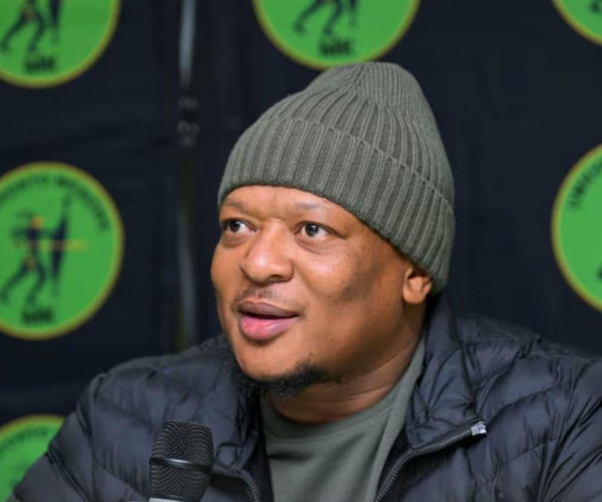
Seen Here: MK Party fires back at SANEF, rejecting claims linking newly appointed spokesperson Cde Sifiso Mahlangu to the party’s formation, while raising broader questions around media ethics, accountability and fairness in South Africa’s journalism landscape. Photo Credit: Sourced
Johannesburg, South Africa — The uMkhonto weSizwe Party (MK Party) has strongly rejected allegations made by the South African National Editors’ Forum (SANEF) concerning the political involvement of its newly appointed National Spokesperson, Sifiso Mahlangu, describing the organisation’s remarks as “false, reckless and unsupported by verifiable facts.”
The dispute follows SANEF’s public concerns regarding Mahlangu’s appointment after he assumed the role of MK Party spokesperson earlier this week. SANEF had reportedly suggested that Mahlangu had been associated with the MK Party “from its inception,” raising broader concerns around the relationship between journalism and political party structures.
In a strongly worded statement, the MK Party denied the claim outright, insisting that Mahlangu only officially joined the organisation following his appointment by former President and MK Party leader Jacob Zuma on 18 May 2026.
According to the party, Mahlangu had “no prior involvement in the formation or operations” of the MK Party before his appointment.
MK Party Accuses SANEF of Ethical Inconsistency
The MK Party further accused SANEF of failing to uphold the same journalistic principles and standards it frequently advocates for within the media sector.
The party argued that SANEF’s public statements carried significant institutional influence despite the organisation not being a formal regulatory authority. It criticised SANEF for allegedly making conclusions without adequate verification or procedural fairness.
Central to the MK Party’s criticism was the assertion that SANEF failed to provide Mahlangu with an opportunity to respond before releasing its public remarks.
The party framed the matter as a broader issue relating to fairness, media ethics and accountability, arguing that organisations representing journalists should themselves remain accountable to principles of accuracy, balance and factual verification.
Comparisons Drawn With Other Former Editors Turned Politicians
The MK Party also questioned what it described as inconsistent treatment within the media and political landscape, pointing to Songezo Zibi, the leader of Rise Mzansi and former editor of Business Day.
The party asked why similar scrutiny had not been publicly directed at Zibi following his transition from journalism into politics.
This argument touches on a long-standing debate within South African media circles surrounding the movement of journalists and editors into political, governmental or corporate roles, and whether such transitions create perceptions of bias or conflicts of interest.
Media analysts have historically noted that while journalists entering politics is not uncommon globally, transparency around political affiliations and editorial independence often becomes central to maintaining public trust.
SANEF Leadership Also Comes Under Fire
The MK Party escalated its criticism further by referencing allegations previously linked to SANEF leadership, specifically mentioning matters reportedly associated with the Special Investigating Unit (SIU) and the National Lotteries Commission.
The statement referenced allegations that funds intended for charitable and public benefit purposes were allegedly diverted towards private property-related expenditures involving individuals previously associated with SANEF leadership structures.
While these matters have been widely reported in the public domain over recent years, the MK Party used them to question SANEF’s moral standing when publicly criticising others.
The party additionally argued that SANEF should devote more attention to issues affecting working journalists directly, particularly concerns around salary disparities and racial inequality within South African newsrooms.
Media Freedom and Political Accountability
Despite its criticism, the MK Party maintained that it remains committed to media freedom and democratic accountability.
The confrontation nevertheless reflects growing tensions between political formations and media institutions in South Africa’s increasingly polarised political environment.
The debate also arrives at a time when newsroom independence, political influence, transformation, media ownership and ethical standards continue to dominate discussions across the South African media industry.
The appointment of high-profile former journalists into political structures often triggers scrutiny due to concerns around editorial neutrality, confidential newsroom relationships and public trust in journalism.
At the same time, political organisations have increasingly challenged what they perceive as selective criticism and uneven standards within sections of the media establishment.
As the dispute unfolds, attention is likely to remain focused on how both political organisations and media institutions navigate questions of ethics, accountability, transparency and freedom of expression within South Africa’s constitutional democracy.