By: Lonwabo Mtyeku | Photo Credit: Supplied
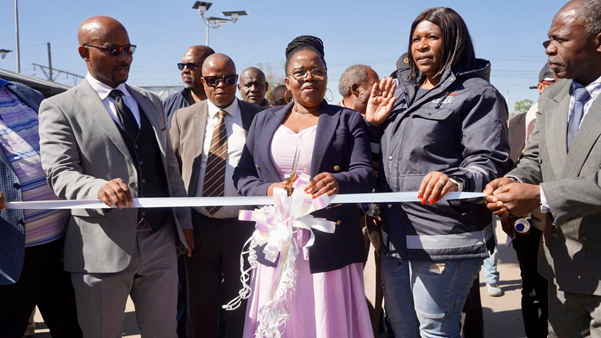
Seen Here: Gauteng MEC for Transport and Logistics Kedibone Diale-Tlabela officially launches the Vereeniging Intermodal Facility, marking a major milestone in South Africa’s public transport modernisation drive in Sedibeng. Photo Credit: Supplied
The Gauteng Provincial Government has officially launched the Vereeniging Intermodal Facility in Sedibeng, marking what officials describe as a historic shift in South Africa’s public transport infrastructure and urban development strategy.
Speaking at the launch on Thursday, Gauteng MEC for Transport and Logistics Kedibone Diale-Tlabela described the project as more than a transport facility, calling it a symbol of “opportunity, dignity, safety and hope” for communities across the Vaal region.
Positioned as the first intermodal transport facility of its kind in South Africa, the development forms part of Gauteng’s long-term Integrated Transport Master Plan 25 (ITMP25), aimed at modernising mobility systems while driving economic growth and urban renewal.
The facility integrates multiple transport modes into a single coordinated hub, including rail services, buses, minibus taxis, e-hailing services and non-motorised transport infrastructure. Government says the model is designed to reduce travel times, improve commuter safety and stimulate local economic participation.
“This facility belongs to the people,” Diale-Tlabela said during the launch. “It is built for commuters, workers, hawkers and young people who deserve a future shaped by development.”
A New Era for Public Transport
The launch comes at a time when Gauteng’s transport system continues to face mounting pressure from rapid urbanisation, population growth and economic migration into the province.
For years, fragmented transport systems, deteriorating rail infrastructure and unsafe commuter environments have undermined mobility and economic productivity across many townships and industrial corridors.
Provincial authorities believe the Vereeniging Intermodal Facility signals the beginning of a more integrated and commuter-focused transport system.
At the heart of the project is the concept of transit-oriented development — an urban planning approach that positions transport hubs as centres of economic activity, small business development and investment attraction.
Government officials say the facility is expected to strengthen Vereeniging’s role as an emerging economic node within the Sedibeng District, while improving connectivity between communities, workplaces and commercial centres.
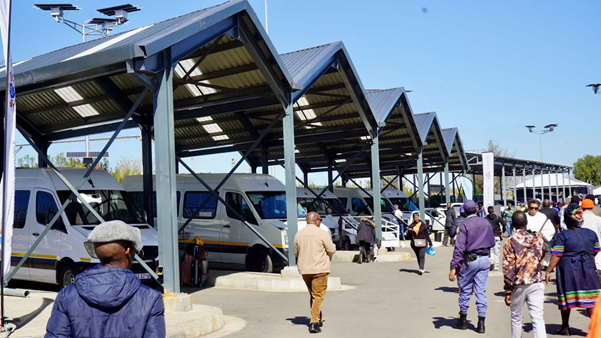
Seen Here: The new Vereeniging Intermodal Facility is set to improve commuter safety, strengthen local economic activity and connect rail, taxi, bus and e-hailing services under one transport hub. Photo Credit: Supplied
Safety, Sustainability and Economic Inclusion
The new facility includes extensive infrastructure aimed at improving both commuter experience and operational efficiency.
Among the key features are:
- 36 CCTV surveillance cameras linked to a 24-hour control room
- Controlled access points and perimeter security fencing
- Covered loading bays for commuter protection
- Solar-powered systems to support operational continuity
- Formalised trading stalls for informal traders and hawkers
- Office space for transport associations
- Vehicle maintenance facilities and taxi wash bays
Officials say these interventions are intended not only to improve transport operations, but also to create safer public spaces while supporting local economic activity.
The inclusion of dedicated trading infrastructure is particularly significant for informal traders and small businesses operating around transport corridors, many of whom depend on commuter foot traffic for survival.
“This project recognises that transport infrastructure is economic infrastructure,” Diale-Tlabela said. “Where people move efficiently, businesses thrive.”
Government Partnerships Drive Delivery
The project was delivered through collaboration between the Gauteng Provincial Government, the Passenger Rail Agency of South Africa (PRASA), Sedibeng District Municipality, Emfuleni Local Municipality, transport operators and local stakeholders.
Provincial authorities highlighted the partnership model as a demonstration of how intergovernmental cooperation can accelerate infrastructure delivery and improve service integration.
The launch also builds on earlier upgrades completed during Phase 1 of the project in 2023, which included refurbished commuter areas, hawker facilities, shelters and ablution amenities.
Officials emphasised that the next phase of success will depend heavily on proper maintenance, governance and community ownership.
Calls were made for residents, transport operators and businesses to protect the infrastructure against vandalism, theft and neglect — persistent challenges that continue to undermine public infrastructure projects across the country.
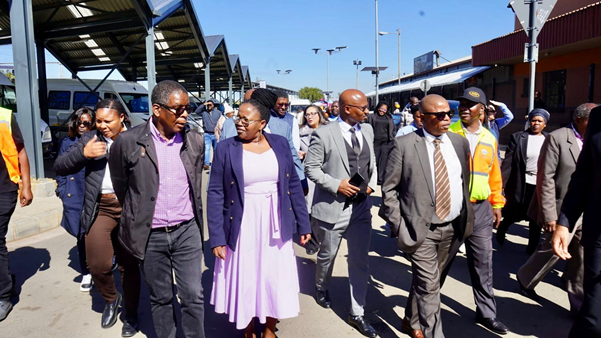
Seen Here: Community members, transport operators and government officials gather at the newly unveiled Vereeniging Intermodal Facility — the first integrated transport hub of its kind in South Africa. Photo Credit: Supplied
Rail Revival and Economic Recovery
The launch further aligns with broader provincial and national efforts to restore rail as the backbone of affordable public transport.
Years of rail service disruptions, cable theft and infrastructure vandalism severely weakened commuter rail systems across Gauteng, placing increased strain on road-based public transport and contributing to rising commuter costs.
Government believes integrated transport hubs like the Vereeniging facility can help rebuild confidence in public transport while supporting regional economic recovery.
For Sedibeng, an area grappling with unemployment, industrial decline and economic stagnation, the project is also viewed as an intervention aimed at stimulating local commerce and attracting future investment.
As Gauteng continues pursuing infrastructure-led development, officials say the Vereeniging Intermodal Facility represents a blueprint for future transport modernisation projects across the province.
The challenge now will be ensuring that the infrastructure remains functional, secure and financially sustainable long after the ribbon-cutting ceremony ends.