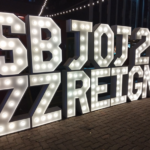
By: Lonwabo Mtyeku | Photo Credit: Community Newsroom
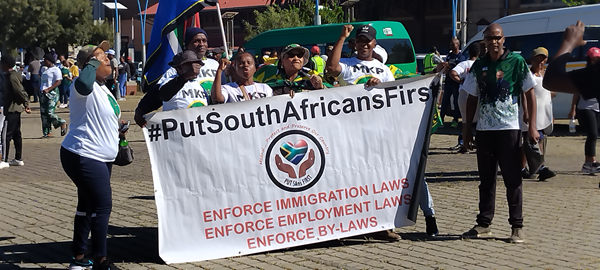
Seen Here: Protesters gather at Mary Fitzgerald Square as the March and March movement stages a demonstration calling for stricter immigration enforcement and economic reforms in the city. Photo Credit: Community Newsroom
Johannesburg, South Africa – 29 April 2026 — Hundreds of demonstrators gathered at Mary Fitzgerald Square today as the March and March movement staged a high-profile protest in the heart of the city, amplifying growing tensions around immigration, economic pressure and law enforcement.
The square — historically a site of labour activism and public mobilisation — once again became a focal point for civic expression, as protesters assembled early before moving through parts of the inner city under heavy police presence.
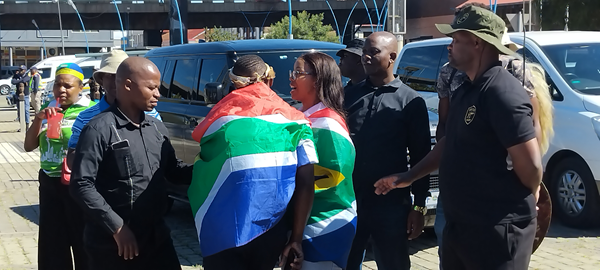
Seen Here: Jacinta Ngobese-Zuma addresses supporters at Mary Fitzgerald Square during the March and March protest, calling for stricter immigration enforcement and policy reform. Photo Credit: Community Newsroom
A Movement Expanding Its Footprint
The demonstration forms part of a broader wave of coordinated actions by the March and March movement across Gauteng, following similar protests in Durban and Pretoria earlier this week.
Led by Jacinta Ngobese-Zuma, the movement has positioned itself at the centre of a contentious national debate, calling for stricter enforcement of immigration laws and prioritisation of South African citizens in local economic activity.
Speaking during the gathering, organisers reiterated their demands for government to tighten visa regulations, review asylum systems and clamp down on businesses employing undocumented foreign nationals.
“This is about law and order and protecting opportunities for South Africans,” one organiser told the crowd, echoing sentiments expressed throughout the protest.
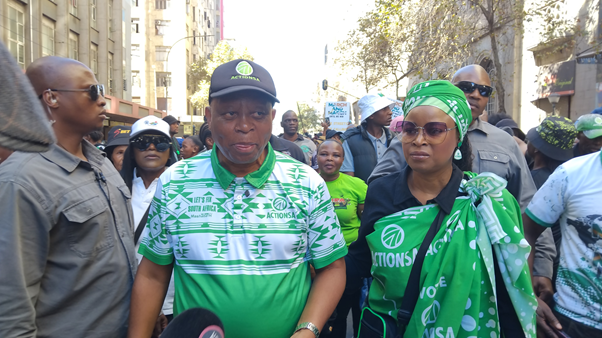
Seen Here: Herman Mashaba and Lerato Ngobeni engage with demonstrators during the March and March protest, reinforcing calls for stricter immigration enforcement and economic reform. Photo Credit: Community Newsroom
Heightened Tensions, Heavy Security
Law enforcement agencies were deployed in significant numbers as the march unfolded, with authorities closely monitoring proceedings amid concerns about potential unrest.
Recent demonstrations linked to the movement have sparked controversy, with critics warning that the rhetoric risks fuelling xenophobia, while organisers insist their campaign is focused on legality rather than nationality.
Today’s protest in Johannesburg remained largely orderly, though the atmosphere was charged, with chants, placards and speeches reflecting deep frustration over unemployment, crime and economic exclusion.
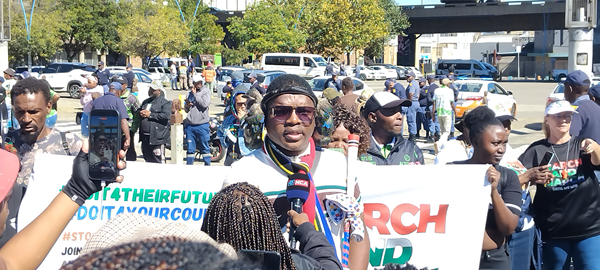
Seen Here: Ngizwe Mchunu addresses the medias at Mary Fitzgerald Square during the March and March protest, adding his voice to calls for policy reform and stronger enforcement measures. Photo Credit: Community Newsroom
A City at the Centre of the Debate
Johannesburg, as South Africa’s economic hub, has increasingly become the epicentre of debates around migration and informal trade. The city’s dense inner districts, including areas such as Hillbrow and the CBD, have been highlighted by organisers as key sites of concern.
Analysts note that the issue is complex, rooted in broader socio-economic challenges including high unemployment, inequality and urbanisation pressures.
“The frustration we are seeing is real,” said a local political analyst. “But the solutions require careful balance to avoid inflaming divisions in an already strained social environment.”
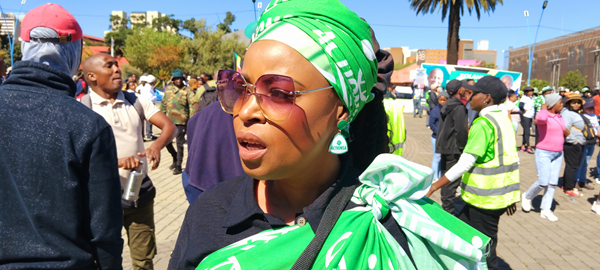
Seen Here: Lerato Ngobeni of ActionSA addresses the media, outlining the party’s position and key priorities amid ongoing developments in Johannesburg. Photo Credit: Community Newsroom
Government Response Awaited
The March and March movement has indicated that it will continue its campaign if its demands are not addressed, warning of further mobilisation in the coming weeks.
Earlier protests saw memorandums handed over to government officials, with organisers signalling that patience among supporters is wearing thin.
As the crowd dispersed from Mary Fitzgerald Square later in the day, the message from demonstrators was clear: this is not a one-off action, but part of a sustained push to influence policy and enforcement.
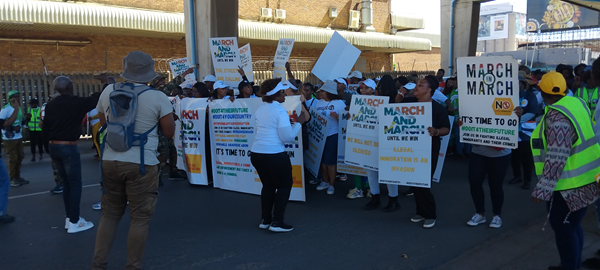
Seen Here: Protesters gathered in a show of unity, raising placards and voices to demand accountability and urgent action on pressing social and economic concerns in Johannesburg’s CBD. Photo Credit: Community Newsroom
A Symbolic Setting for a Defining Issue
That the protest began at Mary Fitzgerald Square is significant. The historic Newtown landmark has long been associated with worker struggles and public assembly, reinforcing the symbolic weight of today’s march.
In 2026, it once again served as a platform for voices seeking to shape the country’s future — highlighting both the enduring power of public protest and the complexity of the issues facing modern South Africa.
As debates around immigration, economic inclusion and social cohesion intensify, today’s march signals that these conversations are far from over — and will continue to play out not just in policy spaces, but on the streets of the country’s largest city.