By: Lonwabo Mtyeku | Photo Credit: Supplied
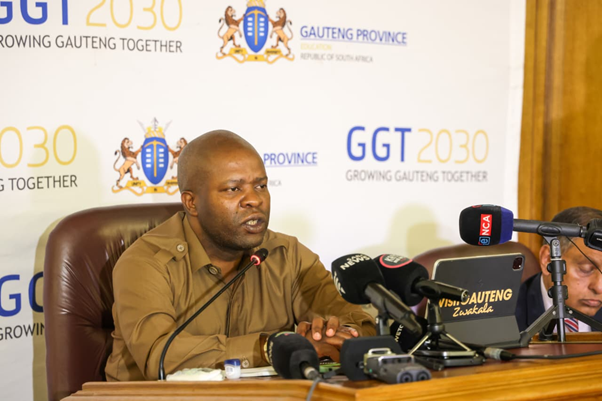
Seen Here: Gauteng MEC Lebogang Maile delivers a data-driven update on learner enrolment pressures, calling for collective action to tackle overcrowding and strengthen the province’s education system. Photo Credit: Supplied
Johannesburg, South Africa — Gauteng’s education system is under mounting pressure, with nearly half of the province’s public schools operating beyond capacity, prompting decisive intervention from the provincial government.
Addressing residents, Lebogang Maile painted a stark picture of an education system strained by rapid urbanisation, population growth and persistent infrastructure backlogs — but also outlined a multi-pronged strategy to stabilise and expand capacity.
“This is not just an education issue,” Maile said. “Our schooling system reflects the broader structural realities of Gauteng — migration, urbanisation and economic pressures are all converging in our classrooms.”
A System Under Pressure
Gauteng’s learner population has more than doubled over the past three decades — from just over 1.4 million in 1995 to nearly 2.84 million in 2026. The province now absorbs an additional 50,000 learners each year, placing immense strain on infrastructure and resources.
Out of 2,111 public schools across the province, 1,021 are now over-subscribed — representing 48% of all schools. Primary schools account for 579 of these, while 442 secondary schools are operating beyond capacity.
“The numbers tell a sobering story,” Maile noted. “Nearly one in every two schools in Gauteng is overcrowded. This is not isolated — it is systemic and widespread across districts.”
The imbalance between primary and secondary schooling capacity is further compounding the crisis. While the province has 1,417 primary schools, it has only 694 secondary schools — creating a bottleneck as learners’ transition to higher grades.
Districts Buckling Under Demand
The pressure is particularly acute in high-density urban and township areas. Districts such as Johannesburg South and Tshwane West are among the hardest hit, with 68% of schools in both regions operating above capacity.
Ekurhuleni South follows closely at 58%, while Johannesburg East records 59% of its schools exceeding enrolment limits. “These are communities where demand is relentless,” Maile said. “Economic opportunity draws people into Gauteng, but our infrastructure has not kept pace with that growth.”
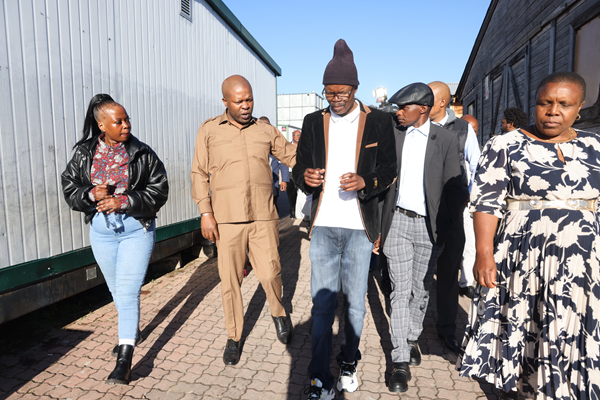
Seen Here: Lebogang Maile addresses residents on the growing challenge of overcrowding in Gauteng schools, outlining urgent interventions to expand infrastructure and improve access to quality education. Photo Credit: Supplied
Infrastructure Deficit and Resource Constraints
At the heart of the crisis lies a significant infrastructure shortfall. The province requires at least 200 new schools to stabilise the system, yet current delivery rates fall far below that threshold.
Despite a budget exceeding R68 billion, competing priorities — including a rising wage bill — have constrained spending on infrastructure, maintenance and learning materials.
The situation is further exacerbated by shortages in essential classroom resources. A recent audit revealed deficits of tens of thousands of desks and chairs across both primary and secondary schools.
“Funding has increased, but it is still not sufficient relative to demand,” Maile explained. “We are constantly balancing immediate needs with long-term sustainability.”
Interventions to Turn the Tide
In response, the Gauteng Provincial Government has committed nearly R4 billion over the Medium-Term Expenditure Framework (MTEF) to build and replace schools — with plans to deliver approximately 23 new schools over the next three years.
Key interventions include:
- Partnerships with the Development Bank of Southern Africa to accelerate construction in high-pressure areas
- Implementation of the Budget Facility for Infrastructure (BFI) programme across multiple municipalities
- Exploration of Public-Private Partnerships (PPPs) to unlock additional funding and delivery capacity
- Expansion of the Self-Build Programme, enabling schools to construct additional classrooms
- Reopening and acquisition of viable former missionary schools
- Deployment of temporary prefabricated classrooms as an interim solution
“We are pursuing every available avenue,” Maile said. “From traditional infrastructure builds to innovative partnerships — the goal is to increase capacity as quickly and efficiently as possible.”
Long-Term Planning and Reform
Beyond immediate interventions, the province is also adopting a 20-year infrastructure plan aimed at aligning school development with population growth, spatial planning and urban expansion.
The introduction of the Project Readiness Matrix (PRM) is expected to improve project execution by ensuring compliance, reducing delays and addressing inefficiencies in infrastructure delivery.
“Our challenge has not only been funding, but execution,” Maile admitted. “We are strengthening oversight, improving planning and ensuring accountability across the system.”
A Call for Collective Responsibility
While government ramps up efforts, Maile emphasised that addressing overcrowding requires a collective approach — particularly in combating vandalism and disruptions that delay school construction.
“We urge communities to protect our schools,” he said. “Every act of vandalism or disruption is an attack on the future of our children.”
He also called on the private sector to play a more active role in supporting infrastructure development and innovation within the education system.
“This is a shared responsibility,” Maile added. “If we are to build a sustainable and inclusive Gauteng, we must work together — government, business and communities alike.”
Looking Ahead
As Gauteng continues to grow as South Africa’s economic hub, the pressure on its education system is unlikely to ease in the short term. However, with targeted interventions, strategic partnerships and long-term planning now in motion, the province is positioning itself to confront one of its most pressing challenges.
“The task ahead is significant,” Maile concluded. “But we are committed to ensuring that every learner in Gauteng has access to a safe, dignified and quality learning environment.”