By: Lonwabo Mtyeku | Photo Credit: Supplied
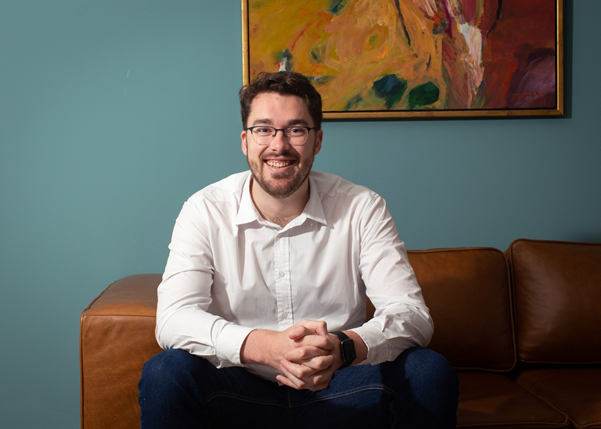
Seen Here: Brad Latilla-Campbell highlights the growing shift of South Africa’s top-performing students toward international medical pathways amid rising competition for local university placements. Photo Credit: Supplied
As competition for medical school places intensifies in South Africa, a growing number of high-achieving students are looking beyond the country’s borders — not out of choice, but necessity. With demand for medical education far outstripping available capacity, Europe is fast becoming a viable and increasingly strategic alternative for aspiring doctors determined to pursue their calling.
Each year, South Africa produces hundreds of thousands of qualified matriculants, yet only a fraction secure placement at local universities. The disparity is even more pronounced in medicine, widely regarded as one of the most competitive programmes in the country. Institutions such as University of Cape Town and Stellenbosch University admit only a small percentage of applicants, while the University of the Witwatersrand maintains similarly stringent intake thresholds.
The result is a bottleneck that is reshaping the academic trajectories of some of the country’s brightest minds.
“Medicine is one of the few fields where exceptional academic performance does not guarantee admission,” explains Brad Latilla-Campbell of Crimson Education. “The margins are incredibly fine. A difference of a few percentage points can determine whether a student secures a place or is excluded entirely.”
While the United Kingdom has traditionally been a top destination for South African students, entry into undergraduate medicine there remains highly restrictive. Elite institutions such as University of Oxford admit only a handful of international medical students each year, making direct entry an elusive goal.
As a result, many students are forced into indirect pathways — such as completing undergraduate degrees in biomedical sciences before applying for graduate-entry medicine programmes at universities like King’s College London or University of Warwick. While viable, these routes extend both the duration and cost of qualification.
In contrast, parts of Europe are offering a more streamlined alternative.
Institutions such as the University of Nicosia and UMCH University have positioned themselves as global education hubs, offering English-medium medical degrees tailored specifically for international cohorts. These programmes maintain rigorous academic standards while adopting a more holistic admissions approach — one that evaluates potential alongside performance.
“European universities are increasingly designed with international accessibility in mind,” says Latilla-Campbell. “They maintain world-class training standards, but without the extreme numerical constraints seen locally or in the UK.”
Importantly, this shift does not signal a loss of talent for South Africa. On the contrary, many students pursuing medical degrees abroad do so with a clear intention to return home. The pathway back into practice is well-established, with international qualifications routinely recognised and converted through the Health Professions Council of South Africa (HPCSA).
This evolving dynamic challenges the long-standing narrative of “brain drain.” Instead, it reflects a system under pressure — one that is producing more capable candidates than it can absorb.
What has changed most significantly is the profile of the students choosing to study abroad. Where international medical education was once perceived as a fallback option, it is now increasingly pursued by top-performing learners who view it as a strategic decision rather than a compromise.
“The calibre of students going overseas today is exceptionally high,” Latilla-Campbell notes. “These are not students who fell short — they are students who simply could not be accommodated.”
The implications are far-reaching. As South Africa continues to grapple with healthcare challenges, including doctor shortages in public systems, the inability to train sufficient numbers of medical professionals locally presents a structural concern. At the same time, the rise of international pathways offers a parallel pipeline — one that, if effectively reintegrated, could help bridge the gap.
For now, the reality remains stark: for many of South Africa’s most capable aspiring doctors, the journey to a stethoscope is increasingly beginning far from home.
And as global education networks expand and evolve, the question is no longer whether students will look abroad — but how quickly they will make that decision in pursuit of their future in medicine.