
By: Lonwabo Mtyeku Photo Credit: Community Newsroom
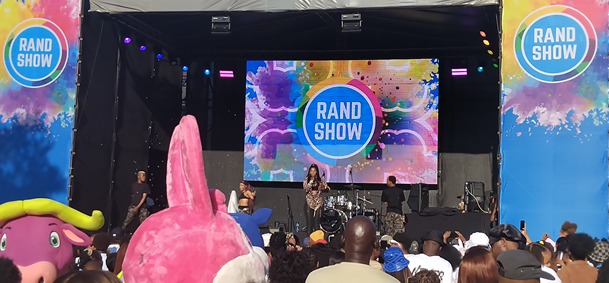
Seen Here: Nkosazana Daughter lights up the stage at the Rand Show 2026, delivering a soulful performance that electrified the crowd. Photo Credit: Community Newsroom
Johannesburg, South Africa — The curtain has closed on the Rand Show 2026, leaving behind a clear message: South Africa’s longest-running consumer exhibition is not just surviving — it is actively reinventing itself.
In a year marked by economic pressure, shifting consumer expectations, and rapid digital disruption, the Rand Show delivered a multi-layered experience that blended nostalgia with modern engagement. Yet, as with any evolving platform, its successes were matched by critical lessons for the future.
A Strategic Reset in a Changing Market
Once synonymous with traditional exhibitions and family outings, the Rand Show has been steadily repositioning itself as an experiential, lifestyle-driven event. The 2026 edition reinforced this pivot, with brands focusing less on static displays and more on immersive activations.
Major exhibitors leaned into experience-first marketing — from live demonstrations and interactive zones to influencer-driven engagement — signalling a broader industry shift toward participatory consumer connection.
Notably, brands like Simba used the platform to launch high-impact campaigns, including a bold rebrand that drew significant foot traffic and social media traction.
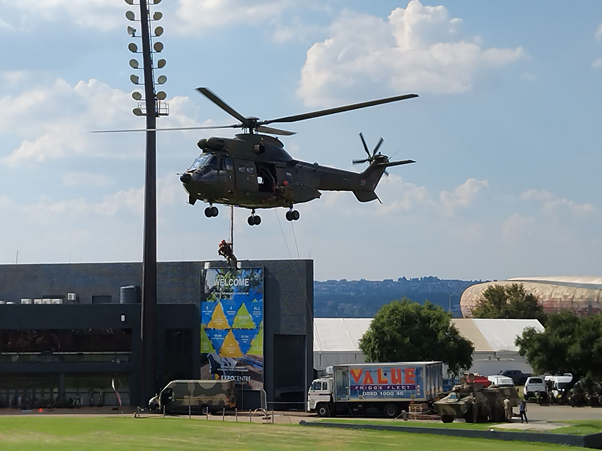
Seen Here: Members of the South African National Defence Force showcase military equipment and capabilities during a live exhibition at the Rand Show 2026, drawing strong public interest. Photo Credit: Community Newsroom
Foot Traffic vs Spending Power
While attendance remained solid, exhibitors reported a more cautious consumer.
With rising living costs and constrained disposable income, visitors were more selective in their spending. The focus shifted toward value, promotions, and experiential engagement rather than impulse purchases.
This reflects a broader macroeconomic reality in South Africa — where consumers are still participating in lifestyle events, but with tighter control over their wallets.
For organisers and exhibitors alike, the implication is clear: engagement must now translate into perceived value, not just visibility.
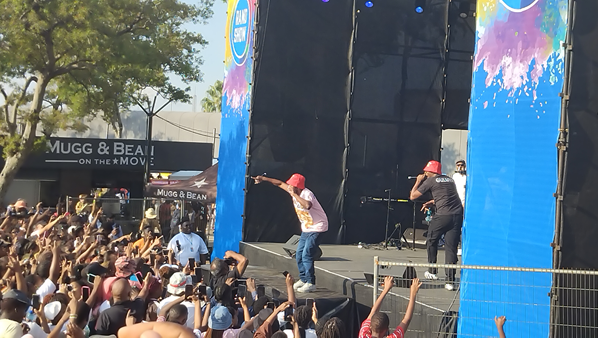
Seen Here: Zola 7 commands the stage at the Rand Show 2026, delivering a high-energy performance that had the crowd on its feet. Photo Credit: Community Newsroom
Experience is King — But Execution Matters
The 2026 Rand Show successfully embraced the “experience economy,” but execution varied across exhibitors.
Where activations were well-designed and interactive, the response was strong. However, less engaging stands struggled to capture attention in an increasingly competitive environment.
This highlights a growing divide:
- Brands investing in experiential storytelling are winning
- Those relying on traditional exhibition formats risk being overlooked
The Rand Show is no longer just a marketplace — it is a stage, and only the most compelling performances resonate.
Digital Integration Still Evolving
Despite progress, digital integration remains an area for growth.
While social media engagement was visible and active, the broader integration of digital tools — such as app-based navigation, real-time promotions, and data-driven visitor experiences — appeared underdeveloped relative to global exhibition standards.
In an era where consumers expect seamless online-to-offline experiences, this represents both a challenge and a significant opportunity for future editions.
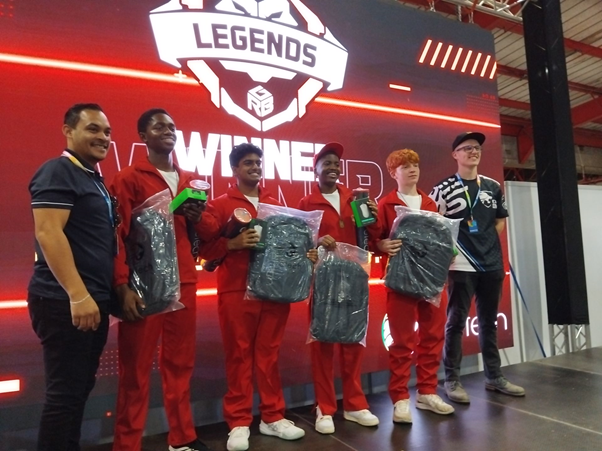
Seen Here: Winners of the Gaming Legends tournament celebrate victory at the Rand Show 2026, marking a high-energy highlight in the event’s expanding esports showcase. Photo Credit: Community Newsroom
Cultural Relevance as a Competitive Edge
One of the standout strengths of the 2026 event was its cultural resonance.
From local brands to entertainment programming, the Rand Show successfully reflected the diversity and energy of contemporary South African life. This cultural authenticity remains a key differentiator — particularly in a market where globalised experiences often lack local nuance.
Maintaining this balance between global standards and local identity will be critical to the event’s long-term positioning.
The Business of Exhibitions is Changing
The Rand Show 2026 underscored a fundamental shift in how exhibitions are valued:
- It is no longer just about foot traffic
- It is about engagement quality
- It is about brand storytelling
- It is about measurable impact
For exhibitors, return on investment is increasingly tied to data, audience interaction, and post-event conversion — not just on-site sales.
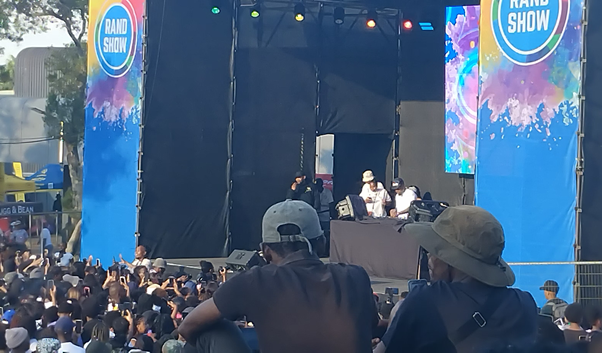
Seen Here: Kelvin Momo delivers a hypnotic amapiano set at the Rand Show 2026, immersing the crowd in deep rhythms and soulful soundscapes. Photo Credit: Community Newsroom
Looking Ahead: Evolution, Not Tradition
As the Rand Show moves forward, its future will depend on how effectively it continues to evolve.
Key priorities include:
- Deeper digital integration
- Stronger experiential consistency across exhibitors
- Enhanced value-driven engagement for consumers
- Continued emphasis on cultural authenticity
The 2026 edition has shown that the foundation is solid — but the expectations are rising.
Final Analysis
The Rand Show remains a powerful platform in South Africa’s consumer and marketing landscape. However, its relevance is no longer guaranteed by history alone.
It must be earned — through innovation, execution, and a clear understanding of a changing audience.
If 2026 is any indication, the Rand Show is on the right path. But in a world that demands constant reinvention, standing still is no longer an option.