

By: Lonwabo Mtyeku Photo Credit: Supplied
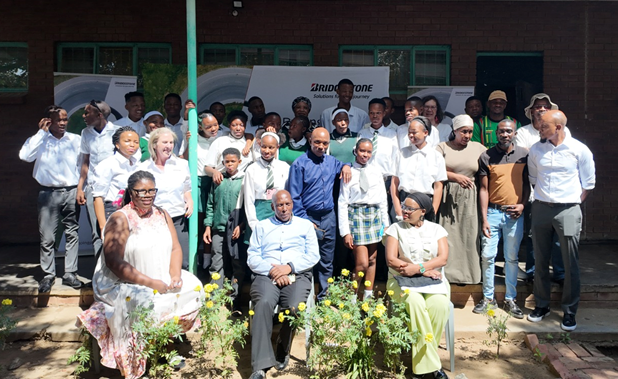
Seen Here: Bridgestone South Africa is empowering 62 learners in Madibeng Local Municipality through Project Turnkey, removing barriers to mobility and opening doors to employment. Photo Credit: Supplied.
BRITS, NORTH WEST — In a country where youth unemployment remains one of the most pressing socio-economic challenges, a new initiative is offering more than just skills—it is delivering access, dignity, and a pathway to opportunity.
Bridgestone South Africa has launched Project Turnkey, an ambitious nine-month programme designed to equip 62 Grade 12 learners in the Madibeng Local Municipality with fully funded learner’s and driver’s licences—an intervention that directly addresses one of the often-overlooked barriers to employment.
The initiative brings together learners from five local schools—Mogale Secondary School, Thaba Morula Secondary School, Eletsa Secondary School, Michael Modisakeng Secondary School, and Mothotlung Secondary School—guiding them through a structured journey that includes learner’s licence theory preparation, road safety education, and practical driving instruction. The programme will culminate in official driver’s licence testing, positioning participants to enter the workforce with a critical and marketable credential.
A Licence to Opportunity
For many young South Africans, particularly in semi-urban and township economies like Madibeng, the absence of a driver’s licence is more than an inconvenience—it is a systemic barrier. In regions such as Brits, where industries like logistics, manufacturing, transport, and retail form the backbone of the local economy, mobility is intrinsically linked to employability.
Yet, the financial cost of obtaining a licence, coupled with limited access to structured training, places this essential qualification beyond the reach of many.
This reality is reflected in stark statistics. According to Statistics South Africa, youth unemployment in Madibeng exceeds 40%, while nationally, 43.8% of individuals aged 15–34 remain unemployed, based on the latest Quarterly Labour Force Survey (Q4 2025). These figures underscore the urgency of targeted, practical interventions.
Corporate Citizenship in Action
Brits is home to Bridgestone’s flagship manufacturing plant in Southern Africa—a facility that has operated for over five decades and remains deeply embedded in the local economic fabric. For the company, Project Turnkey is not merely a corporate social investment initiative; it is a continuation of a long-standing relationship with the community.
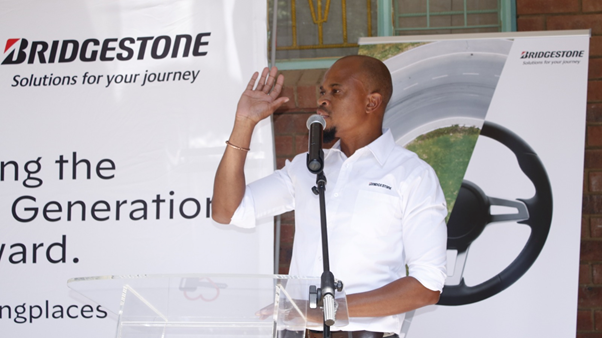
Jacques Rikhotso, Regional Vice President for Africa Middle East at Bridgestone, framed the initiative as both a responsibility and an opportunity:
“We have built tyres in this town for 55 years, and that means this community’s challenges are our challenges too. We see talented young people who are ready to work but are being held back by barriers that are entirely solvable. Project Turnkey is about removing one of those barriers. A driver’s licence is not just a document—it is a pathway to employment.”
His remarks highlight a critical shift in corporate social investment—from symbolic contributions to targeted, outcome-driven programmes that directly influence employability.

Beyond the Wheel: Building Safer, Smarter Drivers
While employment access is a central goal, the initiative also places strong emphasis on road safety and responsible driving—an equally critical component in a country grappling with high rates of road accidents.
Participants will not only gain technical driving competence but will also be equipped with the knowledge and behavioural awareness required to navigate South Africa’s roads safely and responsibly. This dual focus ensures that the programme contributes to both economic inclusion and public safety.
Chantel Baxter, CSI Manager at Bridgestone, emphasised this holistic approach:
“At Bridgestone, we believe mobility can change lives. Project Turnkey reflects our commitment to supporting the communities around our Brits plant by helping young people gain a practical skill that improves their independence and employability. By removing the financial barriers to obtaining a driver’s licence, we hope to give these learners greater confidence and access to the opportunities that mobility makes possible.”
A Scalable Model for Impact
As South Africa continues to grapple with structural unemployment, initiatives like Project Turnkey offer a compelling model for scalable impact—where private sector resources are leveraged to unlock tangible, real-world opportunities for young people.
By targeting a specific, solvable barrier and embedding the intervention within a broader framework of skills development and safety, Bridgestone is not only investing in individuals but also strengthening the socio-economic resilience of the Madibeng community.
In a landscape often defined by limited access and constrained mobility, Project Turnkey stands out as a powerful reminder: sometimes, the road to opportunity begins with the ability to simply get behind the wheel.