Lonwabo Mtyeku | Image Credit:Sourced
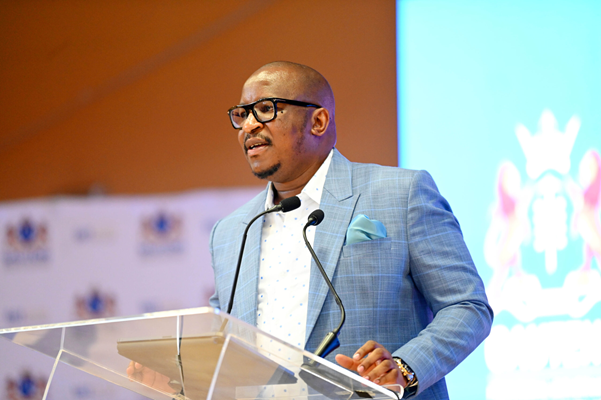
Johannesburg — Gauteng Education MEC Matome Chiloane has firmly rejected claims circulating on social media and within community forums — particularly those amplified by anti-immigrant group Operation Dudula — that non-South African learners are unfairly prioritised in school admissions. In a robust defence of the province’s placement process, the MEC said on Monday that 97% of learners placed in Gauteng public schools are South African citizens, with the remaining placements inclusive of documented foreign nationals, refugees and asylum seekers who meet legal admission criteria.
“I do not know what Dudula is saying, because the facts do not support their narrative,” MEC Chiloane said during a media briefing at the Gauteng Department of Education’s headquarters. “Our admission system is transparent, evidence-based, and governed by law — not by populist rhetoric.”
The comments come amid heightened tensions in parts of Gauteng, where concerns over resource allocation and competition for school placements have occasionally been politicised and exploited by fringe groups seeking blame instead of constructive solutions.
Transparent Admissions, Legal Framework
Gauteng’s school placement system operates within a clear legal framework that prioritises proximity, capacity and equity, but does not discriminate on the basis of nationality for learners who are legally entitled to basic education under South African law.
South Africa’s Constitution guarantees every child the right to basic education. This includes children who are permanent residents, refugees, asylum seekers and documented immigrants. The province’s placement policy reflects this principle, ensuring that school access is administered fairly across communities.
According to official data released by the department, South African citizens comprised 97% of all learner placements in public schools across Gauteng in the 2025 registration cycle. The remaining 3% accounted for documented learners from other countries — a figure that is consistent with broader migration patterns and well within the capacity of schools in the province.
“We cannot allow misinformation to undermine trust in our education system,” said MEC Chiloane. “The reality is that the overwhelming majority of learners placed in our schools are South African — and all placements for foreign nationals are lawful and transparent.”
Response to Misinformation
The MEC’s remarks were made in response to claims recently circulated by Operation Dudula and some online commentators alleging that Gauteng’s education system was being “overrun” by non-nationals at the expense of local children. These assertions, Chiloane stressed, are unsubstantiated and inflammatory.
“Our officials have engaged with data, and that data speaks clearly: 97% South African placements,” he said. “To misrepresent the facts is to distract from the very real challenges we face — overcrowded classrooms, infrastructure backlogs and a need for expanded school capacity.”
Education analysts agreed, noting that while competition for quality schooling is a legitimate concern for many parents, scapegoating foreign nationals is both legally incorrect and counterproductive.
“It’s important to distinguish between genuine systemic challenges and myths that fuel division,” said an education policy expert at a national university. “Echoing misinformation only serves to divide communities and distract from meaningful reforms that could improve education access for all learners.”
Legal Obligations and Human Rights
The Constitution of South Africa and the South African Schools Act obligate the state to provide basic education to all children, regardless of citizenship status, provided that the child’s caregiver can demonstrate the right to reside in the country. This includes refugees and asylum seekers whose claims are registered and in process.
Gauteng’s placement teams have reiterated that their system functions with rigorous documentation checks and that unlawful admissions are irregular and swiftly addressed on a case-by-case basis.
“The principle of non-discrimination is not merely aspirational — it is operationalised in every placement decision we make,” said the department’s head of admissions.
Broader Education Pressures
While defending the integrity of the placement process, MEC Chiloane acknowledged ongoing challenges confronting Gauteng’s schooling sector — including infrastructure constraints, teacher shortages, and rising enrolment pressures, particularly in urban growth corridors.
“We recognise that parents want certainty and stability for their children,” Chiloane said. “Our focus remains on expanding capacity, improving learning environments and ensuring that every child placed in our system has a fair chance to succeed.”
He further announced that the department would soon release a detailed breakdown of 2025 learner registration data by district, age cohort and admissions category to promote transparency and build public confidence.
Moving From Division to Dialogue
As the issue continues to garner attention, Chiloane appealed for constructive dialogue rather than sensationalism.
“Education is not a zero-sum game,” he said. “We are building a system that serves every child in Gauteng — and we must do so with facts, respect and an unwavering commitment to equity.”
By addressing misinformation directly and grounding the debate in verifiable data, the MEC’s intervention seeks to shift the conversation from division and rhetoric toward clarity, cooperation and shared responsibility for learners’ futures.