By Sports Desk – Community Newsroom | 23 October 2026
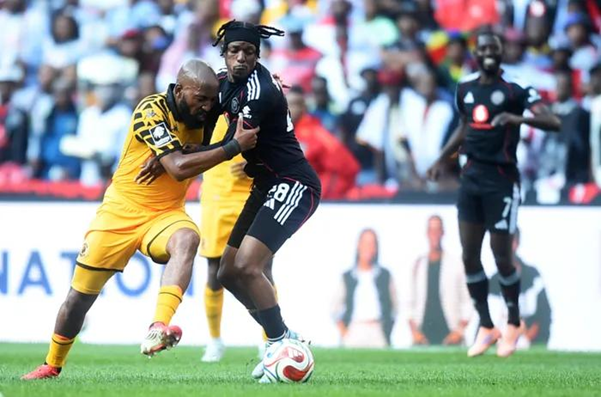
The anticipation is building, the anthems are ready to echo through the stands, and the familiar colours of South African football are preparing to take centre stage. Across the nation, conversations about football are gathering momentum as supporters count down to Saturday, 31 October 2026, when two of the country’s most iconic football institutions, Orlando Pirates and Kaizer Chiefs, renew their historic rivalry.
At FNB Stadium, another chapter in the legendary Soweto Derby is poised to unfold. More than an ordinary football fixture, this encounter represents a powerful collision of history, identity, loyalty and the relentless pursuit of supremacy over one of African football’s most fiercely contested rivalries.
Orlando Pirates will welcome Kaizer Chiefs in a Betway Premiership encounter that promises to command the attention of supporters throughout South Africa and beyond. As part of the 2026/27 season calendar, the fixture once again places the spotlight on a rivalry whose significance extends far beyond the boundaries of the football pitch.
For the players, three valuable league points will be at stake. For the supporters, the occasion is about pride, honour and the right to celebrate at the expense of their fiercest rivals. For South African football, it is a vivid reminder of the enduring influence of a rivalry that has shaped generations and remained relevant for more than five decades.
Some matches are remembered for the trophies they deliver; others are defined by the fight for survival. The Soweto Derby, however, occupies a category of its own. It carries the emotional weight of inherited loyalties, unforgettable victories, heartbreaking defeats and family traditions passed from one generation to the next.
For 90 minutes, these emotions converge on a single pitch, transforming a football match into an event that resonates throughout the country.
This is not merely another fixture on the football calendar. This is the Soweto Derby.
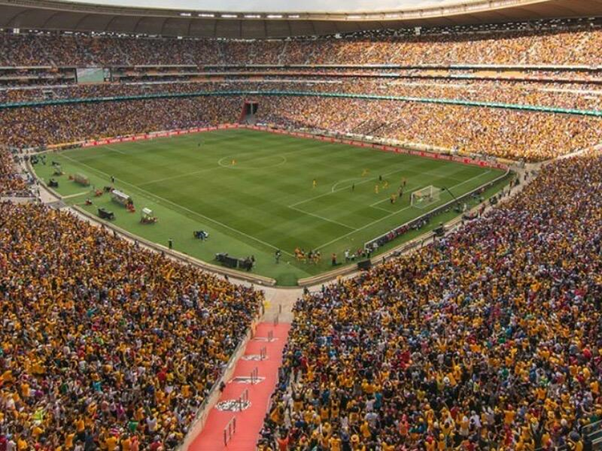
A DATE WITH DESTINY AT FNB STADIUM
THE HOSTS: ORLANDO PIRATES
The Buccaneers | The Sea Robbers
VS
THE VISITORS: KAIZER CHIEFS
Amakhosi | The Glamour Boys
- Date: Saturday, 31 October 2026
- Venue: FNB Stadium, Johannesburg
- Competition: Betway Premiership
- Fixture: Orlando Pirates vs Kaizer Chiefs
- At stake: Three crucial league points and the priceless bragging rights that accompany a derby victory.
Orlando Pirates are the designated home side for this encounter. Supporters should consult the clubs’ latest official announcements for confirmation of the kick-off time.
The excitement surrounding the derby rarely begins and ends at the stadium gates. It permeates homes, workplaces, shopping centres, taxis and neighbourhood streets, becoming a national conversation that brings together supporters from every corner of the country.
Black and white will stand proudly against gold and black, with every supporter carrying a personal conviction about why their team must emerge victorious.
For Orlando Pirates, the occasion presents an opportunity to capitalise on home advantage and deliver a performance worthy of the Buccaneers’ rich heritage. Their supporters will demand intensity, discipline and the determination to overcome their most familiar adversaries.
Kaizer Chiefs, meanwhile, will arrive with ambitions of their own. The Amakhosi faithful will be dreaming of a statement victory, one that silences their rivals, strengthens their team’s position and adds another cherished memory to the club’s illustrious history.
In a contest of this magnitude, neither team requires a reminder of what victory would mean.
THE BIRTH OF A RIVALRY THAT TRANSFORMED SOUTH AFRICAN FOOTBALL
To appreciate the full significance of the Soweto Derby, one must journey back to 24 January 1970, when the first chapter of this extraordinary footballing story was written.
Kaizer Chiefs had been established only 17 days earlier, on 7 January 1970, by Kaizer Motaung, a former Orlando Pirates player who returned to South Africa after pursuing a professional football career in the United States.
Motaung’s departure from Pirates and the creation of a new club laid the foundations for a rivalry that would eventually become inseparable from South Africa’s sporting identity.
The first encounter between the two sides took place at Orlando Stadium during the Rogue Beer Cup. Having both suffered defeats in the semi-finals, the clubs met in the third-place play-off, setting the stage for an opening encounter that would immediately capture the imagination.
What unfolded was a ten-goal spectacle that announced the arrival of a compelling new rivalry.
Orlando Pirates emerged victorious, defeating the newly established Kaizer Chiefs by six goals to four. Chiefs showed considerable fighting spirit, with the gifted Patrick ‘Ace’ Ntsoelengoe among the scorers, but the Buccaneers ultimately claimed the honours.
Few could have predicted that this dramatic encounter would become the starting point of one of Africa’s most enduring sporting spectacles.
The origins of the rivalry were as fascinating as the football itself. Motaung had once shared the pitch with Pirates players, but he was now building an institution determined to challenge the established hierarchy. His ambition created a new force in domestic football, setting the stage for a contest between two clubs determined to establish their own legacies.
What began as a meeting between two teams gradually developed into a defining rivalry between footballing institutions, each attracting generations of loyal followers and producing moments that would become embedded in South African sporting folklore.
From that first meeting, the Soweto Derby began its remarkable journey towards becoming a national sporting institution.
FIVE DECADES OF DRAMA, LEGENDS AND UNFORGETTABLE MOMENTS
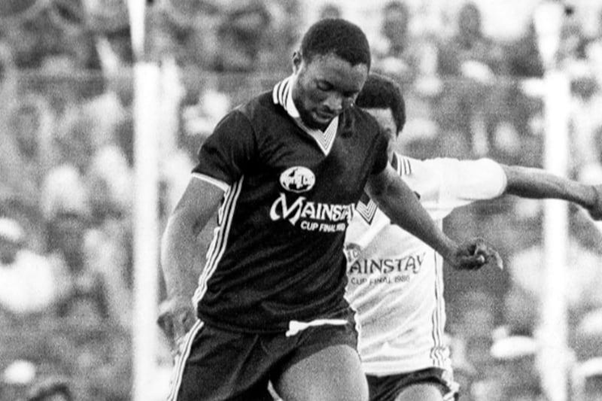
The history of the Soweto Derby is filled with dramatic comebacks, breathtaking scorelines, controversial moments and individual performances that have remained vivid in supporters’ memories long after the final whistle.
One of the rivalry’s earliest defining moments came in April 1971, when Kaizer Chiefs overturned a three-goal deficit to defeat Orlando Pirates 4–3 in a league encounter.
The remarkable comeback demonstrated the unpredictable nature of the fixture and established a lasting characteristic of the derby: no advantage is entirely safe, and no contest is settled until the final whistle.
Another historic encounter followed in February 1972, when Chiefs defeated Pirates 7–3 in the second leg of the Champion of Champions final. The extraordinary result remains among the most memorable scorelines in the rivalry’s history.
These early encounters helped establish the derby as an occasion where reputations could be forged, unexpected heroes could emerge and the balance of power could shift in spectacular fashion.
Among the players who helped shape the rivalry’s formative years was Patrick ‘Ace’ Ntsoelengoe. Renowned for his exceptional footballing ability, he became one of the most celebrated figures associated with the fixture. His reported tally of 19 derby goals remains a notable benchmark in the historical record.
Successive generations have added their own chapters to the story, with outstanding players from the 1970s and 1980s followed by modern professionals who continue to carry the expectations and ambitions of these two historic institutions.
Yet the derby’s legacy cannot be reduced to statistics, trophies or memorable results. It is equally a story of footballers whose performances defined careers, supporters whose celebrations became family traditions and unforgettable encounters that grew into legends retold across neighbourhoods and generations.
Every era has contributed something distinctive to the rivalry. Every generation has found its heroes. And every new meeting presents another opportunity to create a moment that will live long in the memory.
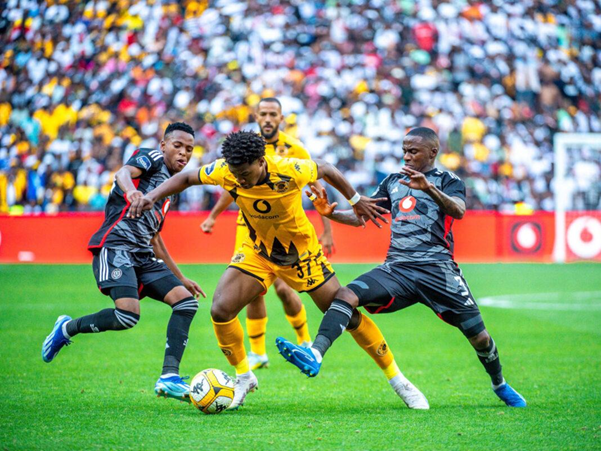
MORE THAN FOOTBALL: A RIVALRY ROOTED IN IDENTITY
The true significance of the Soweto Derby extends far beyond the scoreboard.
Soweto occupies an important place in South Africa’s social and political history, and football has long provided a powerful platform for community identity, collective expression, ambition and celebration. Against this backdrop, Orlando Pirates and Kaizer Chiefs developed into institutions whose cultural influence reached well beyond the communities in which their stories began.
Founded in 1937, Orlando Pirates built a proud heritage around the Buccaneers identity and their unmistakable black-and-white colours. Kaizer Chiefs, established in 1970, cultivated an equally passionate following through the Amakhosi identity and the club’s distinctive gold-and-black colours.
Over the decades, both clubs have attracted supporters from diverse generations, communities and backgrounds. For many, allegiance is an inheritance rather than a choice made in isolation. It is passed down by parents and grandparents, reinforced by childhood memories and strengthened by the emotional experiences that accompany every season.
Others discover their allegiance through the brilliance of a particular player, the exhilaration of a historic victory or the irresistible atmosphere of matchday.
Whatever the origin, loyalty to these clubs often becomes an enduring part of personal and family identity.
Imagine a grandparent whose memories stretch back to the celebrated footballers of the 1970s sitting alongside a teenager whose sporting heroes belong to the modern era. Their opinions about tactics, coaching decisions, transfers and individual performances may differ dramatically, yet both understand the extraordinary importance of the Soweto Derby.
For one family, a victory over the arch-rivals becomes a treasured story retold for decades. For another, a painful defeat inspires days or even weeks of passionate debate, playful taunts and spirited football arguments. Then comes the next encounter, bringing the possibility of redemption and another opportunity to restore bragging rights.
This is the emotional cycle that sustains the rivalry.
Inside the stadium, those emotions take physical form through vibrant displays of colour, thunderous singing, dancing, waving flags and the unmistakable sound of vuvuzelas. Thousands of individual stories merge into one extraordinary atmosphere, transforming the occasion into a cultural celebration that transcends the boundaries of sport.
The derby also serves as a prominent showcase for South African football, attracting nationwide attention and demonstrating the depth of passion that the domestic game continues to inspire.
Its importance lies not only in the competition between two clubs but also in its ability to unite people through a shared national sporting experience, even when they stand on opposite sides of the rivalry.
THE MODERN ERA: A RIVALRY THAT CONTINUES TO EVOLVE
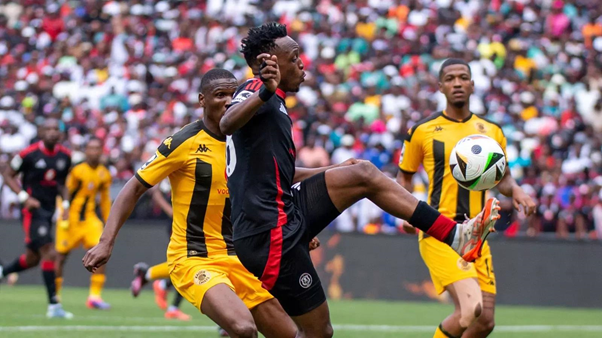
South African football has changed considerably since the earliest Soweto Derbies, and the rivalry between Orlando Pirates and Kaizer Chiefs has evolved alongside it.
Encounters that once unfolded in a very different footballing environment are now experienced through extensive television coverage, digital platforms, real-time commentary, sophisticated tactical analysis and growing international interest.
Despite these changes, the emotions at the heart of the fixture remain remarkably consistent.
The modern Soweto Derby demands more than technical ability and attacking flair. It requires tactical intelligence, psychological resilience, concentration and the discipline to perform under extraordinary pressure.
Coaches must prepare their teams for the unique demands of an occasion in which every decision can be magnified and every mistake scrutinised. Players must channel their aggression constructively, maintain their composure and recognise when to attack with conviction or defend with patience.
The intensity of the rivalry can inspire exceptional performances, but it can also test even the most experienced professionals. A moment of individual brilliance can determine the outcome, while a lapse in concentration may prove costly.
Preparation, adaptability and mental strength are therefore just as important as skill and ambition.
For Orlando Pirates, the challenge will be to impose their game plan, make effective use of their opportunities and convert the energy of their supporters into a decisive advantage. For Kaizer Chiefs, the task will be to disrupt their opponents’ rhythm, remain organised and seize the moments that could turn the contest in their favour.
Ultimately, the badge on the shirt and the noise in the stands cannot win the match on their own. The outcome must be earned through the quality of the performance on the pitch.
That is what makes every new derby so compelling: the history is already written, but the result remains to be decided.
THE PSYCHOLOGICAL BATTLE: PRIDE, PRESSURE AND EXPECTATION
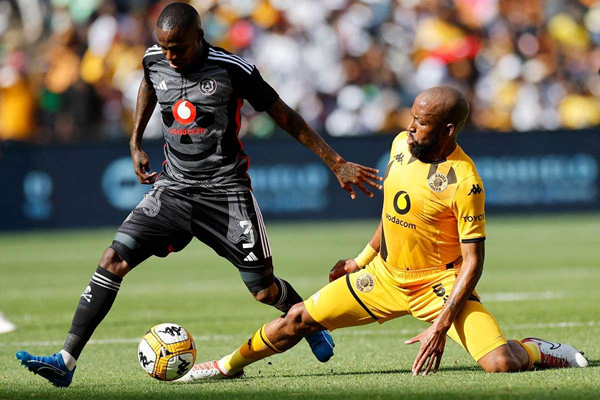
Few domestic fixtures place footballers under the same emotional microscope as the Soweto Derby.
The expectations are immense because supporters do not view the encounter as an isolated 90-minute contest. They see it as an opportunity to reaffirm their club’s standing, defend its reputation and secure a result that will dominate conversations long after matchday.
For the players, this creates a unique psychological challenge.
Experience can be invaluable, particularly for those who have previously participated in the fixture and understand its intensity. Yet experience alone offers no guarantee of success. Younger players may approach the occasion with fearless determination, while established professionals must ensure that the pressure does not interfere with their decision-making.
Composure, discipline and emotional control can prove decisive when the contest becomes heated.
The opening exchanges may establish the tone, but derby matches frequently demand patience. Teams must resist the temptation to abandon their tactical structure in pursuit of an early breakthrough, while remaining alert to opportunities created by mistakes, transitions and set pieces.
A perfectly timed tackle, an intelligent pass, a crucial save or a moment of clinical finishing may ultimately separate the sides.
In such encounters, the smallest details can carry enormous consequences.
The players will understand that the final score will be remembered, debated and compared with the rivalry’s many historic encounters. For supporters, however, the significance will be even more personal: a victory offers weeks of celebration, while defeat can leave a lasting sting.
This is the burden and privilege of representing one of South Africa’s most celebrated football institutions.
WHAT IS AT STAKE ON 31 OCTOBER 2026?
When Orlando Pirates and Kaizer Chiefs meet at FNB Stadium, the implications will extend beyond the immediate result.
The three league points could prove important to each club’s ambitions in the Betway Premiership. Depending on their respective positions at the time, a victory could strengthen a title challenge, improve their standing or provide valuable momentum for the matches that follow.
A derby triumph can also influence confidence within a squad. Winning against the fiercest rival can reinforce belief in a team’s tactical approach, reward weeks of preparation and provide supporters with renewed optimism.
For the losing side, the consequences may be equally significant. Defeat can intensify scrutiny, invite difficult questions and increase the pressure ahead of subsequent fixtures.
Nevertheless, derby football rarely follows a predictable script. League positions, previous results and individual reputations offer context, but they cannot fully determine what will happen when the teams take the field.
That uncertainty is part of the occasion’s enduring appeal.
The players will compete for points, the coaches will search for tactical advantages, and the supporters will dream of a performance that becomes part of club folklore.
Above all, both teams will understand that a result against their fiercest rivals carries a special significance that ordinary league victories cannot always replicate.
A NATION WAITS FOR ANOTHER CHAPTER
As 31 October approaches, the anticipation surrounding the Soweto Derby will continue to build.
Across South Africa, supporters will prepare their jerseys, rehearse their songs and revisit the memories that have shaped their devotion to Orlando Pirates or Kaizer Chiefs. Conversations will become more animated, predictions more confident and friendly rivalries more intense.
For some, the day will be about defending a family’s footballing tradition. For others, it will be an opportunity to celebrate a club whose history and identity have become deeply personal.
For the players, it will be an opportunity to rise to one of the most demanding occasions in domestic football. For the coaches, it will be a test of preparation, tactical judgement and leadership. For the nation, it will be another reminder of the power of football to generate excitement, emotion and collective anticipation.
The history of the Soweto Derby guarantees that the occasion will carry enormous significance, but it cannot guarantee a particular result. That responsibility belongs to the players who will step onto the pitch at FNB Stadium.
One team will leave with three valuable league points and the satisfaction of having prevailed over its fiercest rival. The other will be left to reflect, regroup and prepare for the next opportunity to restore its pride.
Between those outcomes lies the drama that has sustained this rivalry for generations.
The songs are ready. The colours are waiting. The anticipation is growing.
On Saturday, 31 October 2026, Orlando Pirates and Kaizer Chiefs will once again stand on opposite sides of a rivalry that has become part of South Africa’s sporting identity.
Ninety minutes will determine the result, but the emotions will reach far beyond the final whistle.
Because some football matches are remembered for the points they deliver, while others are remembered for the stories they create.
The Soweto Derby is both.
One nation. Two giants. One historic rivalry. Another chapter awaits.
#SowetoDerby #OrlandoPirates #KaizerChiefs #BetwayPremiership #SouthAfricanFootball #FootballRivalry #DerbyDay